
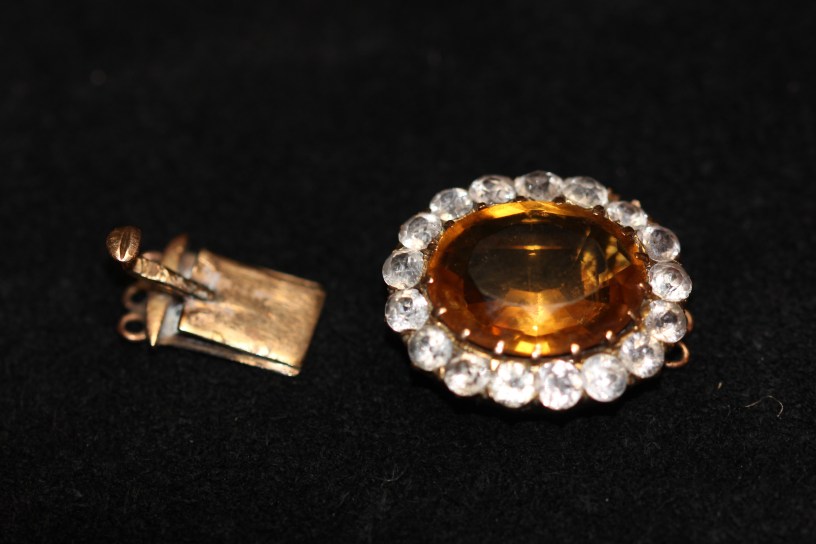
If a piece of antique jewellery is not hallmarked, it can be difficult to definitely date it. Often, the metal used can help, say, if it is made of pinchbeck, gold plated, white gold, or platinum, for instance, as there are known dates about their first use. In other cases, the setting of a gemstone can help with dating, as can the design of the piece. Sometimes it is the clasp that can assist with dating a piece but although we might know when a clasp was first used, it is not so easy to put an end date on its use. Many jewellery clasps continue to be used a few centuries after they were invented. You just have to search online for jewellery findings for necklaces and bracelets and the following clasps will show up: spring ring (or bolt ring) clasp, box clasp, toggle clasp, barrel screw clasp, cylinder or tube clasp, hook and eye, buckle clasp and so on. Many of these clasps have been used for jewellery for a long time.
Generally, when we try to date a piece of unhallmarked jewellery, we look at the whole piece and not just one element but I was wondering if it was possible to just use the clasp as the sole means of dating. Let’s start with one popular clasp, the box clasp or tongue in groove clasp. A version of this style of clasp was used by Ancient Egyptians and Anna Tabakhova includes in her book ‘Clasps: 4,000 years of fasteners in jewellery’ at p61 a picture of a Northern Europe necklace from around 1600 which shows a tongue-in-box clasp with a rectangular slot.

Anna states that there were three types of box clasps which emerged over the 16th, 17th and 18th centuries. The first comprised a box with a rectangular slot in the front and a hole drilled on the side. The folded tongue slides into the slot and a pin was inserted into the hole to keep the tongue in place. The second version from around 1640 had a tongue inserted into a rectangular slot with a pin needed to release the tongue. With the third type of clasp, the tongue has a push-button or trigger attached to it and the rectangular slot had a ‘T’ opening added to the top of the rectangular slot. This latter version became the dominant one (Tabakhova pp 64-65).
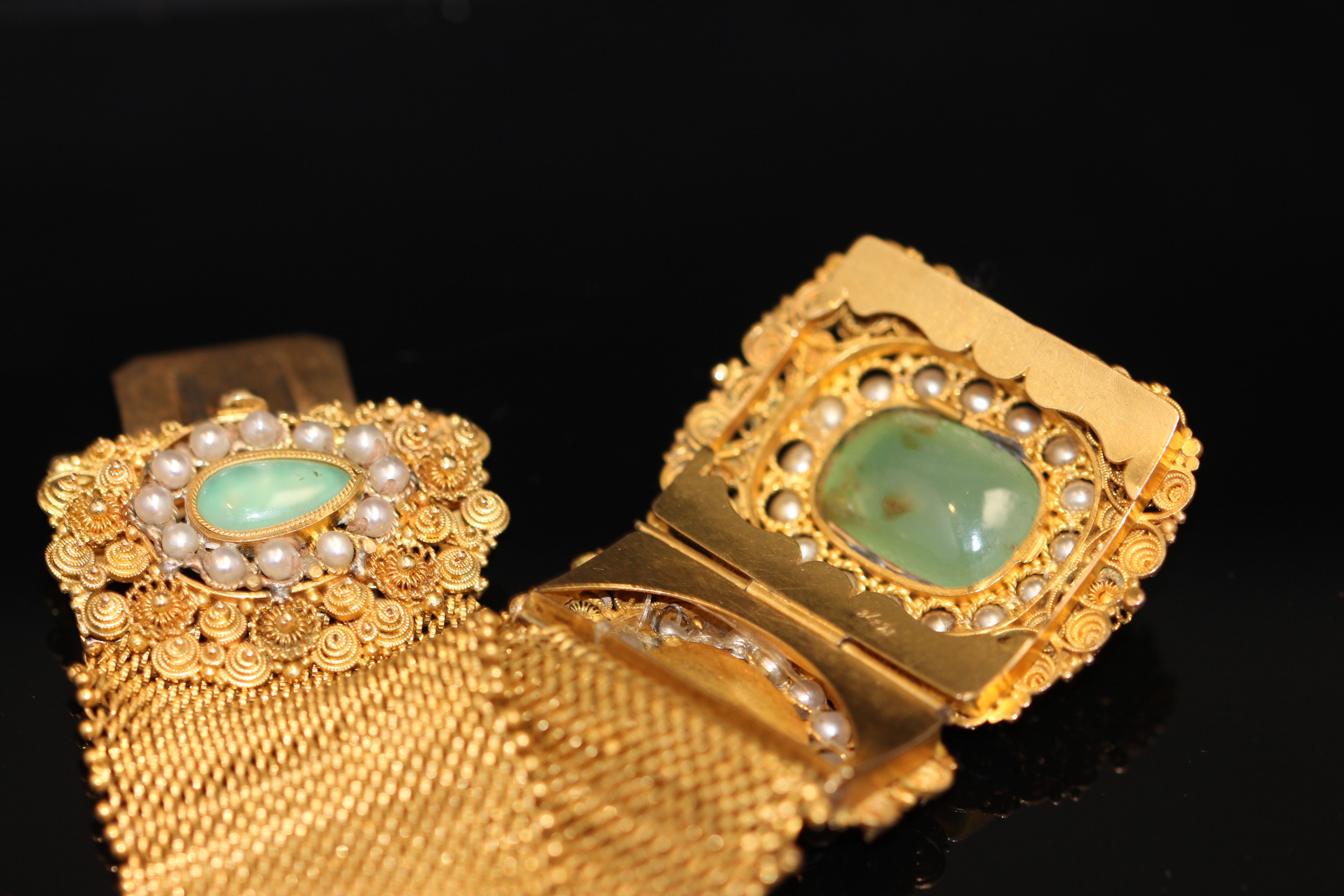
The 18th century saw the tongue and groove clasp come into its own as an important fastener. There were a number of variations. During this period, the box could be merely just a rectangular bar or just a thin slit in the frame of a bracelet like the one above. In the 19th century the box might have a cross-shaped slit so the tongue could be inserted at different angles.
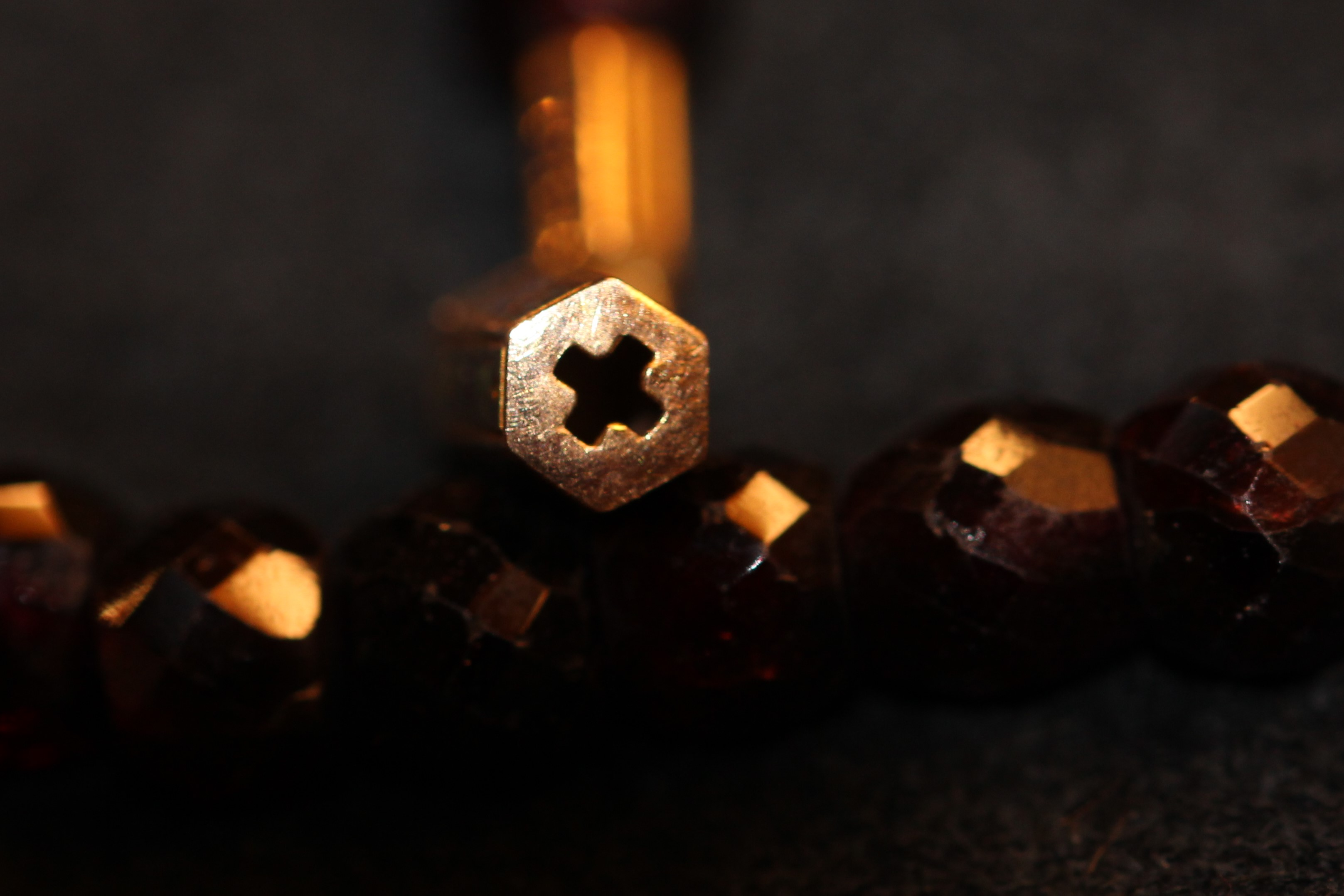
So, if a piece of jewellery has a box clasp, then we know that that clasp might have been made between the 16th and 21st centuries. If we ignore the other elements of the piece such as the metal, gem settings, design, etc, are there any pointers to dating box clasps? I think there might be a few ways and I will discuss then in my next blog as well as look at more clasps.
 navette jewellery