
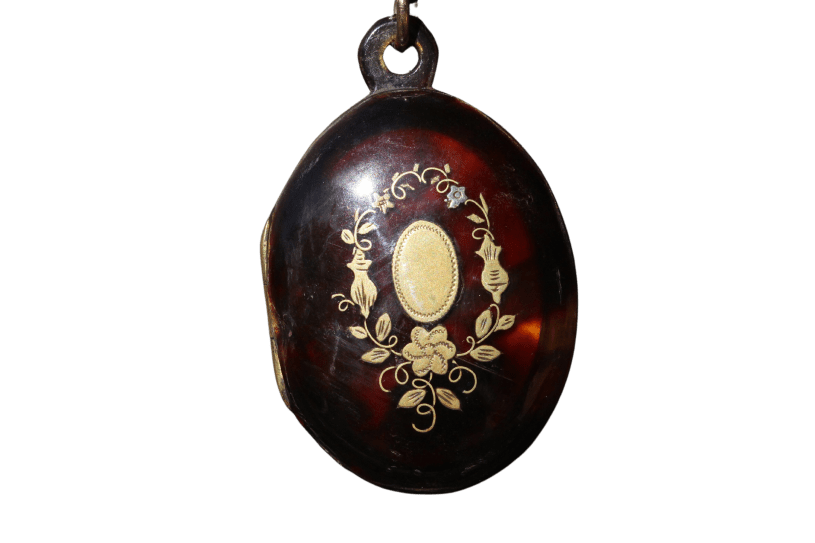
Recently, I purchased online an antique pendant which was stated to be coral from about the early 19th century. The colour worried me a bit as it is more of a gold colour and not the usual red, orange, pink or white colour of antique jewellery. It is cold to the touch and it does fluoresce under UV light but it doesn’t have the clear striations that you would expect for coral. I began to think about what material it could be if it wasn’t coral. This led me to think about bone and shell but also about early plastics, both natural ones and synthetic ones.
The word ‘plastic’ comes from the Greek ‘plassein’, to mold or shape a soft substance. The Museum of Design in Plastics classifies plastics as
- ‘Natural, a material that can be moulded in its natural form. Examples are amber, gutta percha, horn, rubber, and tortoiseshell.
- Semi-synthetic, that means, made of a chemically altered natural material. Examples are casein, cellulosic plastics and rubber.
- Synthetic, that is entirely laboratory made, as for example is the case with phenol formaldehyde and the many poly-plastics.’
They divide plastics into two distinct groups:
- ‘thermosets, plastics that on being heated and moulded set permanently, and thus cannot be re-melted and re-formed.
- thermoplastics, plastics that can be re-melted after moulding again and again, and thus can be recycled by melting and reforming’.
https://www.modip.ac.uk/plastics
I thought I would talk about some of the natural plastics to start with and then move onto the semi-synthetic ones.
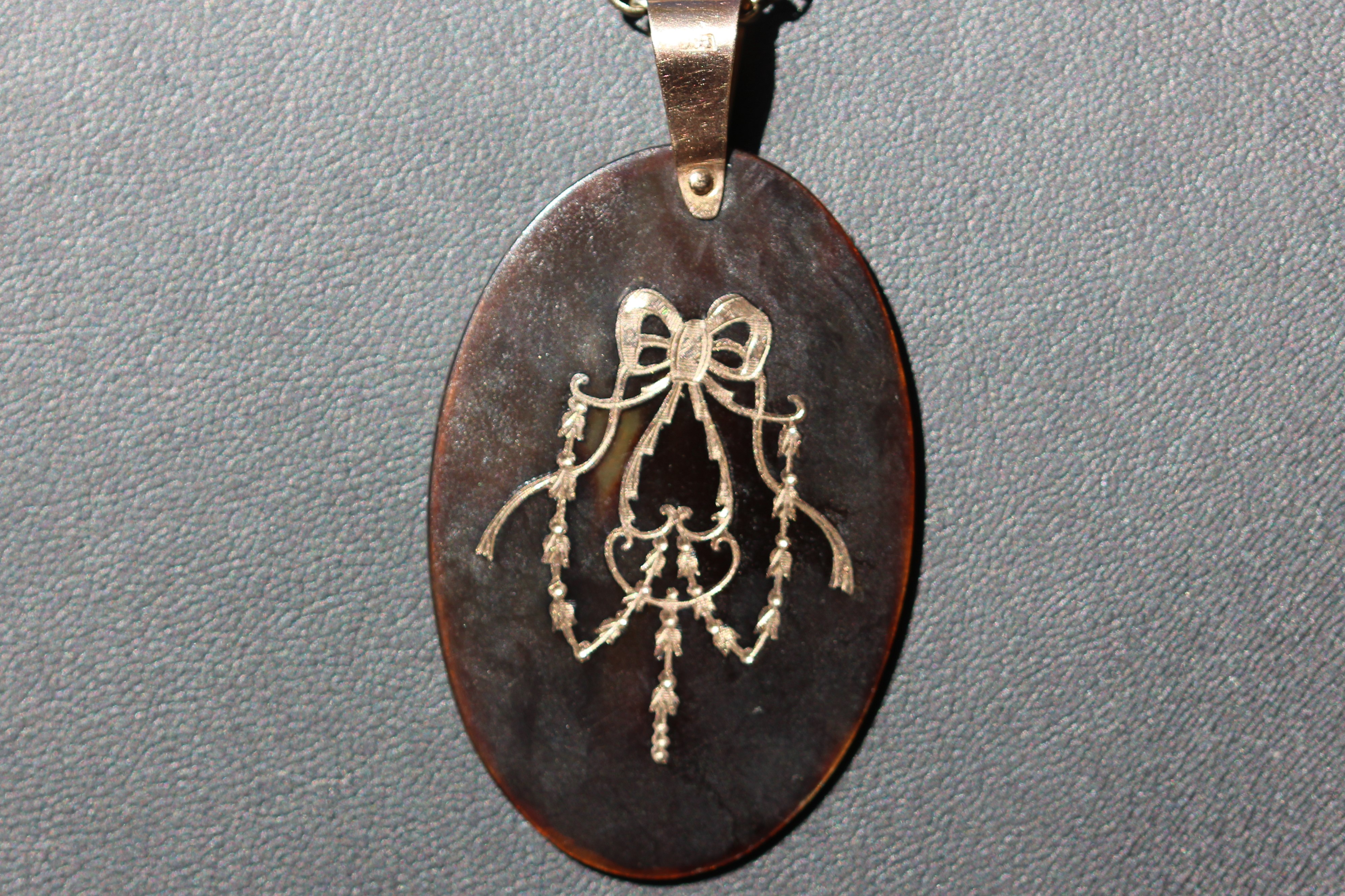
Tortoiseshell is classed as a natural plastic, one that can be heated and moulded into a new shape. It came from hawksbill turtles mainly and trade in it is now banned. It has been used for centuries to make decorative items and jewellery for a long time. It was very popular in the 17th and 18th centuries for veneers for furniture and for objects like snuff boxes and card holders.
The use of tortoiseshell for jewellery rather than for small decorative objects and accessories reached its popularity in the 1860s. Two types of inlay work were done, using a technique called ‘pricking’ which became ‘pique’. The first, pique point, was when small wires were pushed into tortoiseshell softened by heat, and then filed off flush to the surface, leaving dots, stars or similar small shapes. The second, pique pose, pressed strips of gold or silver metal arranged into floral or geometric patterns.

It was the shortage of tortoiseshell and other organic products like ivory that led to experiments to produce materials that would mimic them.
The second natural plastic I wanted to discuss is amber, which is a hardened tree resin. A lot of antique amber jewellery for sale has either been clarified or pressed. Clarification, to improve transparency, is when amber is placed in canola or linseed and heated slowly. The oil seeps into internal fissures and bubbles. As the oil slowly cools, internal circular fractures which are called ‘sun spangles’ can occur. These look like nasturtium leaves or lily pads.
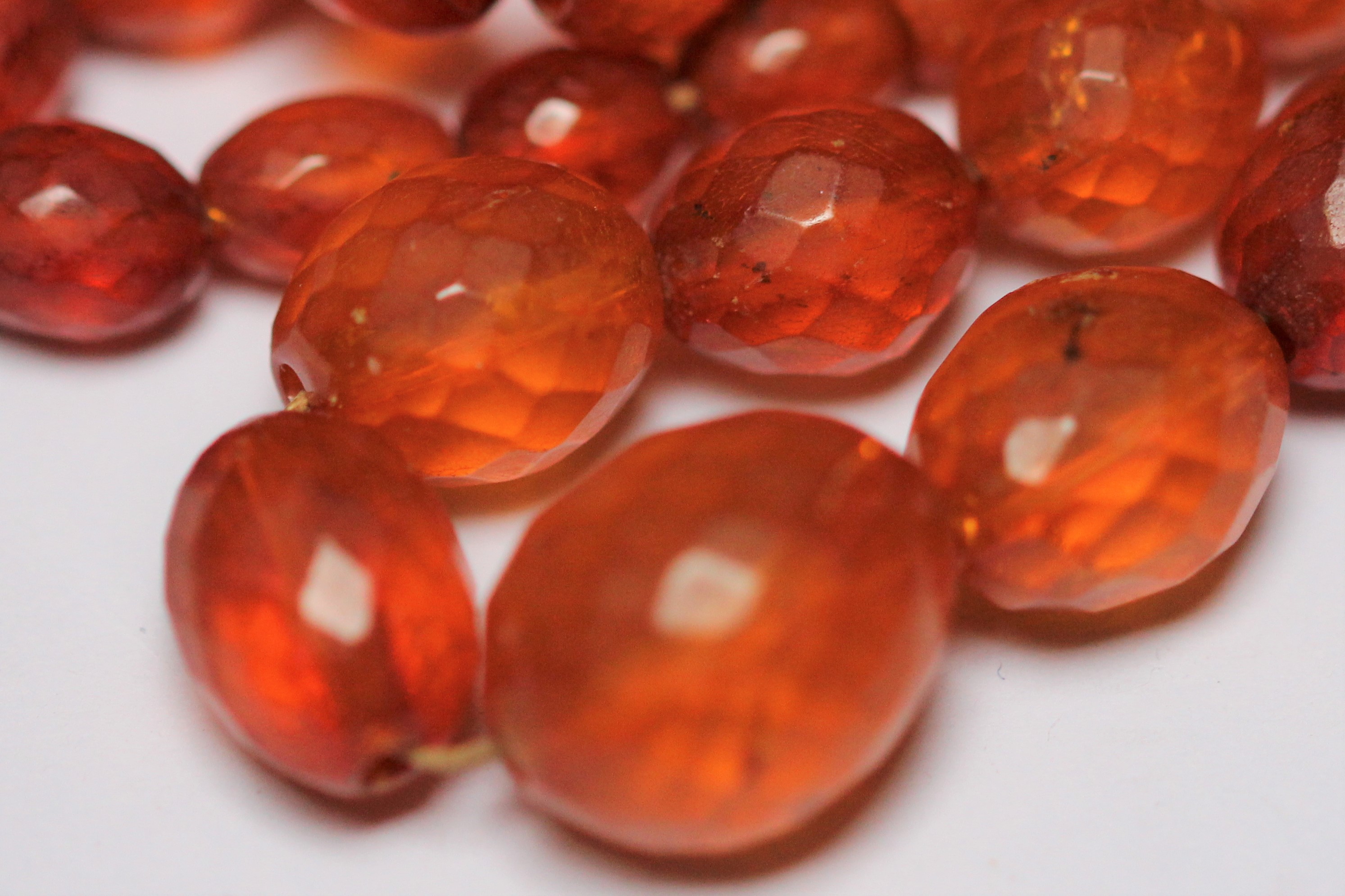
With pressing, small pieces of amber are heated and then pressed together to form new shapes, often beads. Another way of pressing is using powdered amber and melting it, pressing it, and then extruding it. This form of pressed amber is also called ‘ambroid’ or ‘amberoid’.
References:
Museum of Design in Plastics, https://www.modip.ac.uk/plastics
Pedersen, Maggie Campbell, ‘Gem and Ornamental Materials of Organic Origin’, 2010
Pedersen, Maggie Campbell, ‘Tortoiseshell’, 2021
 navette jewellery
Really usefuand interesting information about the amber – I had no idea about the pressing. Thank you
LikeLike