
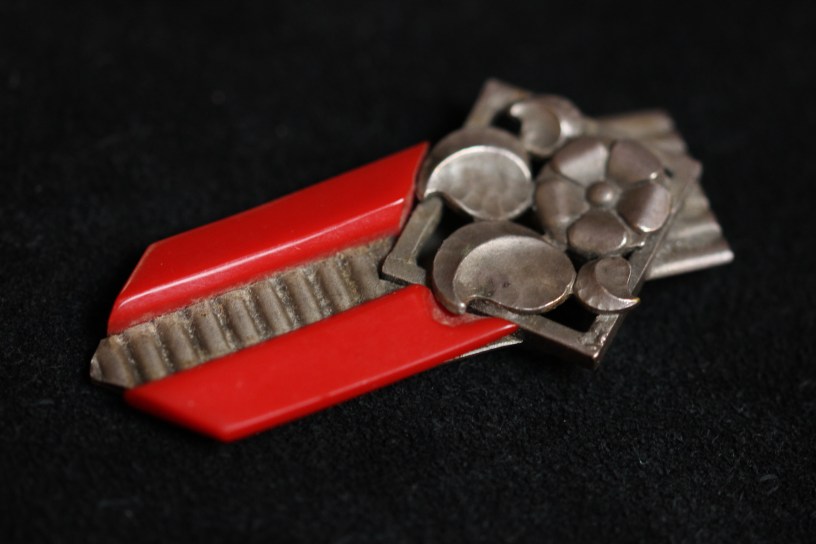
In 1899, Leo Baekeland, a Belgium inventor working in the US, was granted a patent for the first synthetic plastic which was made of Phenol formaldehyde. It took a few years for the process to be developed but he eventually produced a strong, opaque and heavy plastic. It came in dark colours because of the wood fillers used to help with moulding it. The plastic was called Bakelite and iIt was used in car manufacturing, for radios and so on. During the 1910s and 1920s, the Bakelite Company did produce a more translucent cast resin with omitted the wood filler but generally it concentrated on opaque moulded products. The General Bakelite Company operated until 1939 when Baekeland sold it to Union Carbide.
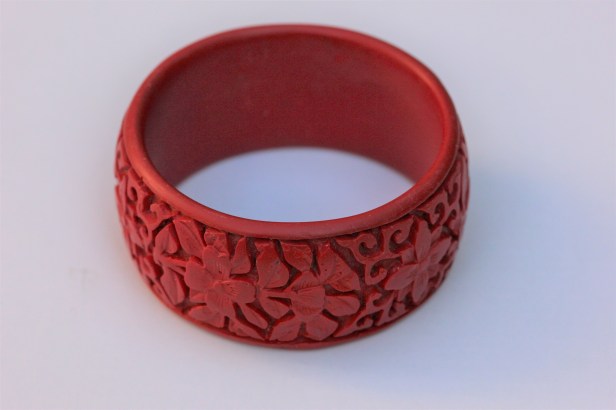
A similar product developed by German chemists was also made from Phenol formaldehyde but did not use wood filllers and so was able to be manufactured in bright colours as well as being able to be transluclent. This product was introduced into the US in 1927 by the American Catalin Corporation when some of Baekeland’s patents expired. The vibrant colours of catalin meant it was used for decorative items, including jewellery.
It appears that much of the brightly coloured jewellery from the 1930s and 40s called bakelite is actually catalin. Both bakelite and catalin ceased to be made after WWII.

There is no doubt that the rest of the 20th century saw a tremendous growth in synthetic plastics. After bakelite and catalin, there was plastics like neoprene, vinyl, nylon, polyester and acrylic glass like lucite.
 navette jewellery