
The Georgian period covers the reign of the Hanover family, with four kings called George, and one called William, from 1714 to 1737, a total of 123 years. A lot happened in those 123 years. 1756 saw the end of the Jacobite Rebellion involving uprisings by James Stuart and Charles Stuart (known as Bonnie Prince Charlie). In 1757, Britain gained political control of India and lost its American lands in 1783. The French Revolution took place between 1789 to 1799, leading to the Napoleonic Wars between 1803 and 1815. Apart from the gaining and losing of overseas holdings and the fighting of wars, an important event in 1764, which was when the Spinning Jenny was invented, heralding the birth of the Industrial Revolution and the growth of an affluent middle class.
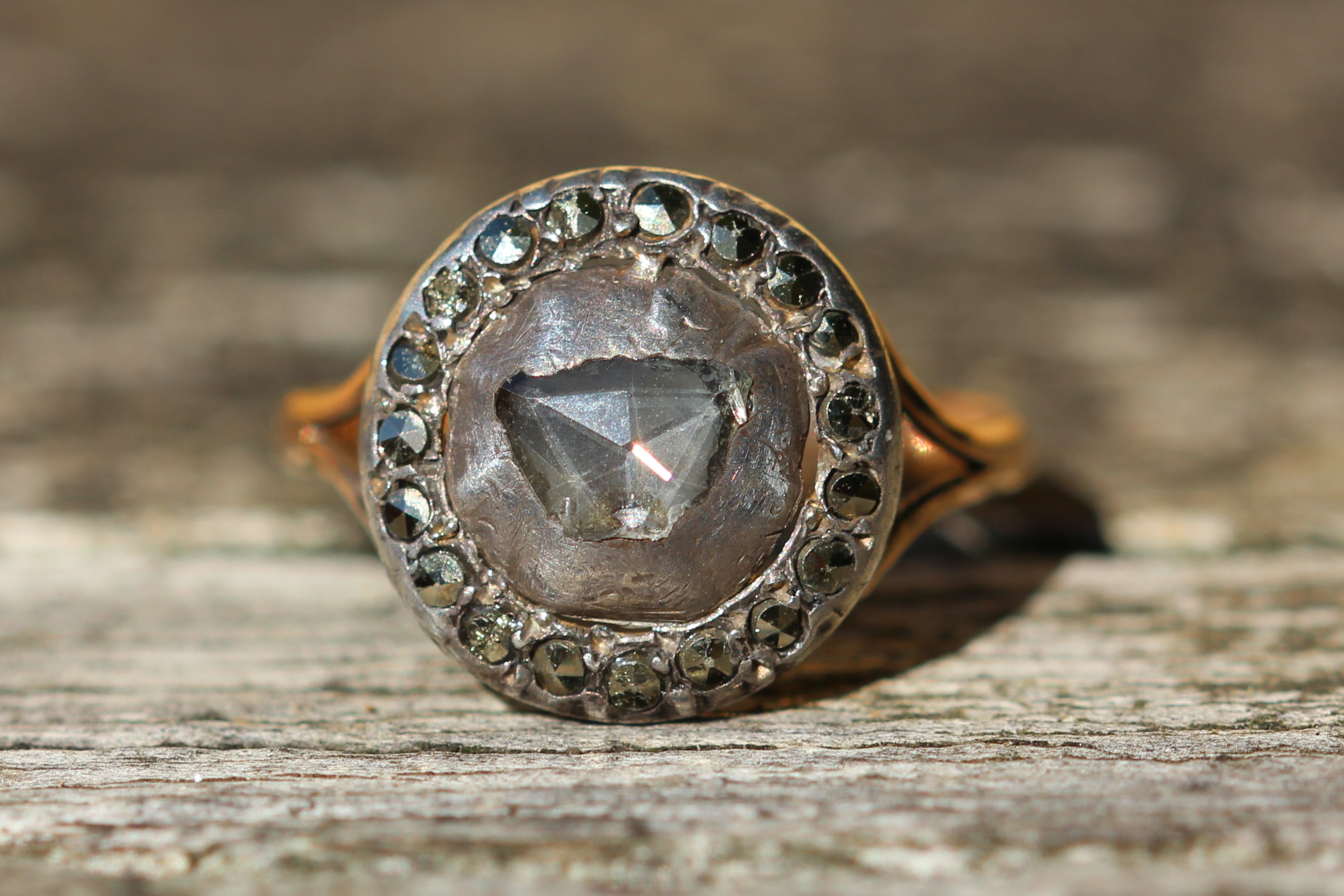
As far as jewellery styles were concerned, there were a lot of changes over the 123 years of the Hanoverian rule, particularly given a number of technological advances in jewellery making and gem cutting. One change was the way in which diamonds were cut. During the first quarter of the 16th century, the table cut was popular. A table cut diamond had a flat top, four facets around the table, four large facets on the bottom plus a tiny culet. The cut was usually used for small stones (Carvalho, p119). The rose cut, which had dominated diamond jewellery since the 1500s, took over as the main diamond cut in the 17th century and much of the 18th. Rose cut diamonds have flat bottoms, between 3 to 24 facets, and either a peaked or dome top.

By the mid 18th century, a form of brilliant cut, which has a flat top, small facets around the stone above the girdle and a small culet, began to be more common, particularly in England. These stones were generally described as Old Brilliant Cuts or, because many diamonds from Indian mines were being re-cut, Old Mine Cuts.
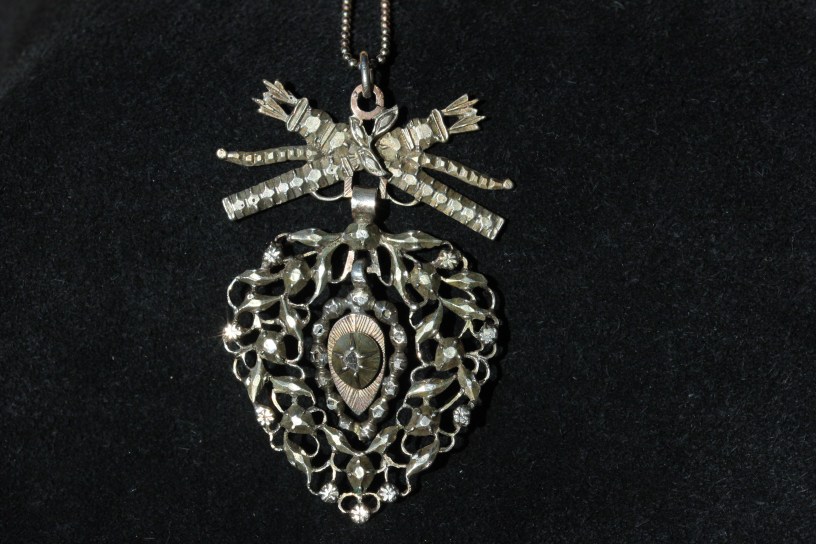
A plentiful supply of diamonds from Brazil, starting from around 1720, meant that ‘jewels progressively transformed into metal structures to hold as many stones as the face-up surface would allow’ (Carvalho, p122). The pendant at the top of the post is a good example of this. Diamonds were usually set in silver, sometimes with gold backs and were close-backed. An old Brilliant cut set in a closed back looked as if the culet was a black dot, an effect that was copied with diamond simulants like paste (Carvalho, p127).
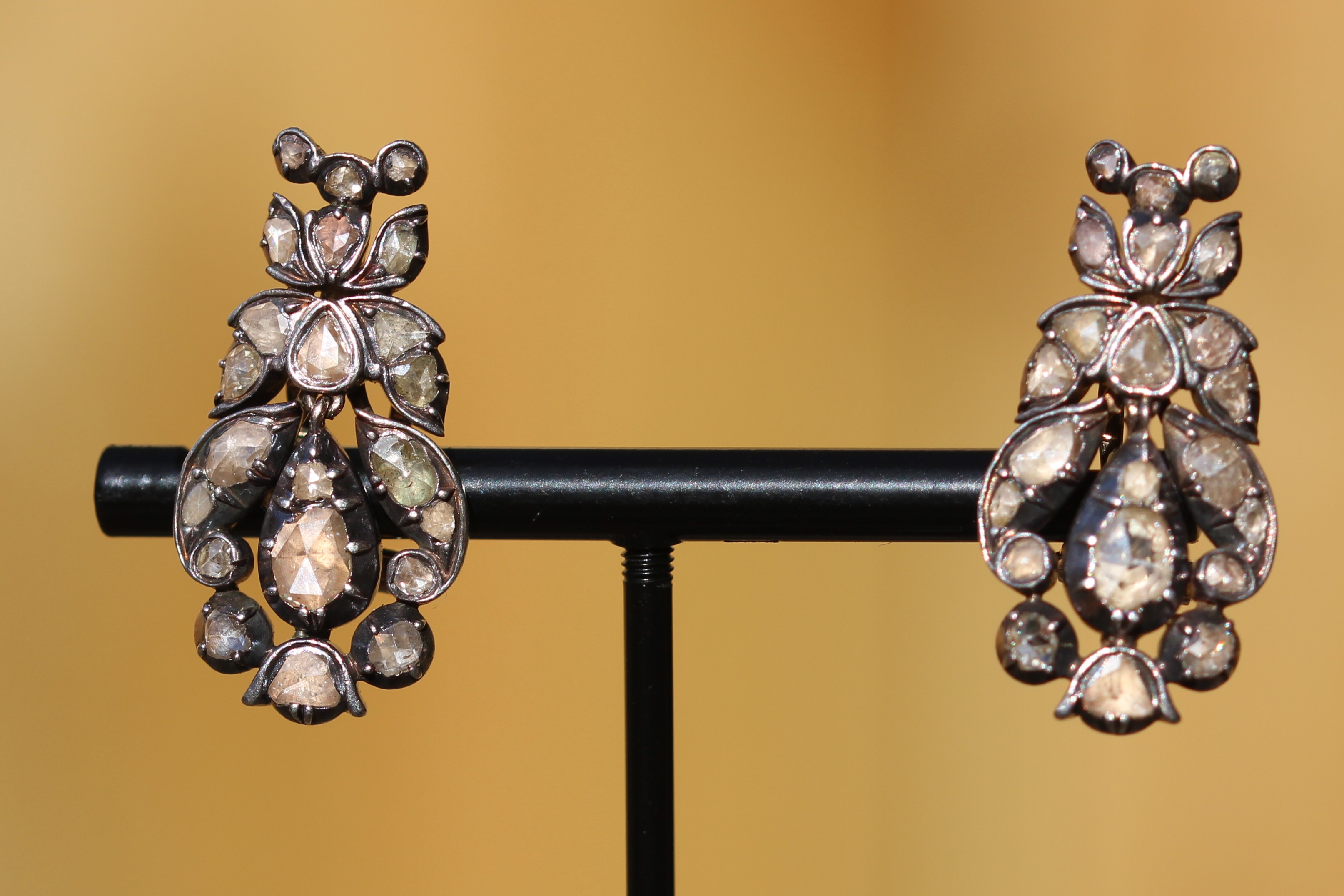
The dominant cut, though, for most of the Georgian period remained the rose cut, particularly for smaller diamonds.
References:
Jack Ogden, ‘Diamonds: An Early History of the King of Gems’, 2018, Yale University Press.
Rui Galopim de Varvalho, ‘Evolution of Diamond Cuts in Portuguese Jewellery and Sacred Objects During the 16th-18th Centuries: A Brief Review’, The Journal of Gemmology, 2014, Vol 34, No 2, pp114-128.
 navette jewellery