
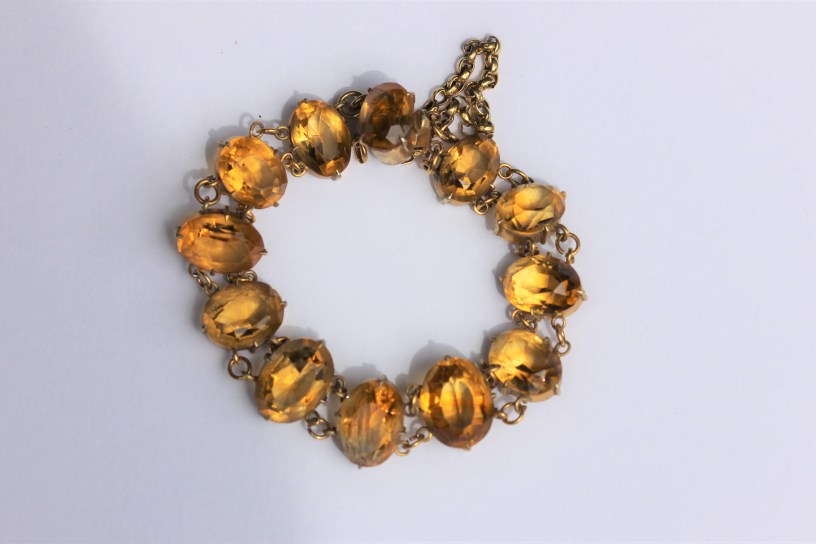
November has two birthstones, topaz and citrine. The citrine was only added to The American National Retail Jeweler’s Association (now Jewellers of America (JA)) list of birthstones in 1952. I find that I have collected quite a few pieces of citrine jewellery as it is a gemstone that goes well with darker colours of clothing like black and navy blue and it is not an overly expensive gemstone.
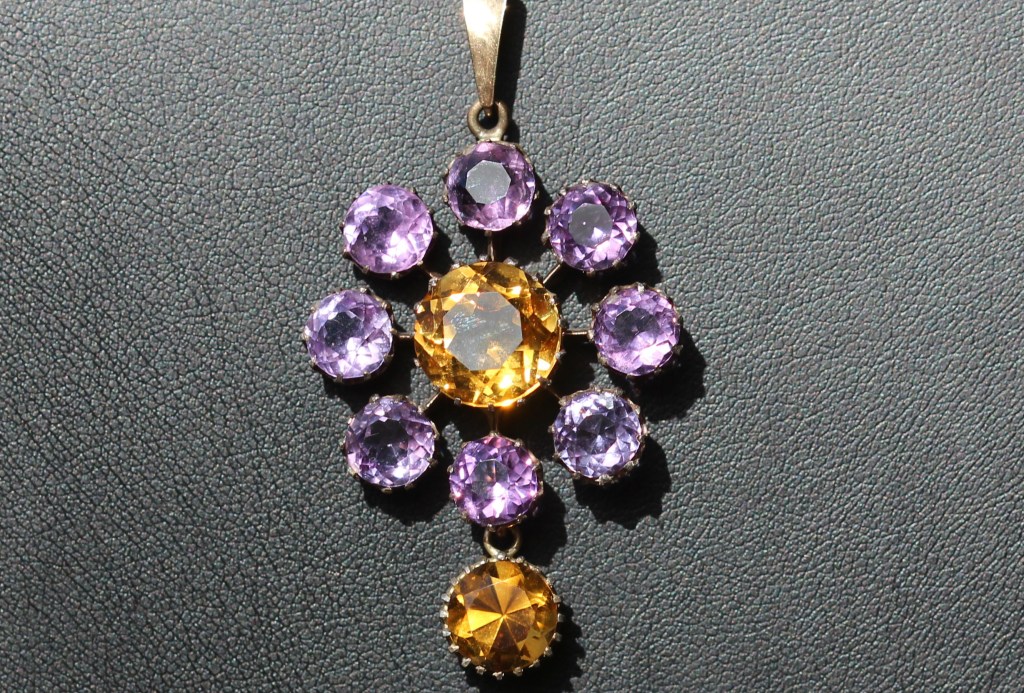
The name ‘citrine’ comes from the French word for lemon which is ‘citron’ and citrines are a beautiful yellow colour. Once described as yellow quartz, citrines were first recognized as a named gemstone in their own right in 1546 by German mineralist Georg Bauer.
Antique natural citrines are more likely to be a lemon yellow. Foiling of the stones was common up to the beginning of the 19th century and could result in them appearing darker.
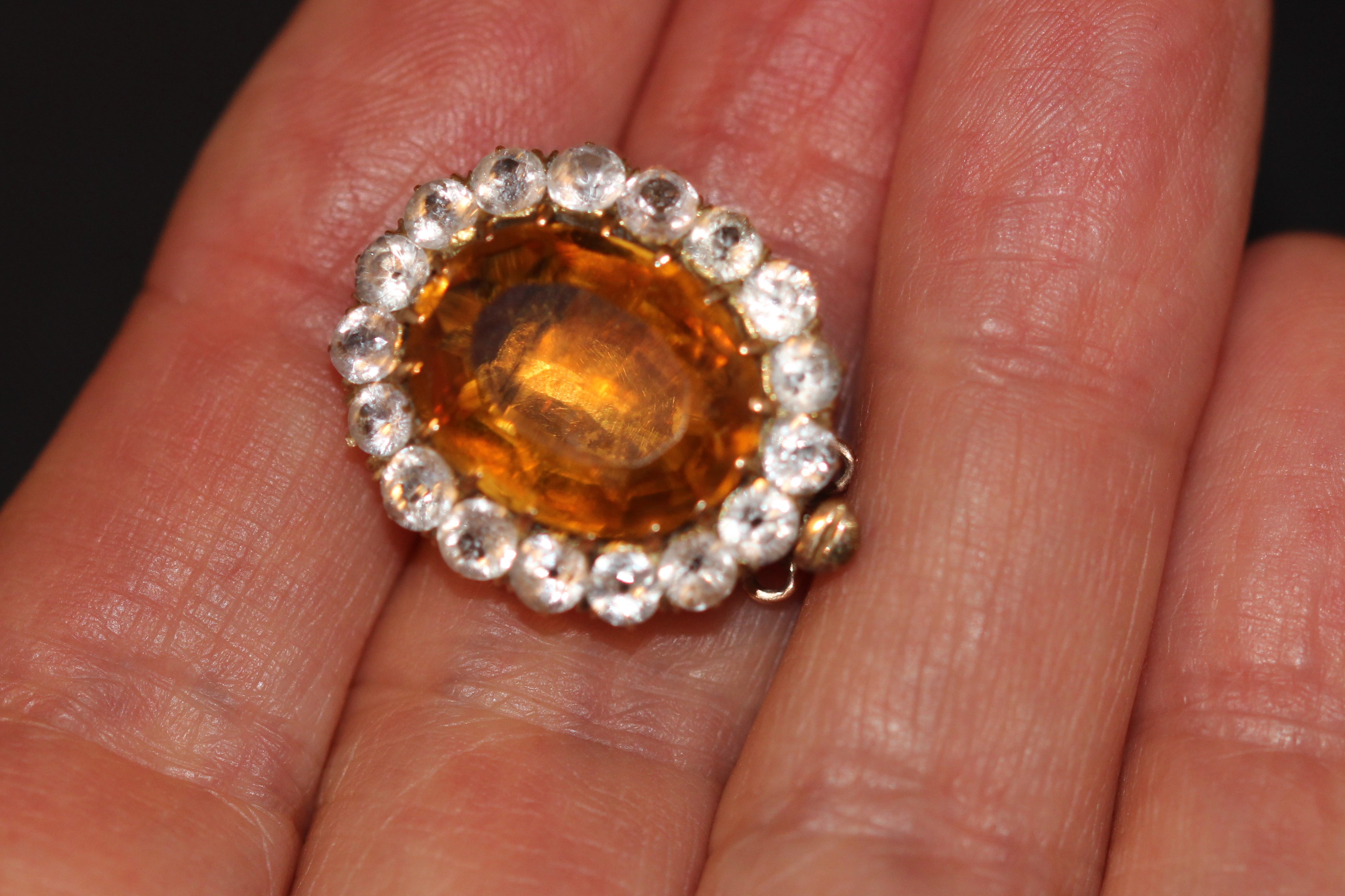
Citrines belong to the quartz family, like amethysts. It is a relatively hard stone, 7 on the Mohs hardness scale, and so it wears well in jewellery. It was found in quite large pieces as well, with few inclusions.

Today it is rare to find citrines naturally and the ones for sale are usually heat treated amethysts which can result in stones of a golden colour and sometimes an orangey yellow colour.
 navette jewellery