
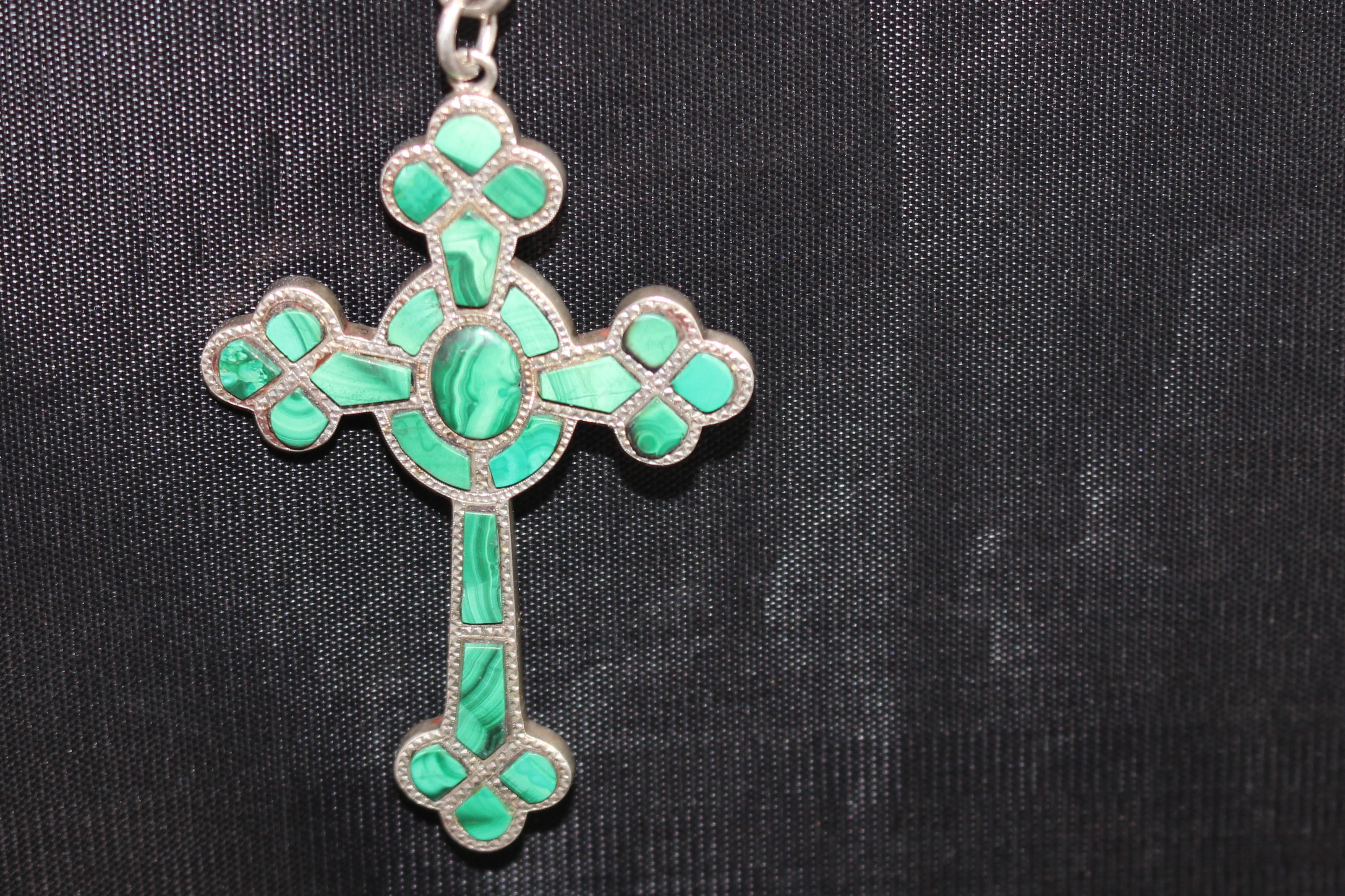
Silver may not have been used for high class jewellery during the Victorian era but it was still used a lot for daytime jewellery. Queen Victoria started a craze for Scottish agate or pebble jewellery when, in 1847, she purchased Balmoral Castle in Scotland to serve as her holiday house. She became interested in the jewellery made in Scotland using local ornamental stones. Originally made in Scotland, as demand for it increased, the jewellery began to be made in Birmingham and agates and other ornamental stones were sourced from India, Germany and Africa. The malachite in the Scottish cross pendant would have come from Siberia. By the 1880s, part of the jewellery construction was even outsourced to Germany. Most Scottish jewellery was set in silver, though more expensive gold versions were produced. Detailed engraving on the silver settings were done by hand.
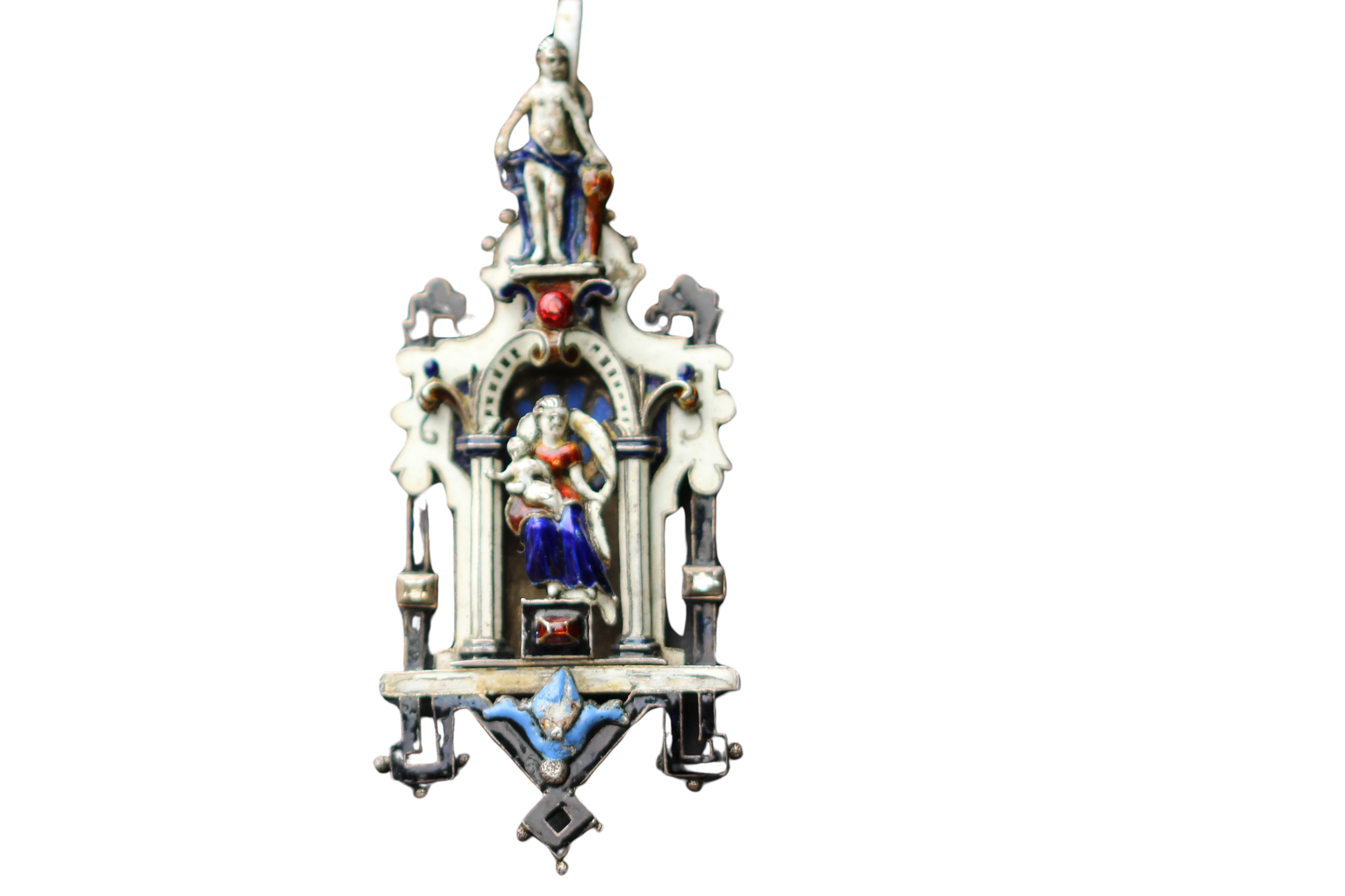
The next silver piece is from the Austro-Hungarian Empire, created in 1867 out of the Austrian Empire and the Kingdom of Hungary. It was to last until 1918. It was the second largest European country after Russia and was an important technological adopter. Increasing industrialization saw a growth in a middle class based in the cities. There was a demand for jewellery and jewellers looked back to the Renaissance for inspiration.
Jewellers produced ornate pieces of jewellery in the form of large pendants covered with enamel, often white enamel decorated with black dots, coloured gemstones and /or paste, and pearls set in gold, silver or silver gilt. The lovely pendant below is silver with multicoloured enamels on the front, while the back is engraved and enamelled.
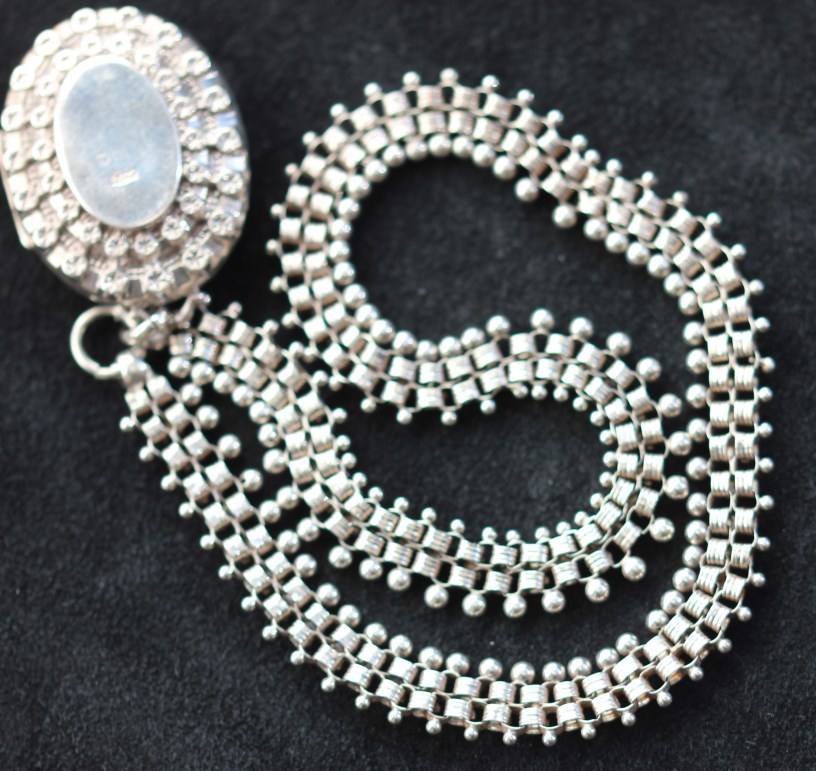
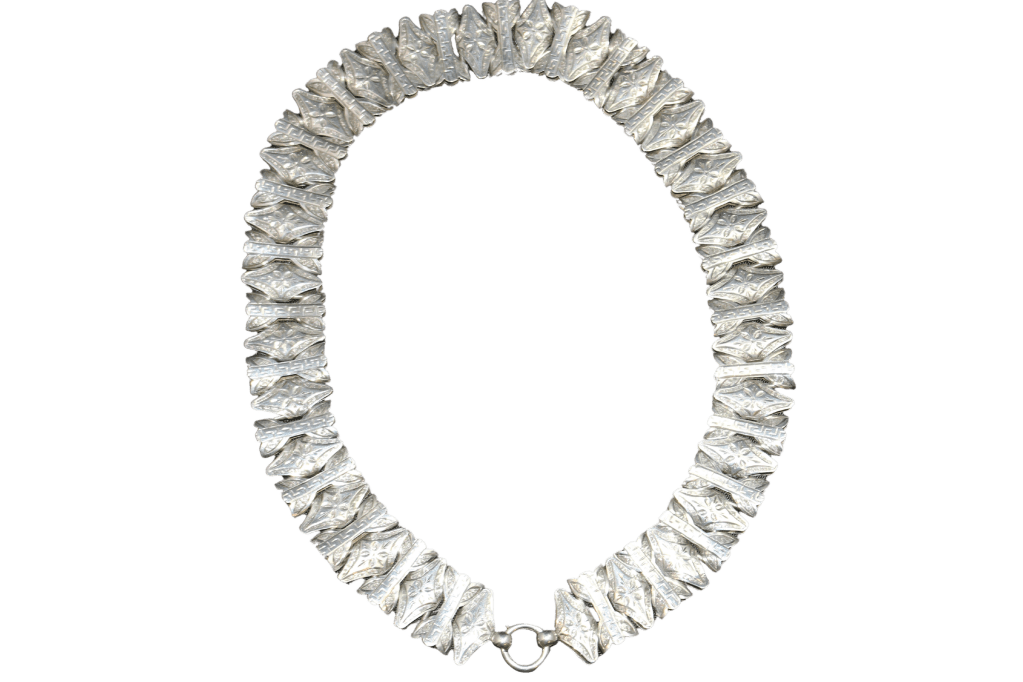
Whilst silver jewellery was made throughout the Victorian period, it was the discovery of silver in Nevada in 1858 which was to lead to a growth in silver, together with the ever growing middle classes who had money to spare. Silver collars in particular, with oval or square shaped lockets, became popular for everyday wear from around the late 1870s. The links on the collars were usually flattened to allow them to sit flat around the neck. As well, at the end of the 1880s, a tax on silver and gold items was removed, and jewellery, particularly silver jewellery, became more affordable.
The pollution in England at the end of the 19th century was one reason why silver jewellery began to fall out of favour. The sulfur dioxide in the air tarnished the silver and cleaning became a constant chore.
 navette jewellery