
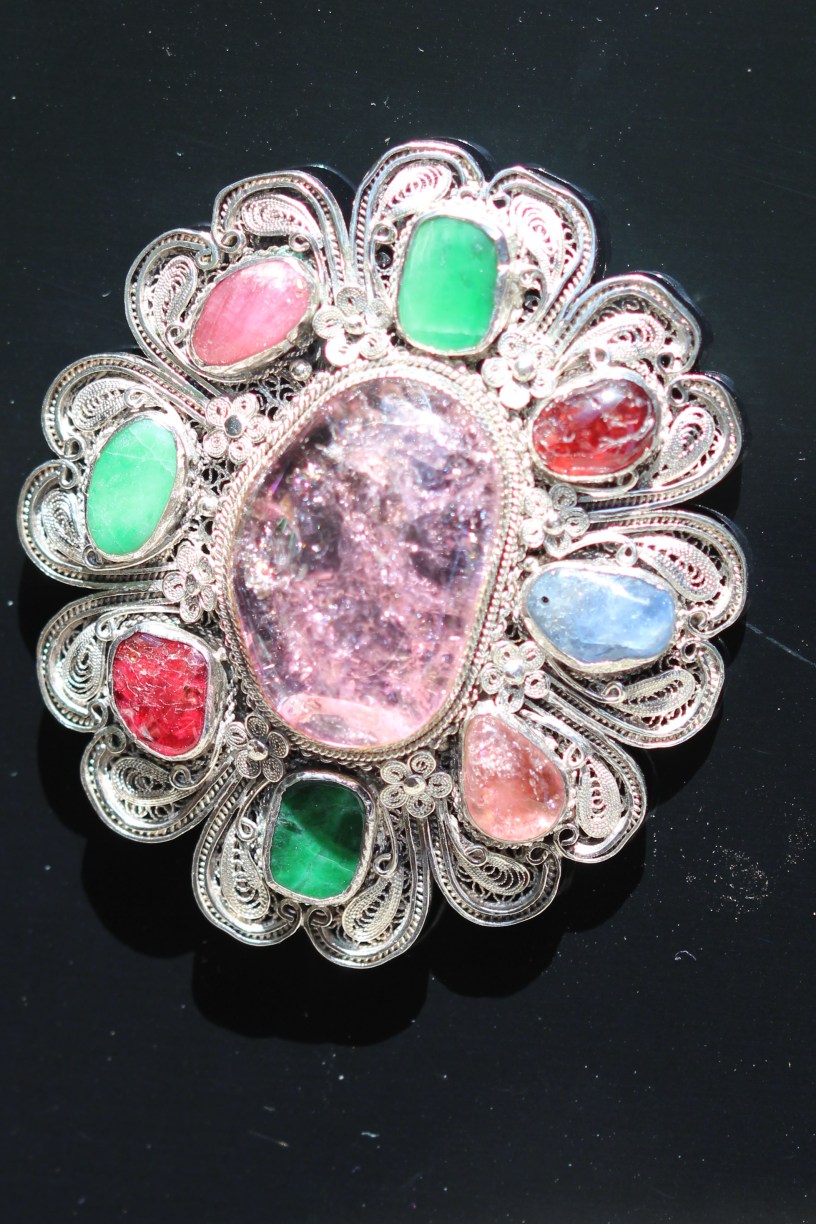
Like gold, silver jewellery comes in different purities. Pure silver is too soft to be used for jewellery so other metals, such as copper, are added in different proportions to enable it to be used for jewellery. Silver jewellery can range in purity from 0.925/1000, which is known as sterling silver, down to a minimum of 800/1000, used in jewellery from countries like Germany, Austria, Portugal, and China. Countries generally have a number of accepted purities, say, from .925, then .830 to .800, which is now the case in the UK, or two approved purities, such as France which has two, .925 and 800. To make it more complicated, the silver purities in many countries have changed over the last two centuries. As well, not all pieces are hallmarked or stamped so have to be tested to determine the purity.
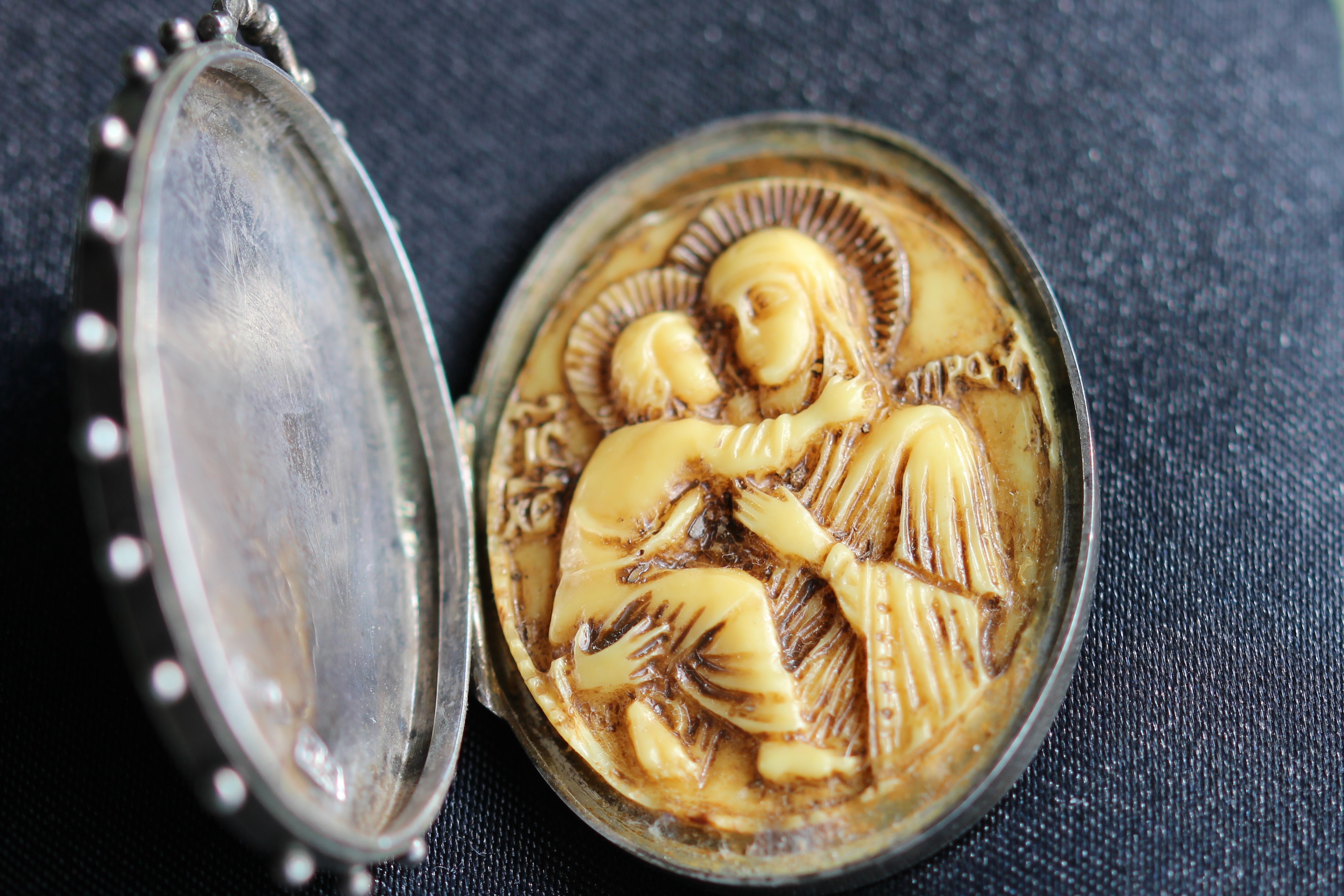
The history of silver purities and standards can differ a lot in different countries. In Russia, for instance, the standard for silver and gold was based on the Zolotnik, a Russian word for gold which was a measure of weight. It was used from the 11th century. The locket above is stamped 84 zolotniks which is the equivalent of 875/1000 silver. This system was changed in 1927 to a metric system.
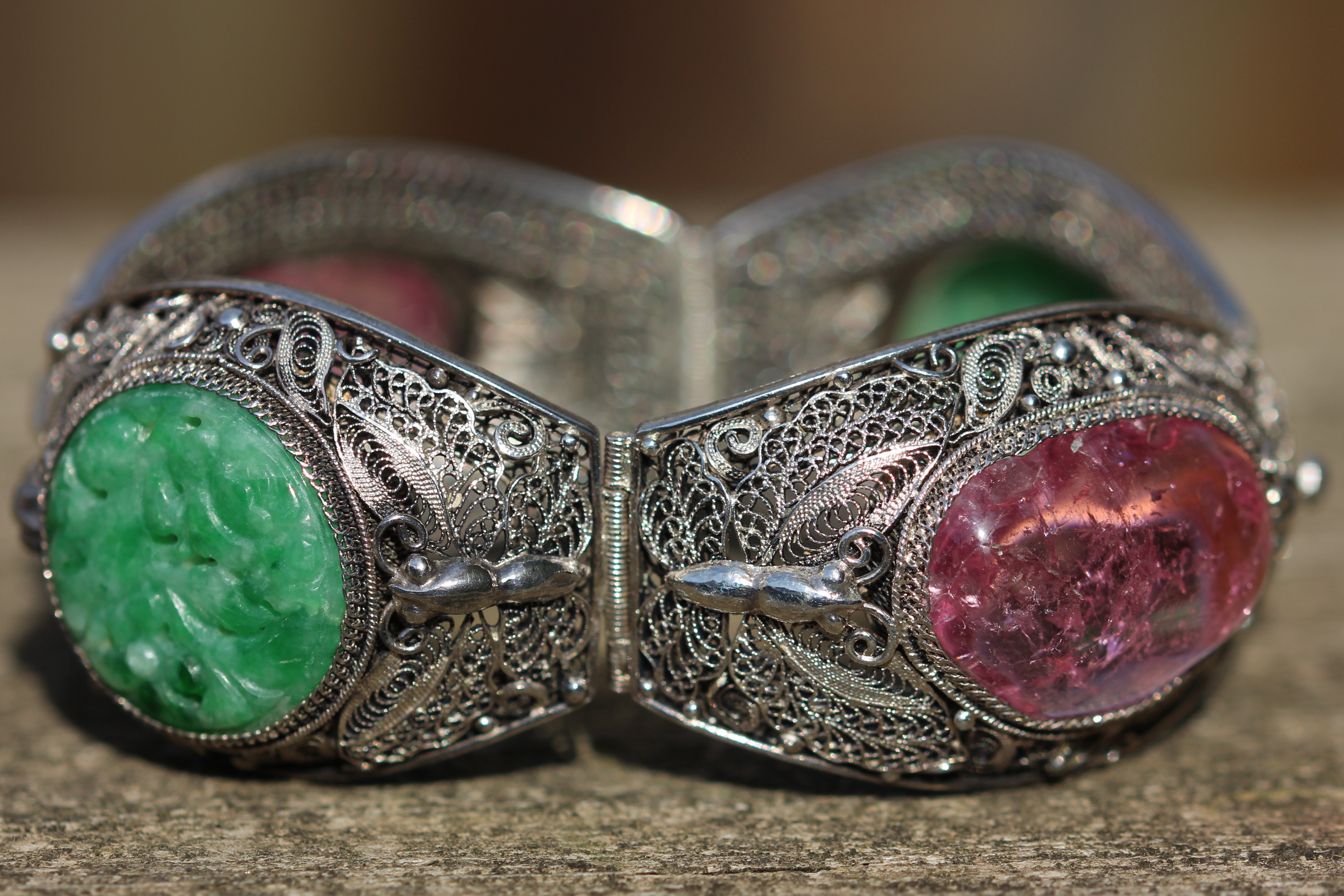
In China, silver items made for export were made of silver with a purity of .900. Silver was the currency of choice for large transactions and government taxes for centuries, and for a lot of foreign trade. China had few silver deposits but received foreign payments in silver from Japan, and later, in the 17th century and after, from the new Spanish colonies in South America. This silver, which was normally of about 90% or 900/1000 purity, was melted down and used to produce goods, including jewellery like the bangle above or the brooch at the top of the post.

As mentioned earlier, France currently accepts two silver standards, .950 and .800. The silver guarantee stamp on French silver differs depending on the size of the item. Smaller items will have a boar’s head, a crab or a head of Minerva without a frame. Larger items will have a head of Minerva with a frame. The shape of the frame around the head will vary depending on whether the item is made of 950% silver or 800%. If the item was made for export, the head of Mercury is used. The most common mark on jewellery is the boar’s head, the mark of the Paris Assay Office, indicating a fineness of 800 or higher. This mark has been used from 1838 to 1961. Outside of Paris, the crab mark was used from 1838 to 1961, and since 1962, has also been used by the Paris Assay Office.
A good reference for world hallmarks is World Hallmarks, Volumes I and II, published by the Hallmark Research Institute.
 navette jewellery
Useful information about the non UK silver alloys, thank you
LikeLike
Thanks Dawn
LikeLiked by 1 person