
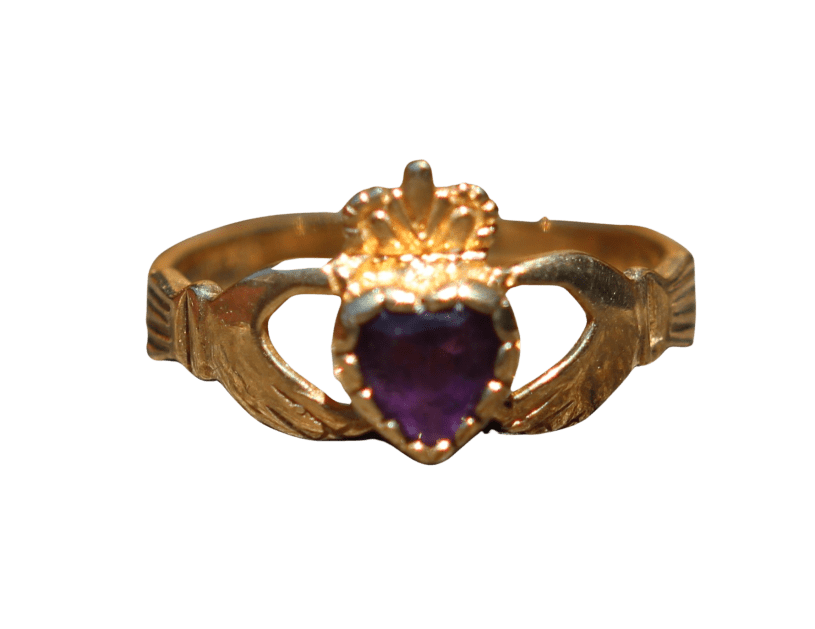
With Valentine’s Day so close, it seems a good time to look at symbols associated with the day. The most recognized symbol is the heart. Love and hearts were first linked in the 14th century but it was the concept of courtly love developed in the 16th and 17th centuries which embedded the link.
Jewellery has often been depicted love using hearts. From the 1600s, fede gimmel rings became popular. They have two hands clasped together and open up to reveal one or two hearts. In the 17th century, the claddagh ring from Ireland has a heart held in two hands, often with a crown on top of the heart, meaning ‘ruler of my heart’. Claddagh rings are still popular as seen in the sweet little amethyst set Claddagh ring in the photo at the top of the post. In France, ‘alliance’ ring set with two hearts became popular as wedding rings in the 18th century.
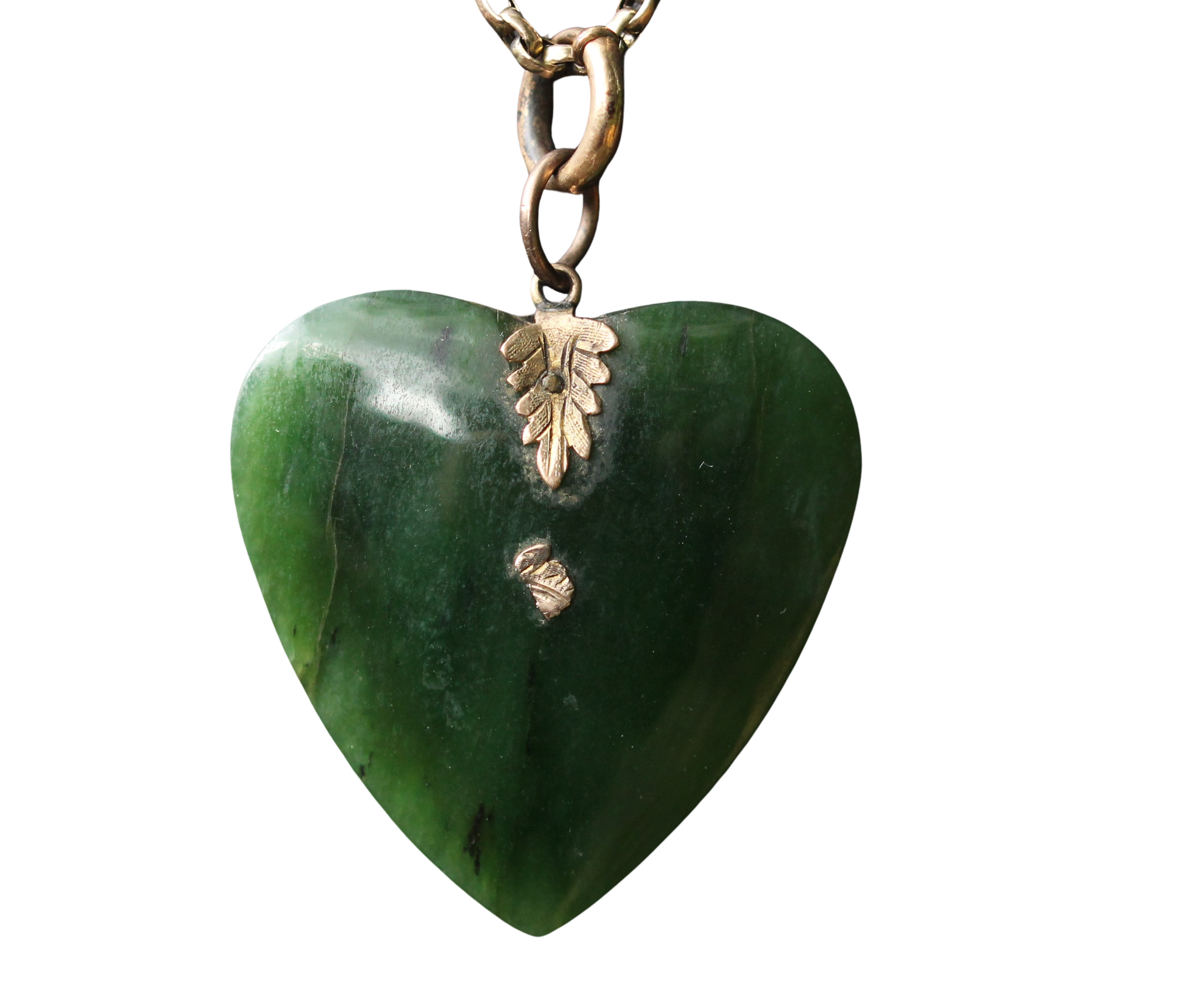
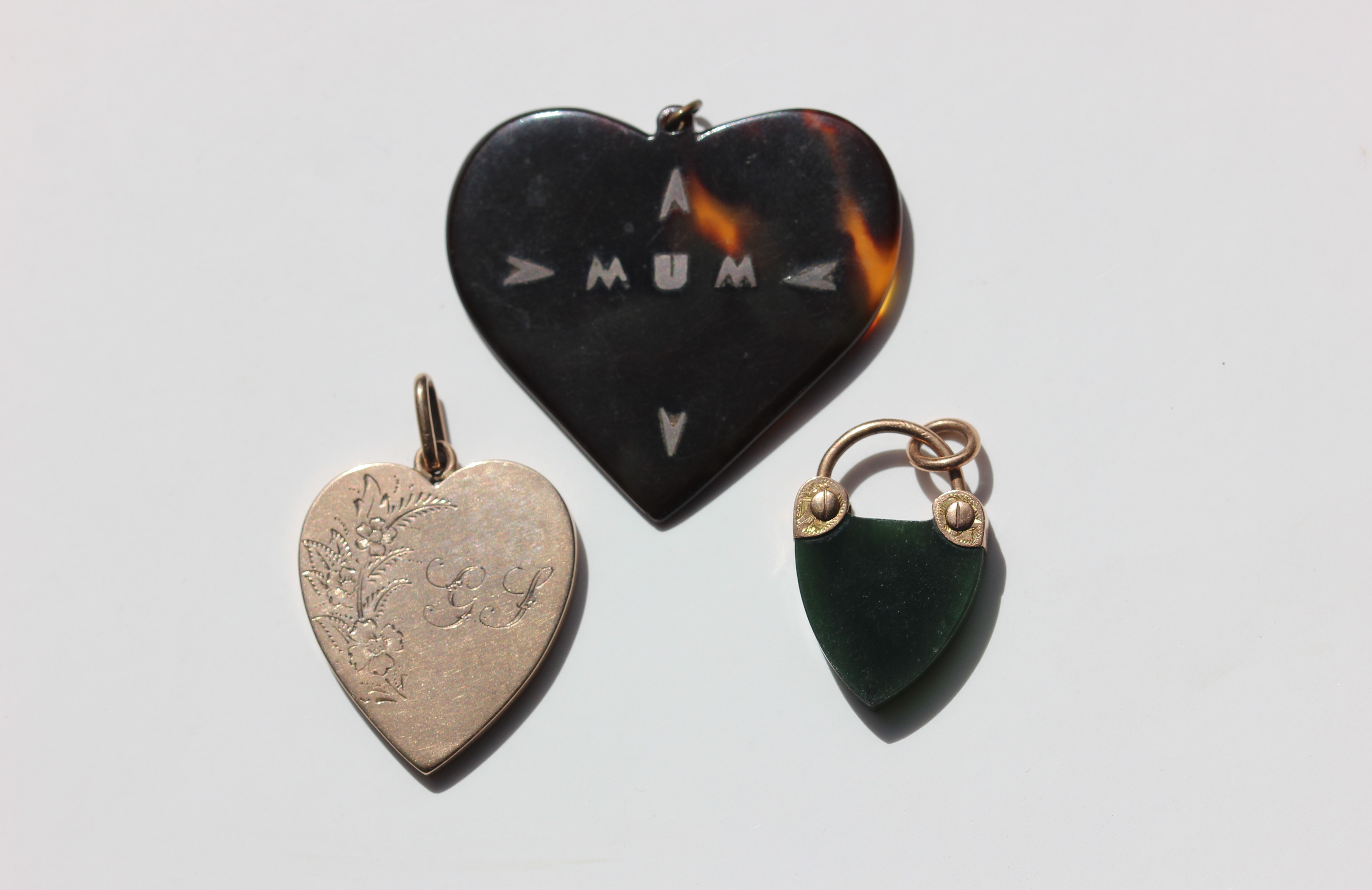
Heart jewellery can take the form of a simple heart pendant, like the jade heart one above, with a small gold leaf decoration. Or like the tortoiseshell heart pendant below with the silver embedded ‘Mum’. It might also be depicted as a padlock, like the jade one below. Often, though, heart jewellery will take the form of a locket.
Lockets can be versatile as they can range in size from tiny, about 1.5cms in length, to large, about 5.5cms long. They can have two inside compartments or just one.
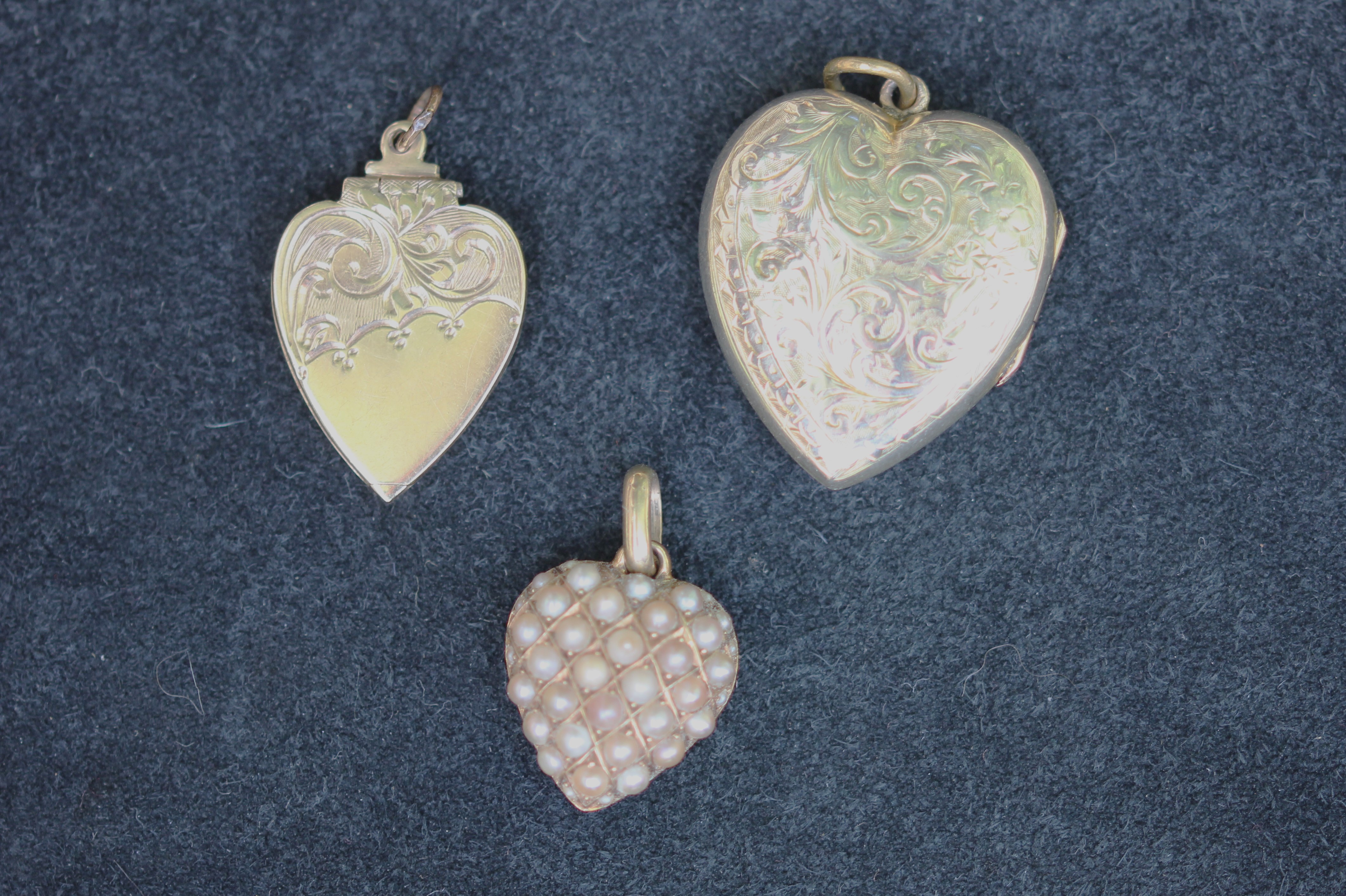
The outsides can be plain, have a simple engraving of flowers and initials or be ornately engraved. Some might have gemstone decorations, others enamelling. All lovely.
 navette jewellery
I’m in love with the jade heart.
LikeLike
I know, it is such a lovely big one too.
LikeLike