
I have used photos of claddagh rings in the last two posts to, first, illustrate the use of amethyst gemstones and, then, Victorian Irish jewellery but they also demonstrate the use of hands in antique jewellery.
The motif of hands has been used in jewellery for a long time. Clasped hands were used for rings by the Romans, usually for romantic purposes or for friendship pledges. ‘Fede’ (Italian for good faith, belief, etc) rings used two clasped hands and were associated with ‘handfasting’ leading to marriage and with both commercial and romantic agreements. The fede ring evolved in the late Middle Ages and Renaissance into the gimmel ring, with the hands on separate but linked rings which locked together. The Claddagh ring was an Irish version of these rings. Their use continued into the 19th century.

Traditionally, single hands were also used as amulets. The hamsa, which is an open hand, palm forward, dates from early Mesopotania, and is a protection against evil. Another version of a hand amulet is the figa, with the thumb of the hand protruding through a clenched fist. The figa, used since early Greek and Roman times, has variously been held to promote fertility, due to it representing female genitalia, as a gesture of contempt, and as a protection against evil.
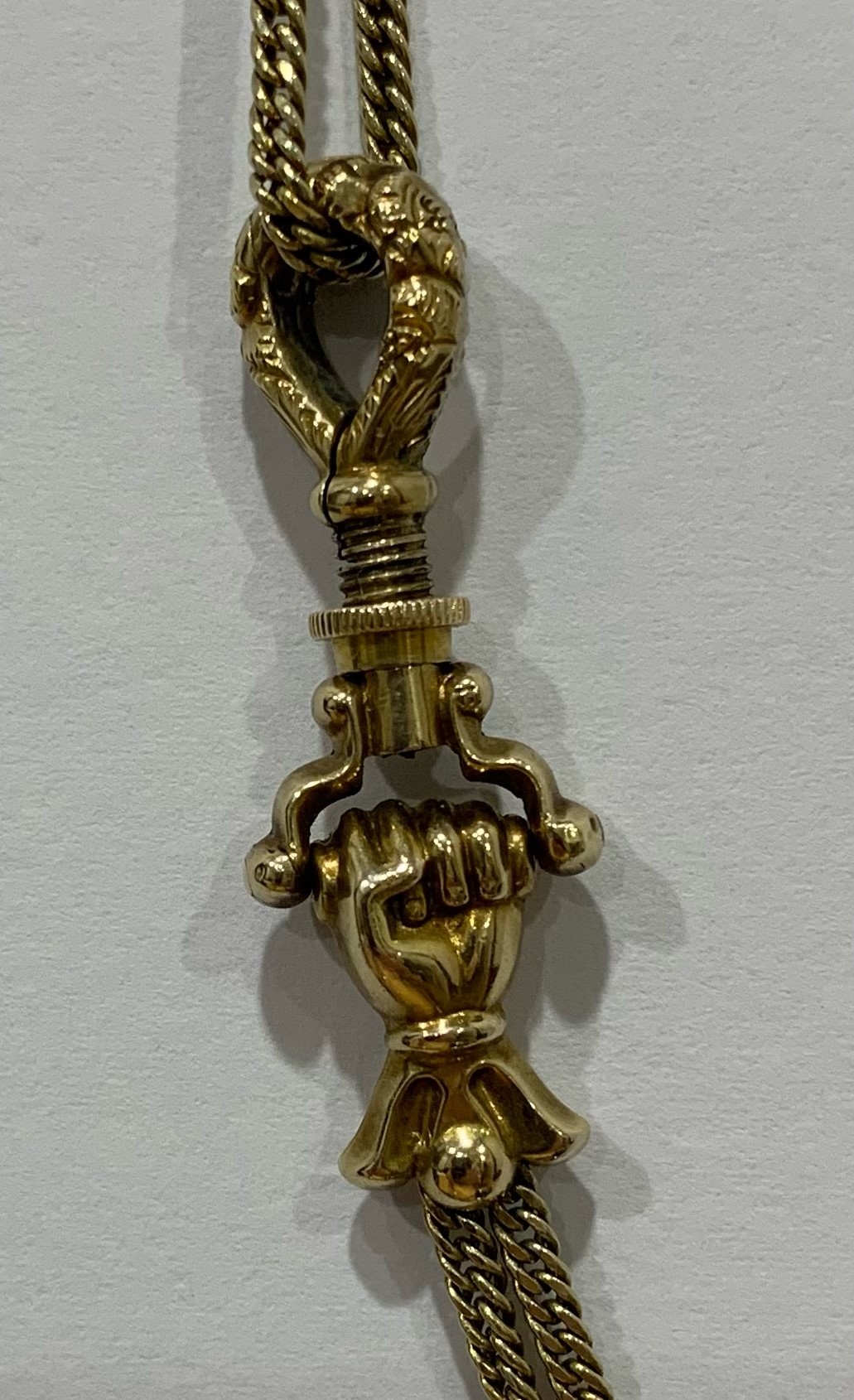
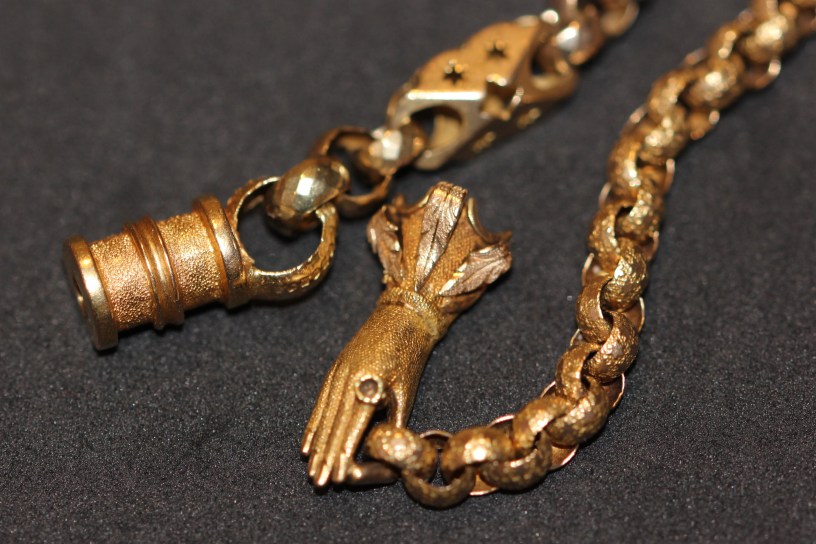
Hands as jewellery became very fashionable again in the late Georgian era, used as necklace clasps in the form of gloved hands. There was generally just a single hand, usually with cuffs, some made of lace, set with gemstones, or with a cuff bangle. The hand might be wearing a ring. The use of such clasps does not appear to have any specific symbolism but rather were just a lovely image.
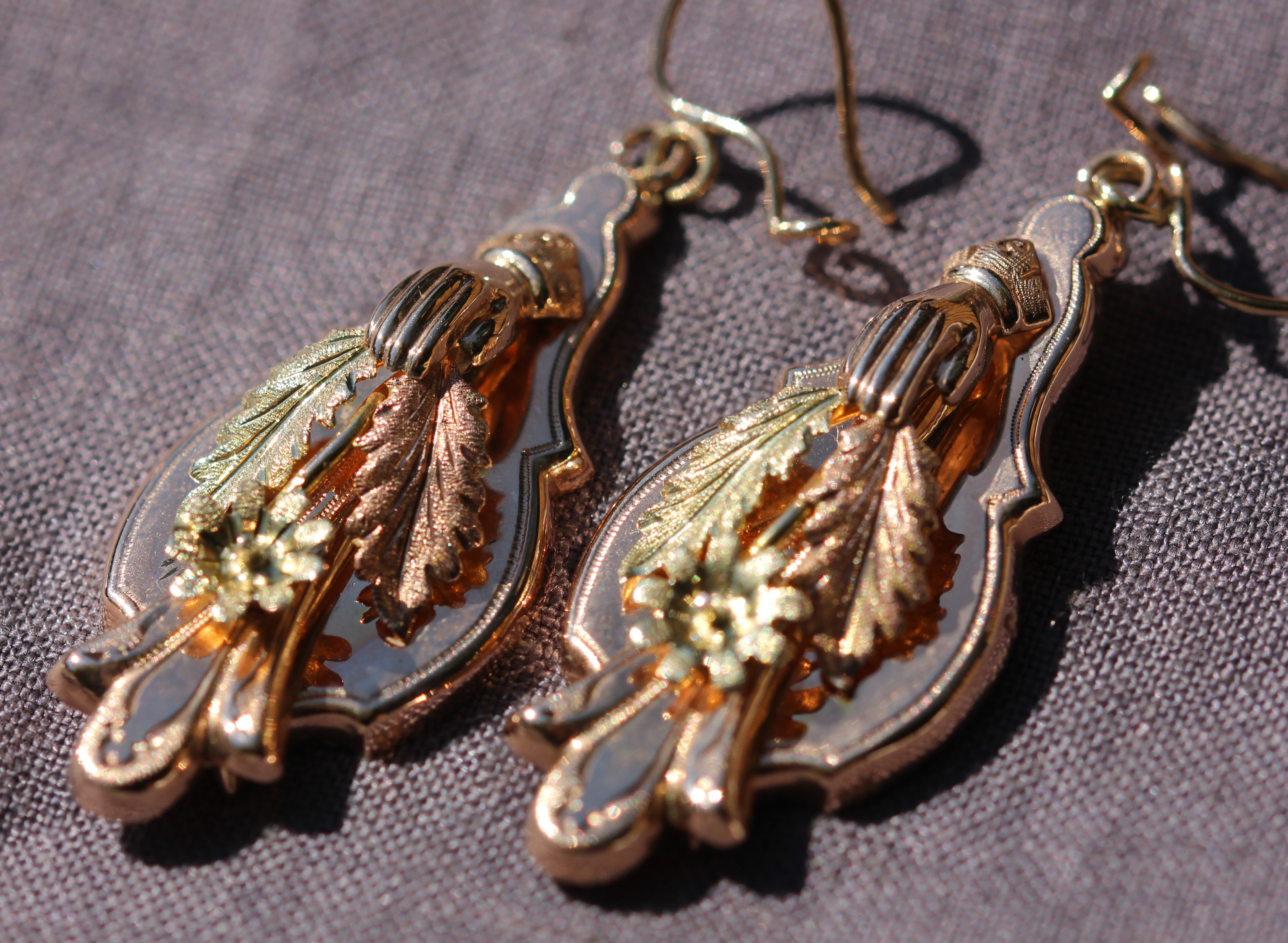
However, in the Victorian period, hands made of Whitby jet and other black materials and holding a wreath were used as mourning jewellery. Gold hands with cuffs, as in the earrings above, or carved from ivory, and holding flowers were probably given as a romantic gift.
 navette jewellery