

March has two birthstones – aquamarines and bloodstones – but I am only going to talk about aquamarines today.
Aquamarines are part of the Beryl family of gemstones which includes emeralds (green), helidor (yellow) and morganite (pink). The aquamarine is transparent and can range in colour from a very light blue to a darker blue, sometimes with touch of green. Aquamarine takes its name from the sea, literally, water of the sea. You can visualise a sea near the water’s edge which is just floating over a sandy seabed. Most aquamarines are very light in colour, particularly small ones. Those stones with the most colour are the most valuable generally.
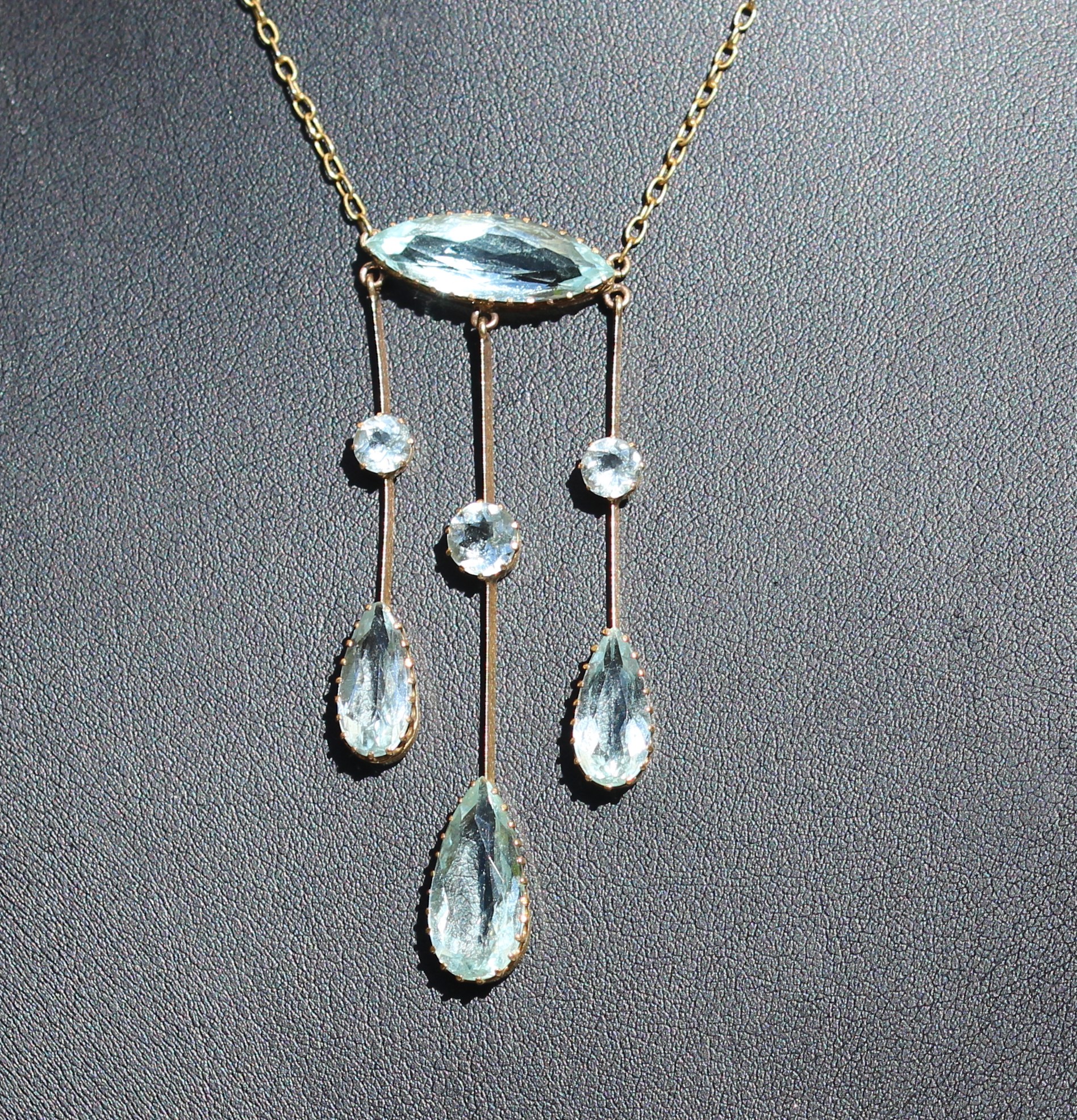
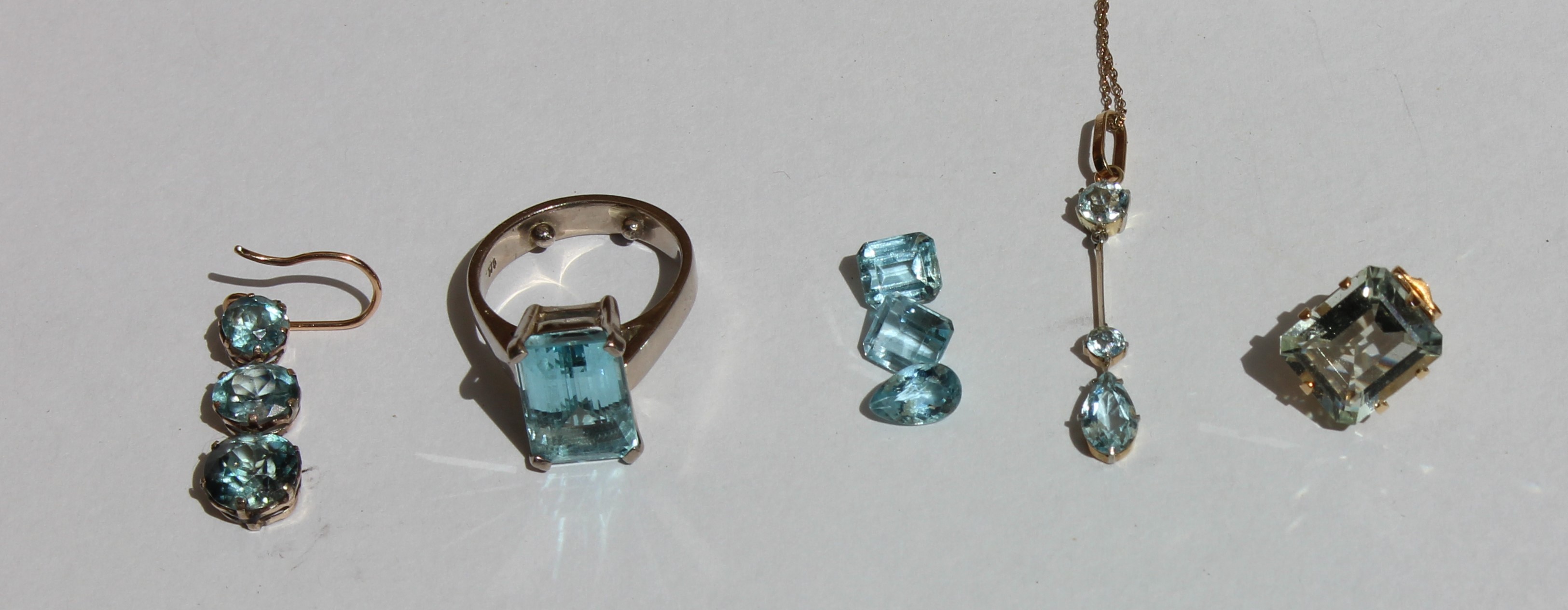
Unlike emeralds which can contain a lot of inclusions, aquamarines are normally eye clean. The stones are also fairly large, often as an attempt to improve the colour saturation. The emerald cut, a rectangular shape with cut off corners, is used a lot for aquamarines, as seen below, but they can also be cut as round, square and pear shaped stones.
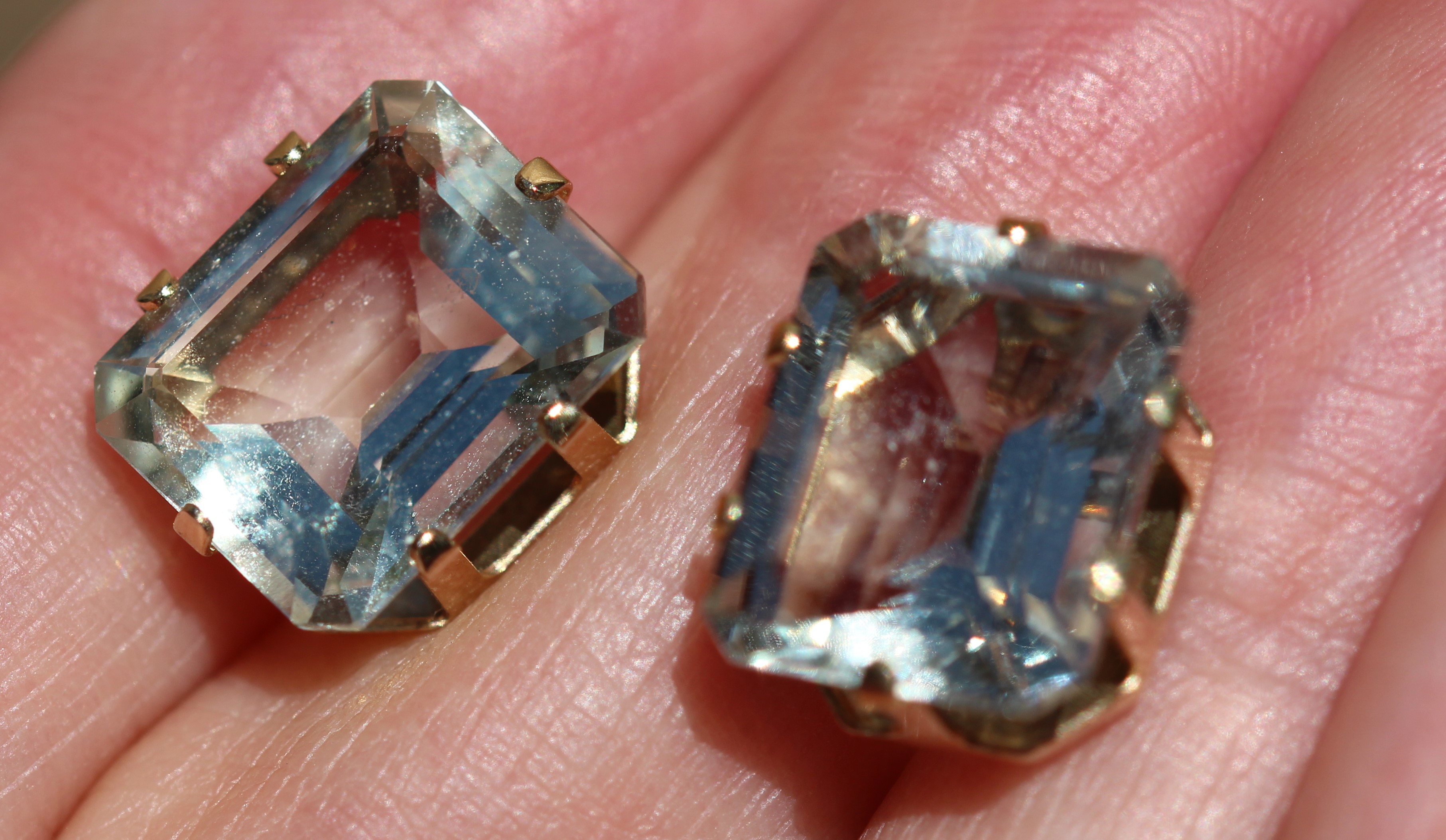
The large aquamarine earrings below are a very faint blue. Aquamarines are pleochroic, that is, they show different colors in different crystal directions. When we look at the earrings, depending on the direction, they are almost colourless and from another angle, they are a very light blue. If they were colourless from both directions, then they would be classed as a colourless beryl, called a goshenite, rather than an aquamarine. Goshenite are named after Goshen in Massachusetts near where one of the first US deposits was found.
 navette jewellery