
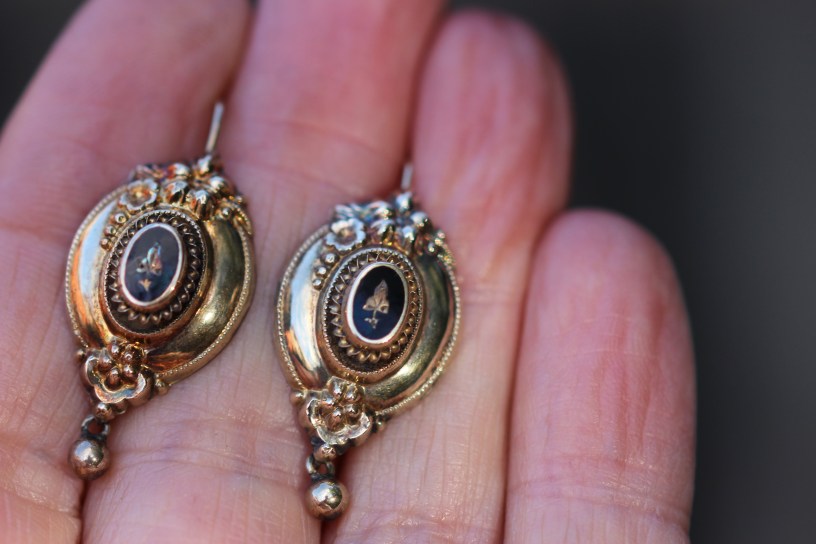
There is quite a lot of antique jewellery which looks like gold and and can test as if it is gold but it is not solid gold or at least not all parts of the piece are gold. It may be a thin layer of gold placed over a metal, usually silver, or it might be hollow, placed over a frame or with a cavity filled with a stabilizer. There are a number of reasons for this, including a shortage of gold at the time due to war or a new target market of middle class buyers who couldn’t afford solid gold pieces.
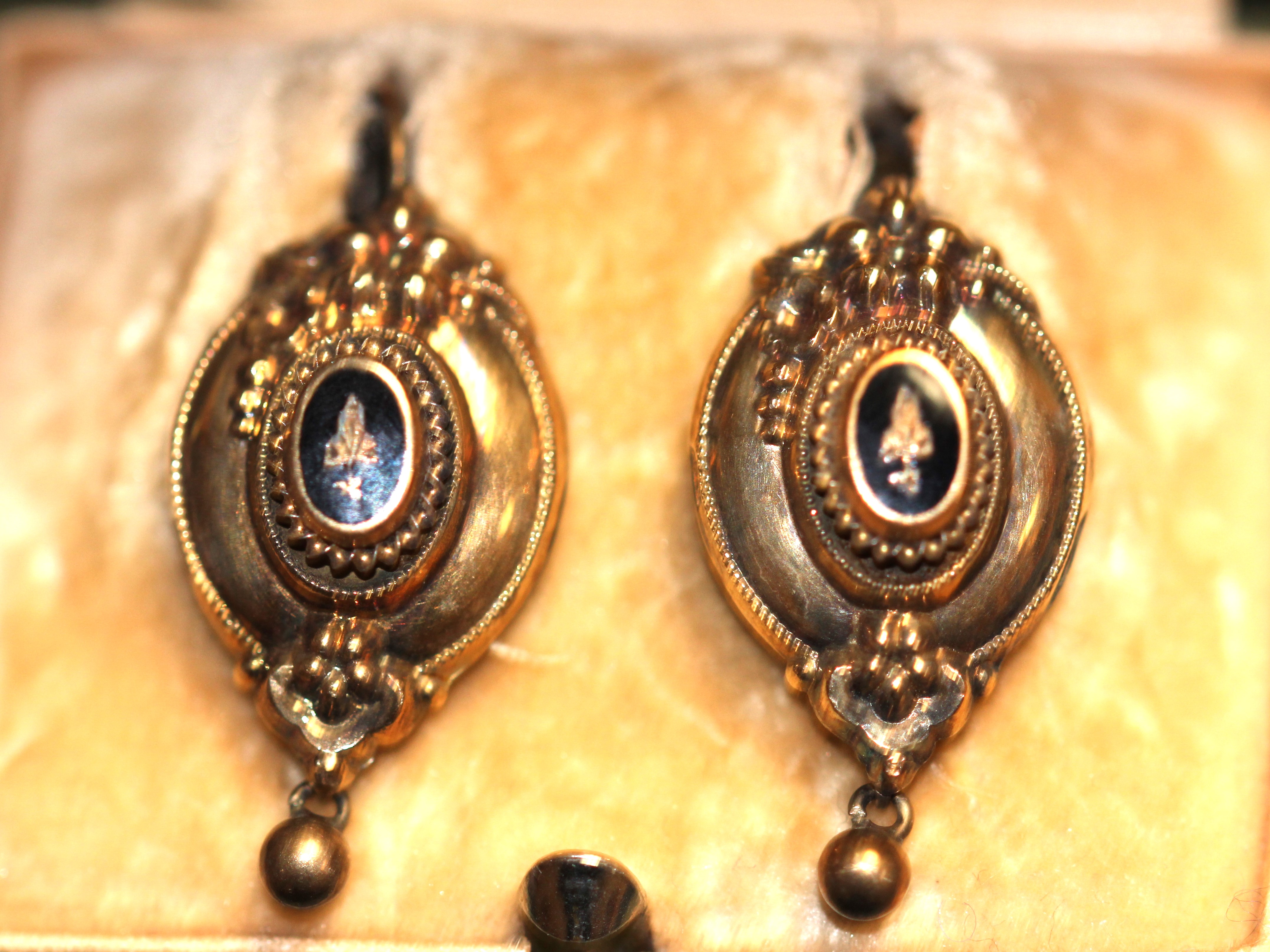
One example of such jewellery is ‘Biedermeier’ foam gold jewellery. The Biedermeier period existed in Germany from 1815 to 1848. Although generally associated with a specific style of furniture, there is also Biedermeier jewellery. This jewellery was often made out of a gold sheet, usually 14ct, pressed into a mould which could be lined with a gold or silver sheet, chased and decorated, and then a filler, like putty or a resin, was inserted into the form to stabilize it and to give it a bit more weight. This jewellery was known as ‘Bauern Schmuck’, which translates as ‘farmers’ jewellery’ or ‘Schaumgold’ which is hollow gold or, literally, gold foam.

The jewellery usually had swirls and flower decorations and looks quite ornate. Onyx was often used as a central feature with gold flower inserts. The earrings at the top of the post, above and below are a typical example of Biedermeier foam gold jewellery.
 navette jewellery