
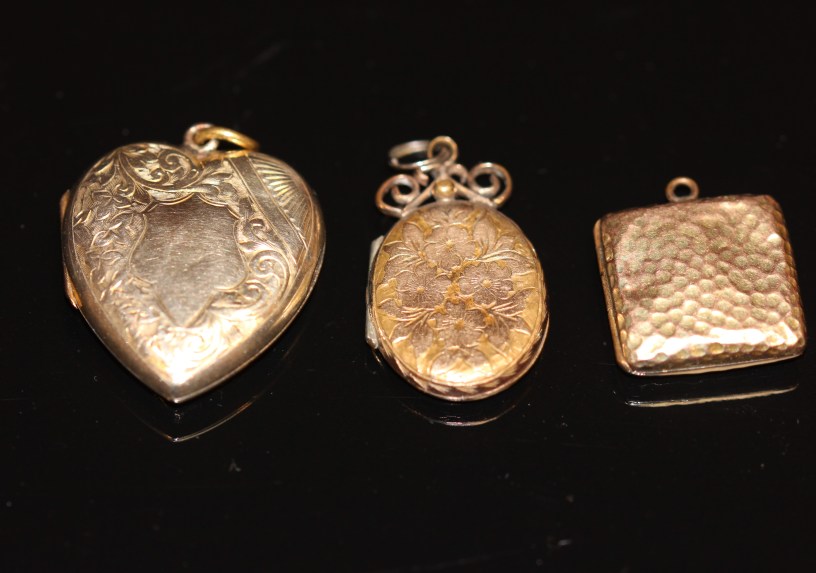
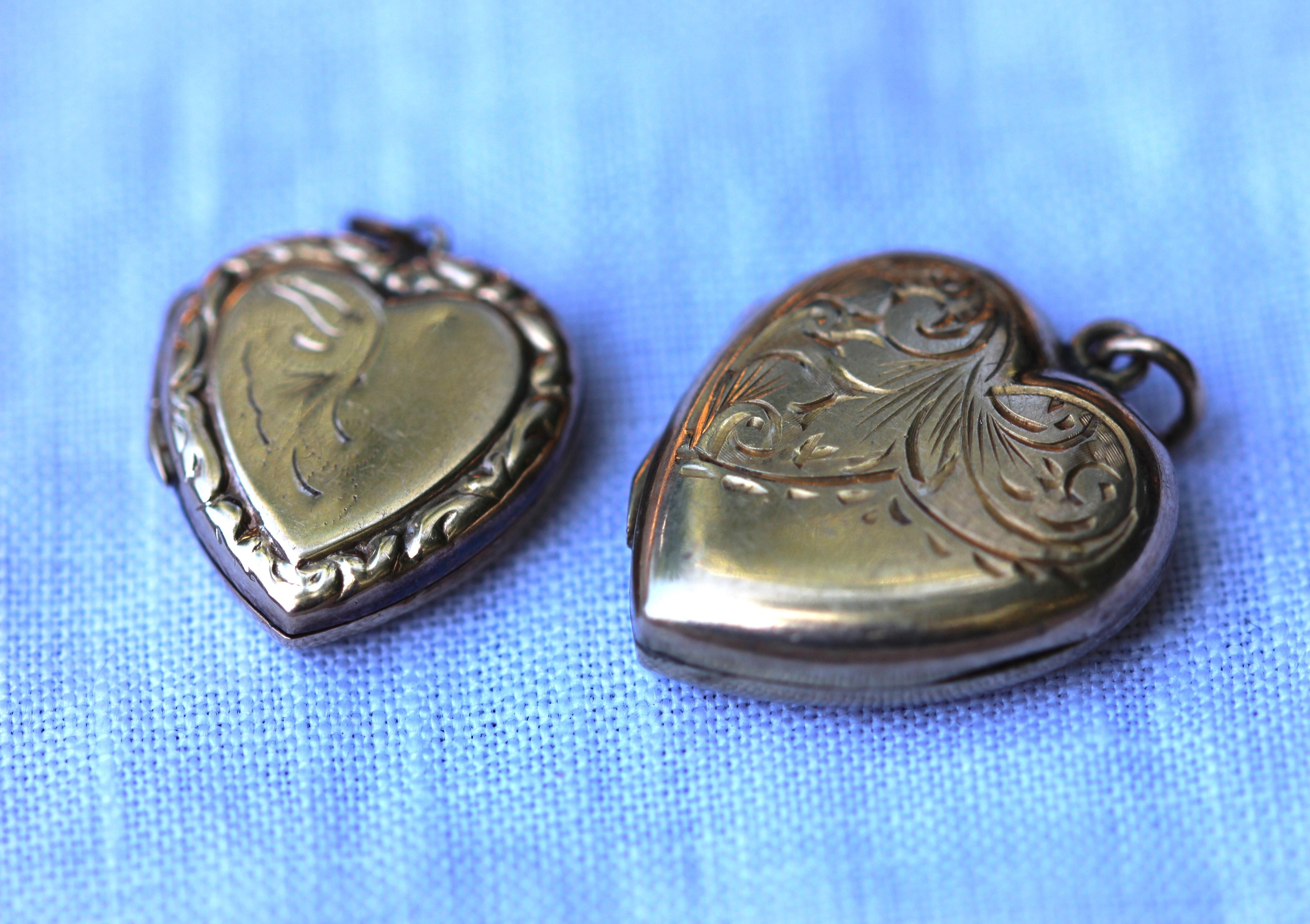
Continuing with last week’s theme that a lot of antique gold jewellery is not all gold, I wanted to talk about front and back lockets. Lockets are quite difficult items to make because of the need for a hinge and clasp, internal rims and removable frames, and a fixed bale, plus the need to be able to decorate the front and often the back of the locket. To reduce the amount of gold that is needed to make a solid gold piece, which would lessen the cost of the piece, lockets that had gold fronts and backs over a metal frame, rims and hinges were invented. They were known as front and back lockets.
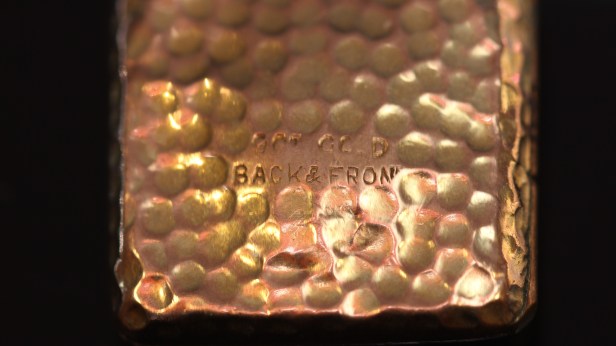
The lockets usually were made of 9ct gold and most were stamped ‘front and back 9ct’, ‘9CT Back & Front’, ‘9CT BK & FT’ or something similar.
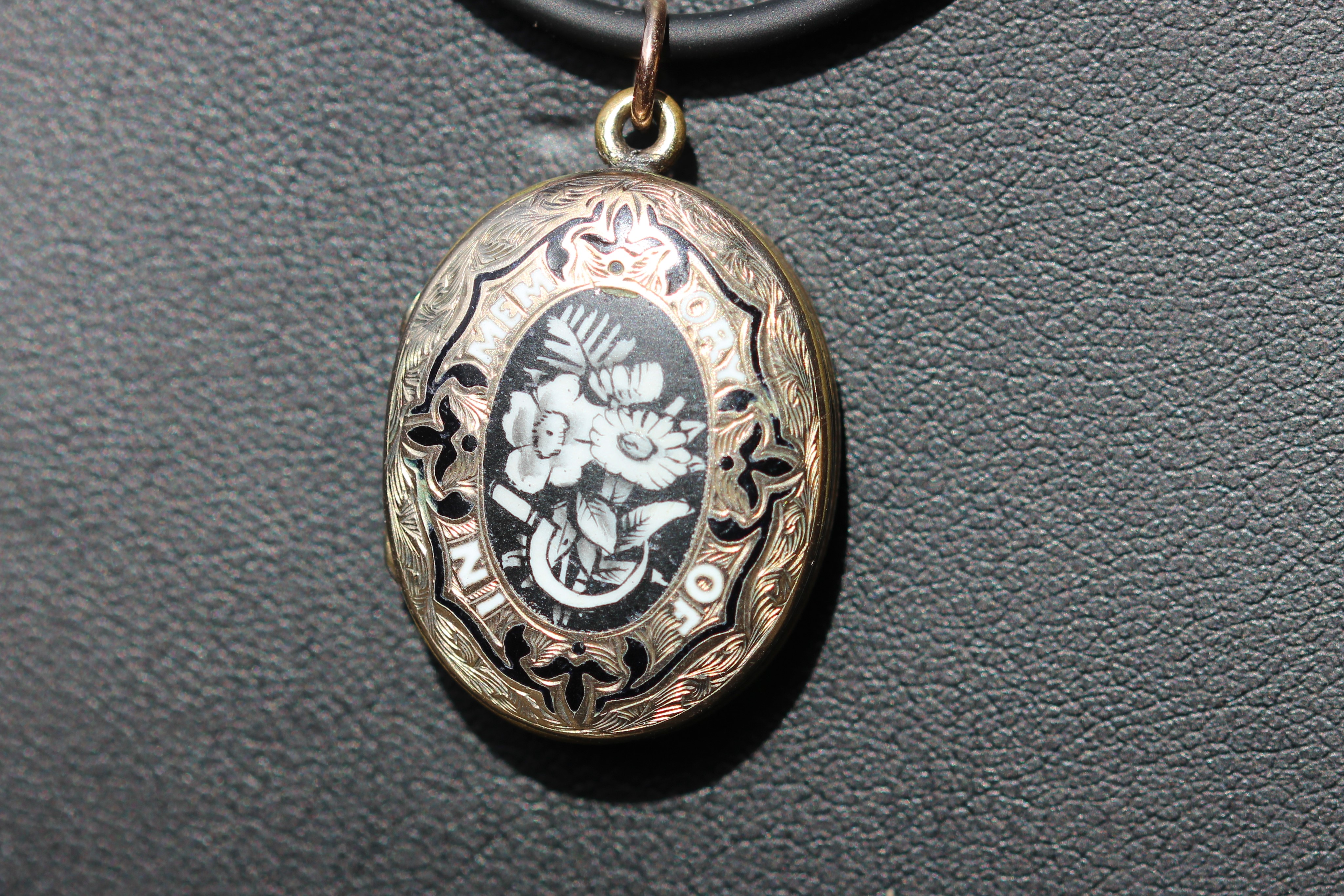
Not all lockets were stamped this way. The lovely Memento Mori locket below with an enamel decorated front and engraved back, has panels are made of 9ct rose gold, while the inside frame and hinge is metal.
These lockets began to appear in the late Victorian era and were common during the Edwardian period.
 navette jewellery