
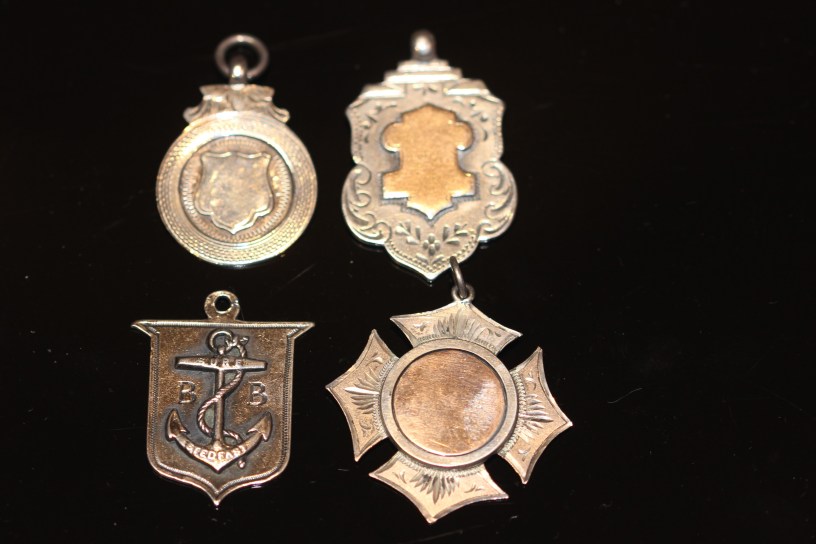
I have written previously about the attachments to the watch or vest chains which were called fobs. These little fobs took a number of forms, many purely decorative, although some fobs were seals, used to authenticate documents and seal letters and others were watch keys. Others fobs contained the insignia of a regiment, a sporting club and some other allegiance and some represented sporting achievements with inscriptions explaining who they were given to and why. The ones I want to look at today are silver medallions. I find these old medallions so interesting because of the stories and history associated with them.
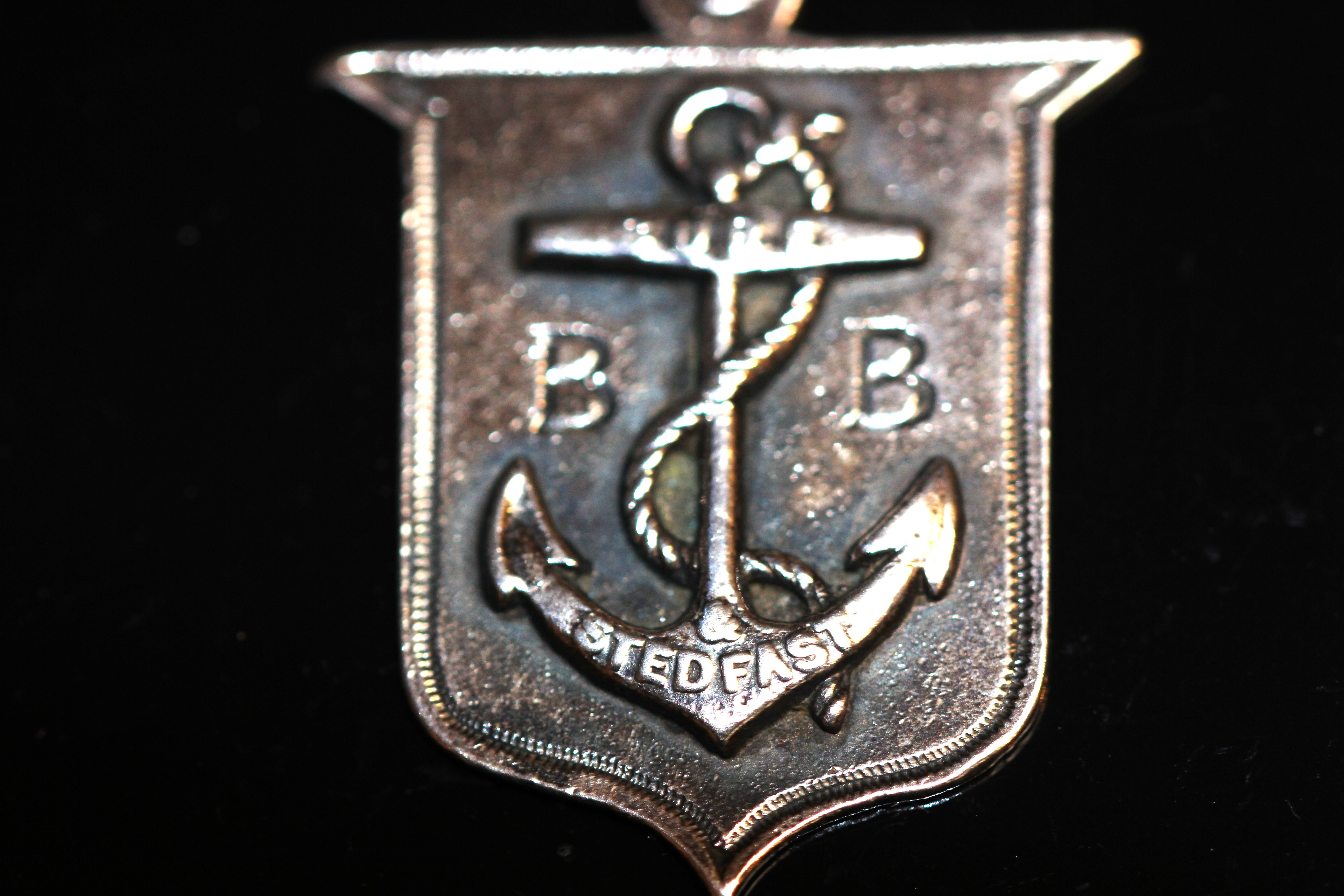
The first medallion is sterling silver, hallmarked JHS, Glasgow, 1897, and is associated with the Boys’ Brigade which was founded in Glasgow by William Alexander Smith in 1883. It was a voluntary uniformed youth organisation with a dual purpose of teaching boys military drill and religion. It was established 20 years before the Boy Scouts. Its membership grew rapidly from its inception, with 206 companies created between 1883 and 1888 and it spread to other countries in the Commonwealth. The Brigade’s badge is an anchor and their motto is ‘Sure and Stedfast’, taken from Hebrew 6:19 in the Bible, “Which hope we have as an anchor of the soul, both sure and stedfast…”. The word ‘steadfast’ replaced ‘stedfast’ later in some countries. This medallion from 1897 is still using the original spelling. There is no inscription on the back of the medallion.
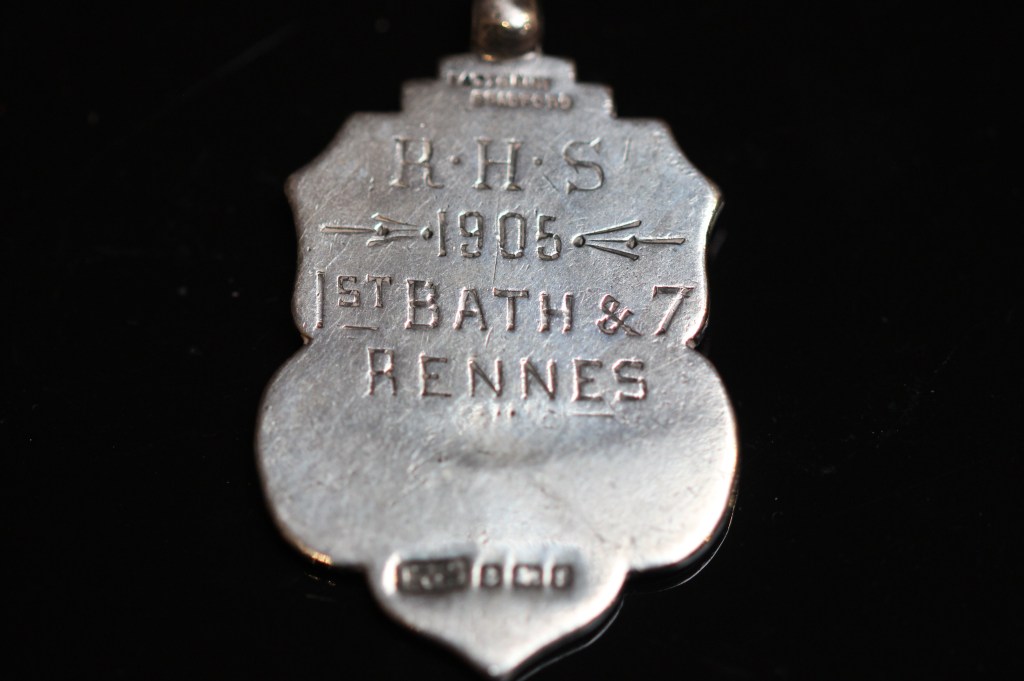
It is the back of the second medallion (top right in the photo at the top of the post) which is the most interesting part. It is hallmarked Fattorini & Sons Ltd, Birmingham, 1905, and is inscribed ‘R.H.S 1905 1st Bath & 7 Rennes’. I have no idea what this means. Usually, these medals are awarded for getting a place in a race or some competition but I haven’t been able to locate what is meant by Bath & Rennes.

The third medallion (the round one in the photo at the top of the post) is more the typical medallion. It is hallmarked William Adams Ltd, Birmingham, 1938 and the inscription reads ‘Northex T.T. Knockout F.G. Carney 1946-47’. I am assuming this is a table tennis knockout match and I gather that Northex refers to the North.
References:
J Springhall Sure and Stedfast A History of the Boys’ Brigade 1883-1983 (1983) p39
 navette jewellery