
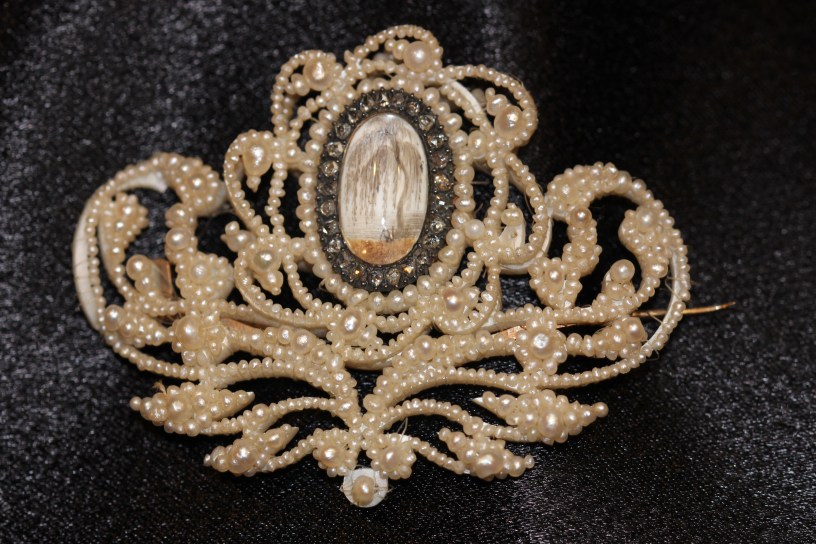
I find mourning jewellery fascinating and have collected quite a few pieces. What interests me a lot is that there is such wide range from large ornate pieces like the magnificent seed pearl brooch at the top of the post to the tiny little Georgian fichu pins, designed to secure triangular pieces of lace or other lightweight material worn around a woman’s shoulders or neckline.

One aspect that can be found in some mourning jewellery from the 1770s to the early Victorian period was the inclusion of little miniature scenes. These little miniatures were of romantic scenes with lots of symbolism, showing obelisks with a mourning figure draped over them, urns, plinths, as well as weeping willows, anchors, and drooping foliage. A bereaved person could pick a pattern from a series of samples and also ask for an inscription, perhaps showing the name of the dead person and the date of death or their age, to be included onto the urn or plinth.

Sepia paint was used to detail the objects in the little scenes. This paint was a result of soaking or finely chopping up human hair so that it was dissolved or powdered and mixing it with brown ink derived from the dried ink sacs of cuttlefish (named Sepia). This little sepia mourning ring has an engraving around the band with the date 1770.

 navette jewellery