
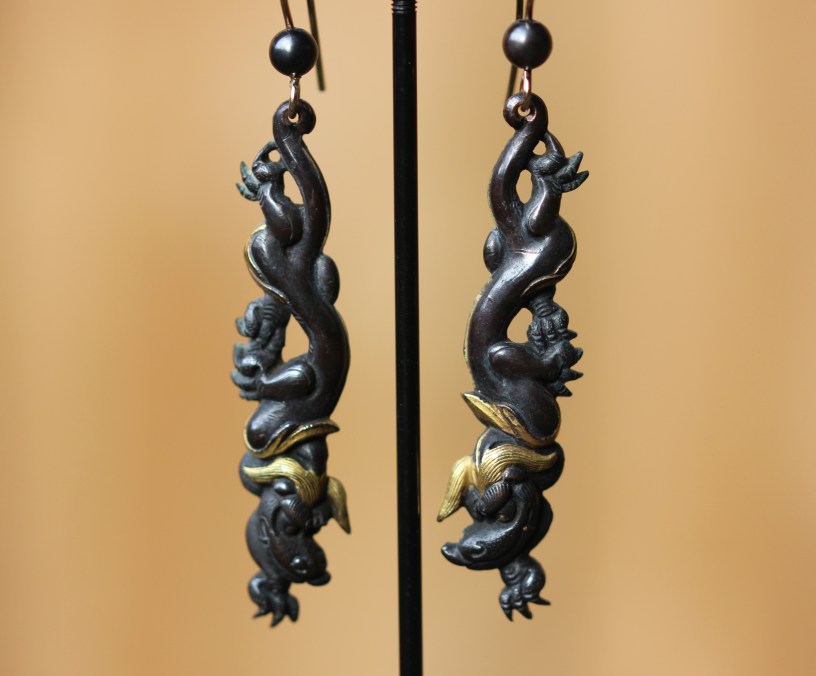
I usually focus on English and European antique jewellery but I recently came across some striking antique Shakudo earrings and wanted to learn more about them. First of all, what does the name ‘shakudo’ mean? Shakudo is an alloy of gold and copper which, when treated, can become black or dark indigo in colour. These Japanese alloys are called irogane,’coloured metals’. This treated alloy contrasts with added gold and silver decorations and those made of other alloys.
Shakudo was used to create decorations and fittings, known as tosuga, for Japanese swords used by the Samuarai class, particularly tsuba, menuki and kashira. Tsuba was a sword guard, mounted between the sword blade and the grip. They are round with two openings. Menuki were small decorations attached to either side of the sword hilt. Kashira were oval caps at the top of the sword handle. A creative industry of metalworkers was devoted to producing tosuga and other small items, with the peak from the early 17th century to 1876. In 1876 though, an edict abolished the samurai and only military and police officers could wear swords. Many swords had to be discarded or converted to military styles and so the distinctive decorations on them were removed, often to be turned into jewellery.
After 1876, the craftsmen continued to produce decorative art but created small boxes, fan decorations and small ornaments instead.
The decorative subjects on the sword fittings were beautifully created and could be dragons, lions, leaves and trees, flowers, insects and clouds.
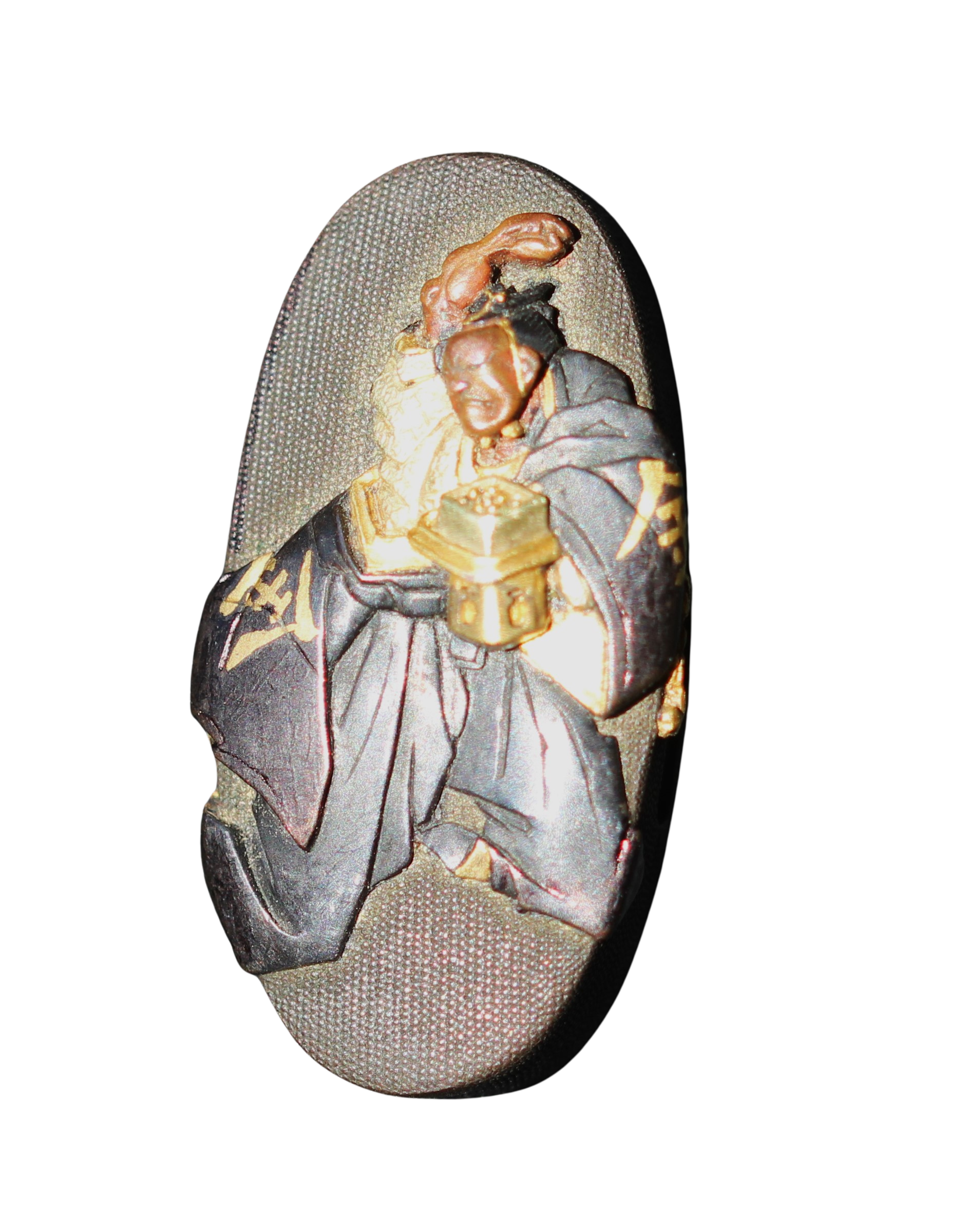
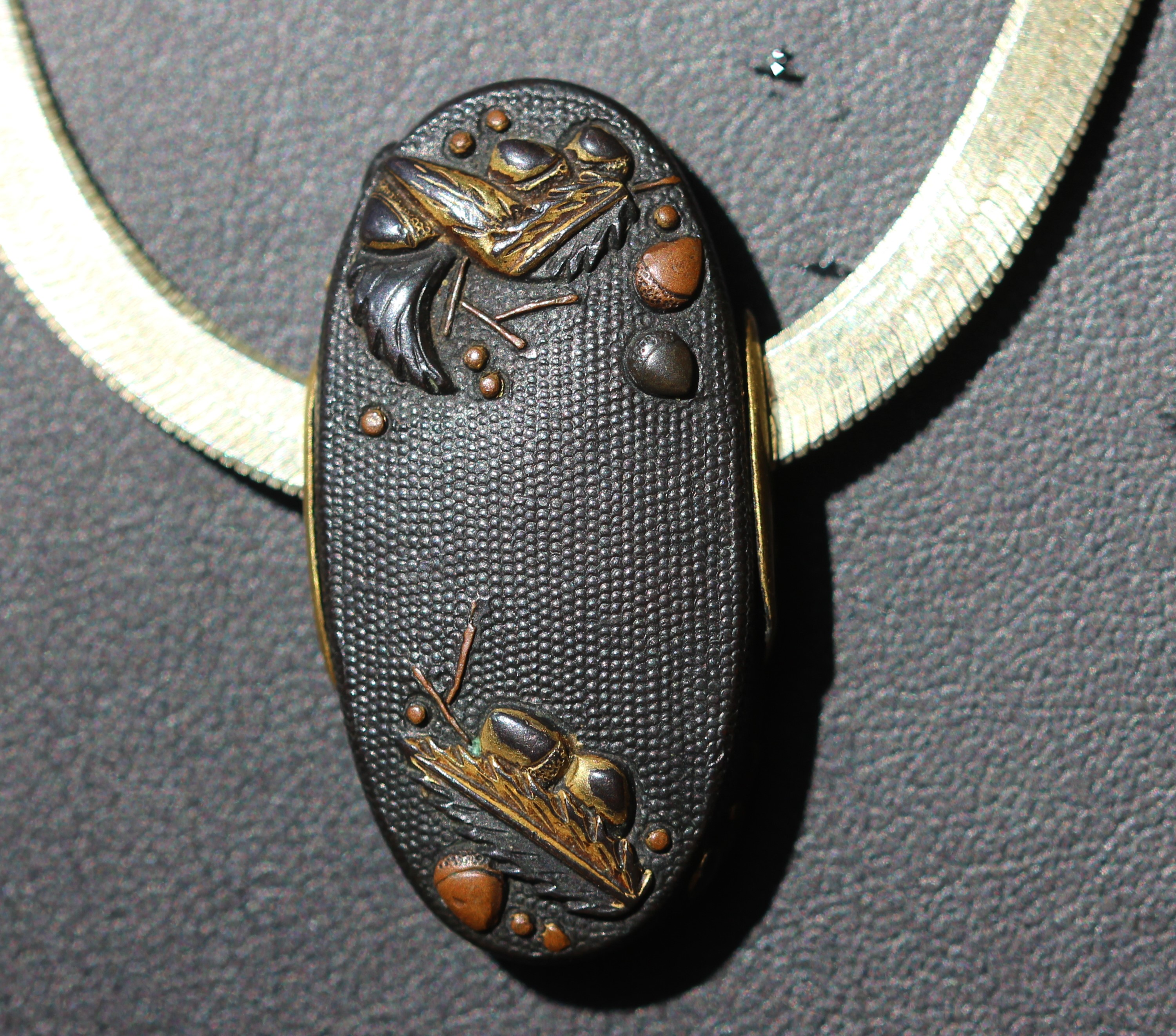
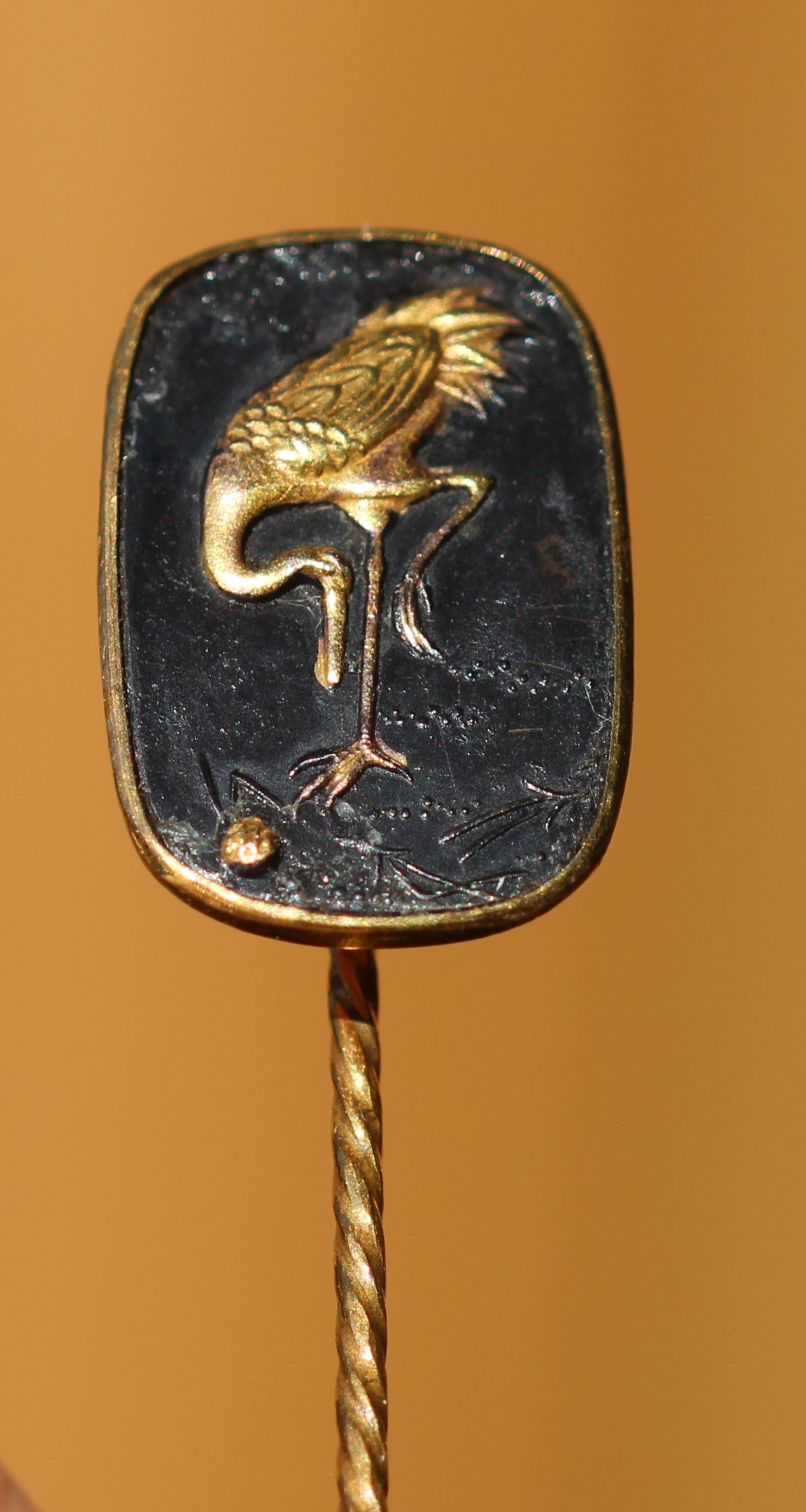
The subject matter of just this small collection of pieces varies a lot. The earrings in the photo at the top of the story have long sinuous dragons running down their length, with gold decorations around the head and some of the body. The small pendant has beetles, leaves and nuts, the stick pin has a gold heron or similar water bird about to eat a small gold object, while the brooch above has the beautifully decorated figure of a man in ornate robes.
 navette jewellery