
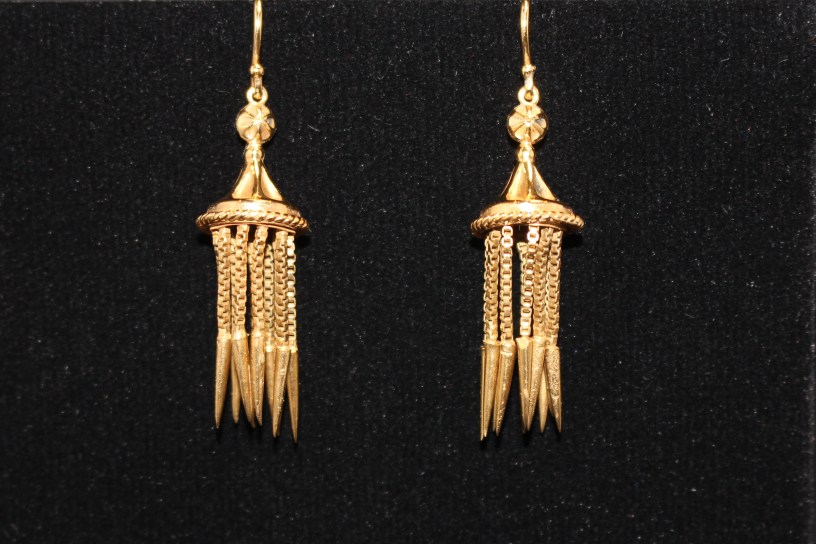
Tassels and fringes often decorate antique jewellery. They have been found on jewellery, mainly earrings and necklaces, from 4th century BC Asia Minor and artwork exists showing Egyptians and Romans wearing tassels. The Etruscans wore fringed earrings.
So what do the terms mean? What is a tassel? It is an ornament comprised of cords, metal chains, beads, or other strands hanging from a roundish knob or cap. Fringes are usually gold, silver or beads and are often graduated rows with a pointed drop. They can also circle a piece. It is this latter point that leads to some overlap with tassels as they, too, can make up a circle. Sometimes, it can be difficult to state whether the attachment is a fringe or a tassel and you can see the terms used interchangeably on occasions.

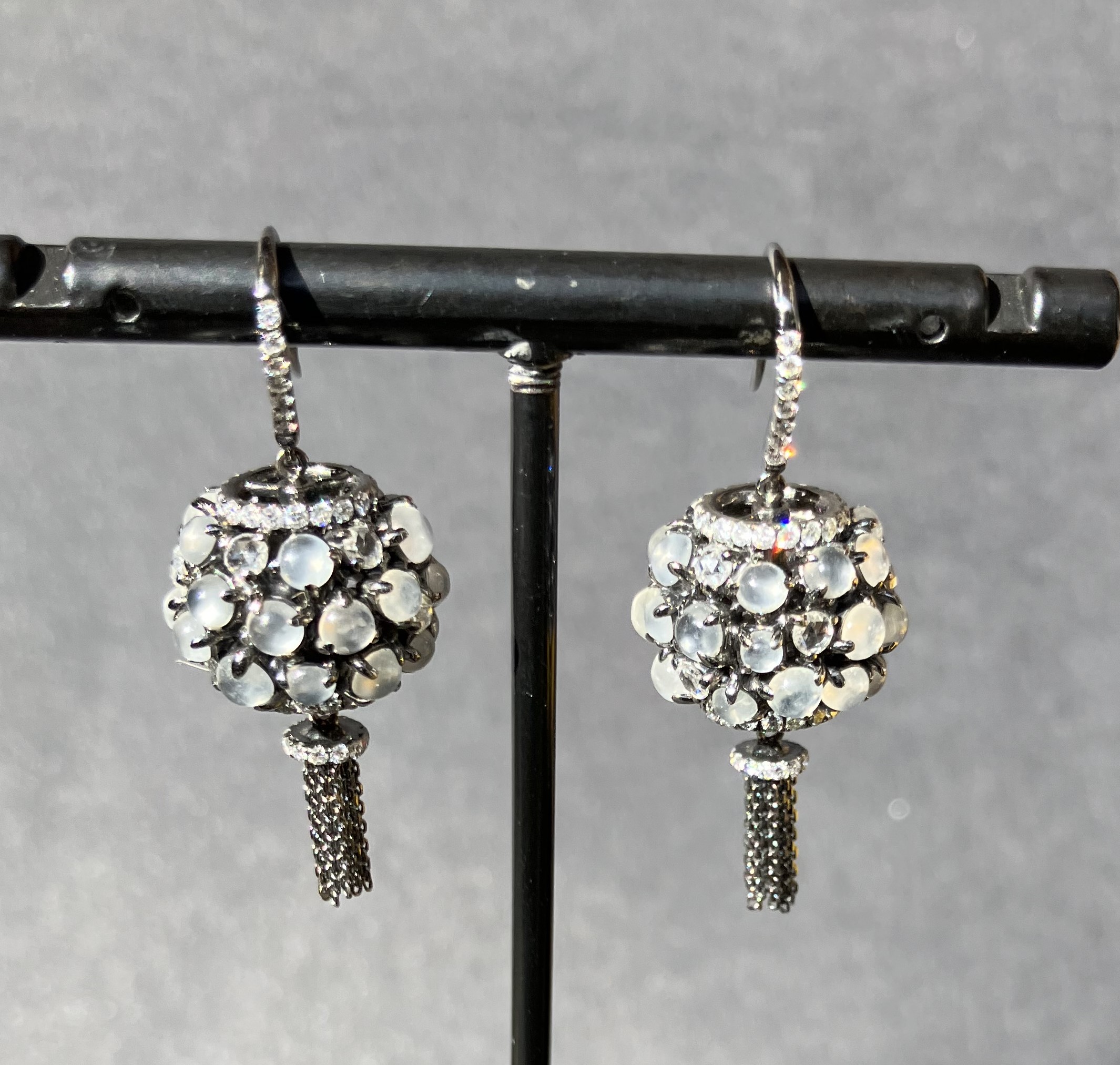
Jewellery with tassels and fringes and various dangly bits are lovely to wear; they swing on the ear and are quite carefree. They also add length to pieces.
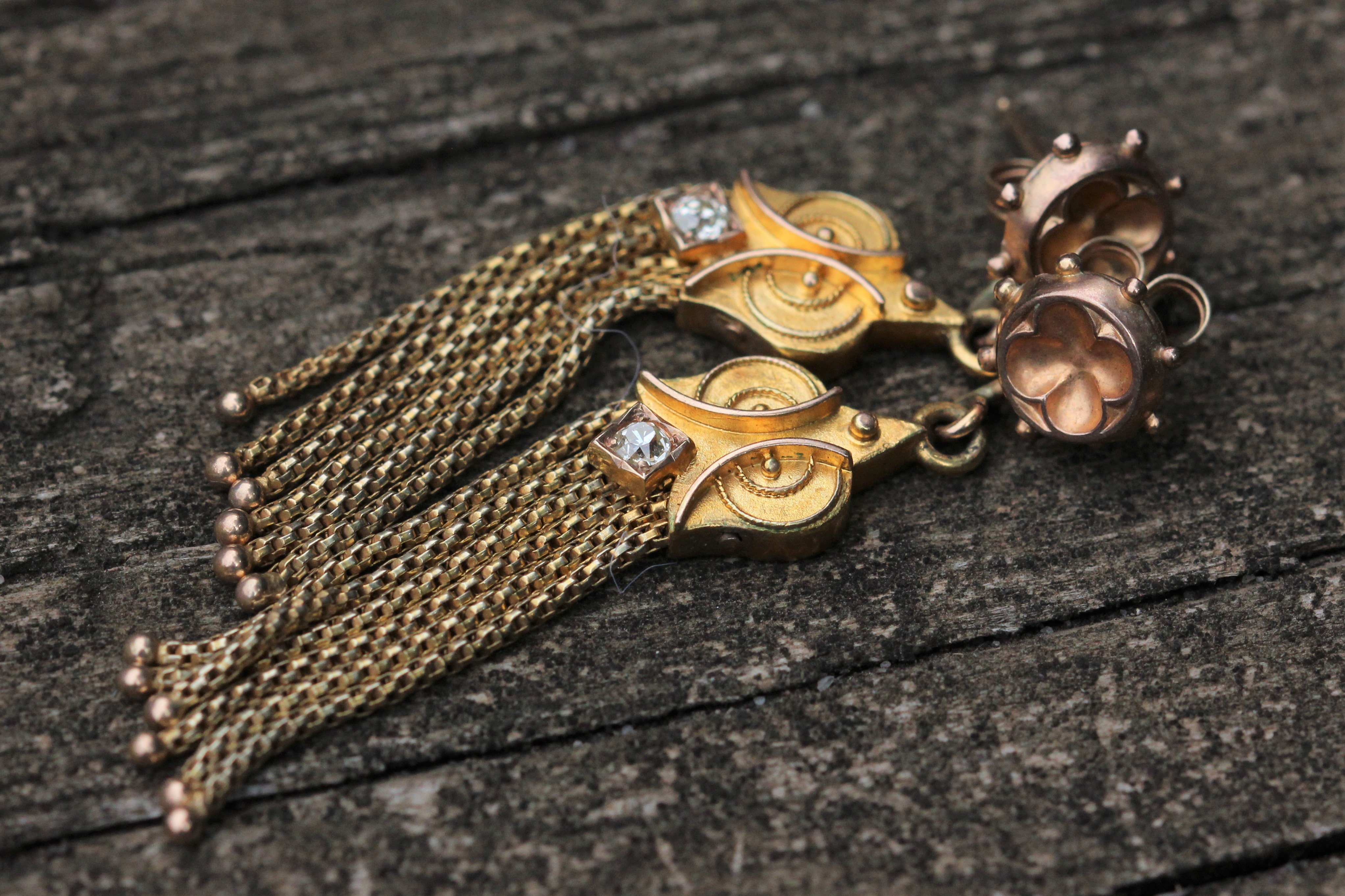
Tassels have been used on jewellery for centuries but they were very popular during the Georgian period when chatelaines were first worn. Later, in the Victorian period, Albert chains for men and the more decorative Albertina chains for women were used to hold watches and fobs and other necessities, with tassels attached. Brooches with tassels spanned the entire 19th century. Earrings, pendant and brooches with fringes were extremely popular in the 1870s in England.

The Edwardian period saw tassels being added to necklaces with swags, bows and garlands, and pearl tassel earrings were popular. Sautoirs, which were long ropes of pearls or beads finished with a tassel or a pendant, began to be worn, and were to continue well into the Art Deco period, as slim line dresses with dropped waistlines became fashionable.
 navette jewellery