
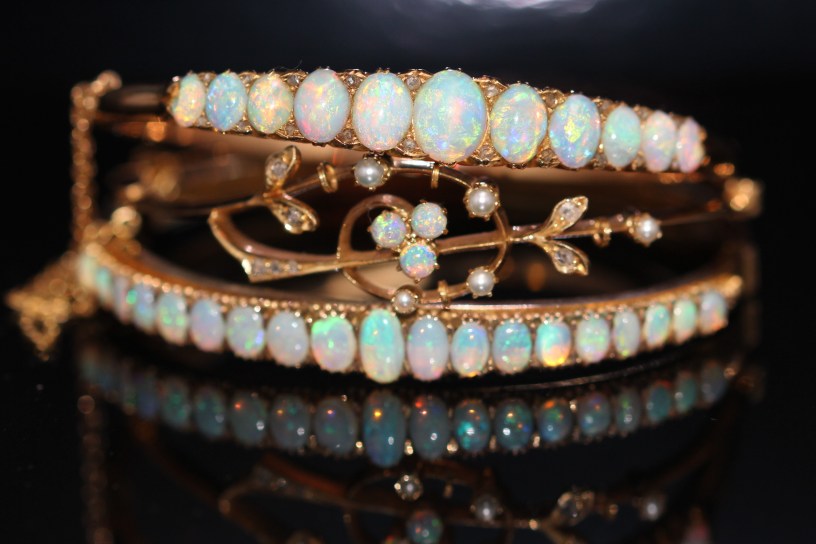
There are two birthstones for those born in October – opals and tourmalines. The opal is Australia’s national gemstone. There are two categories of opal – precious opal and common opal. Precious opal will show ‘play of colour’ and includes black opal, white opal, crystal opal, boulder opal and matrix opal. ‘Play of colour’ is a display of iridescent colours – blue, green, yellow and/or red – against a white, transparent/translucent or dark background which change depending on the direction you hold the gemstone. It is the background that describes and defines the type of opal. Black opal has a black, brown or dark gray background, white opal has a white or cream background and crystal opal is translucent.
Ancient Romans used a lot of opals in their jewellery and the name is derived from the Latin word ‘opalus’ which translates as ‘precious stone’. In antique jewellery, the most common precious opals found are white or crystal opals as black opals from Australia were not commercially mined until 1903. White opals have a white or creamy background with play of colour. A crystal or water opal refers to any kind of opal which has a transparent, translucent, or semi-translucent body. The bangles on the photo at the top of the post contain white opals.
The common opal does not display ‘play of colour’. They can be found in lovely orange, yellow or red translucent stones, mainly from Mexico, as well as white and blue colours.
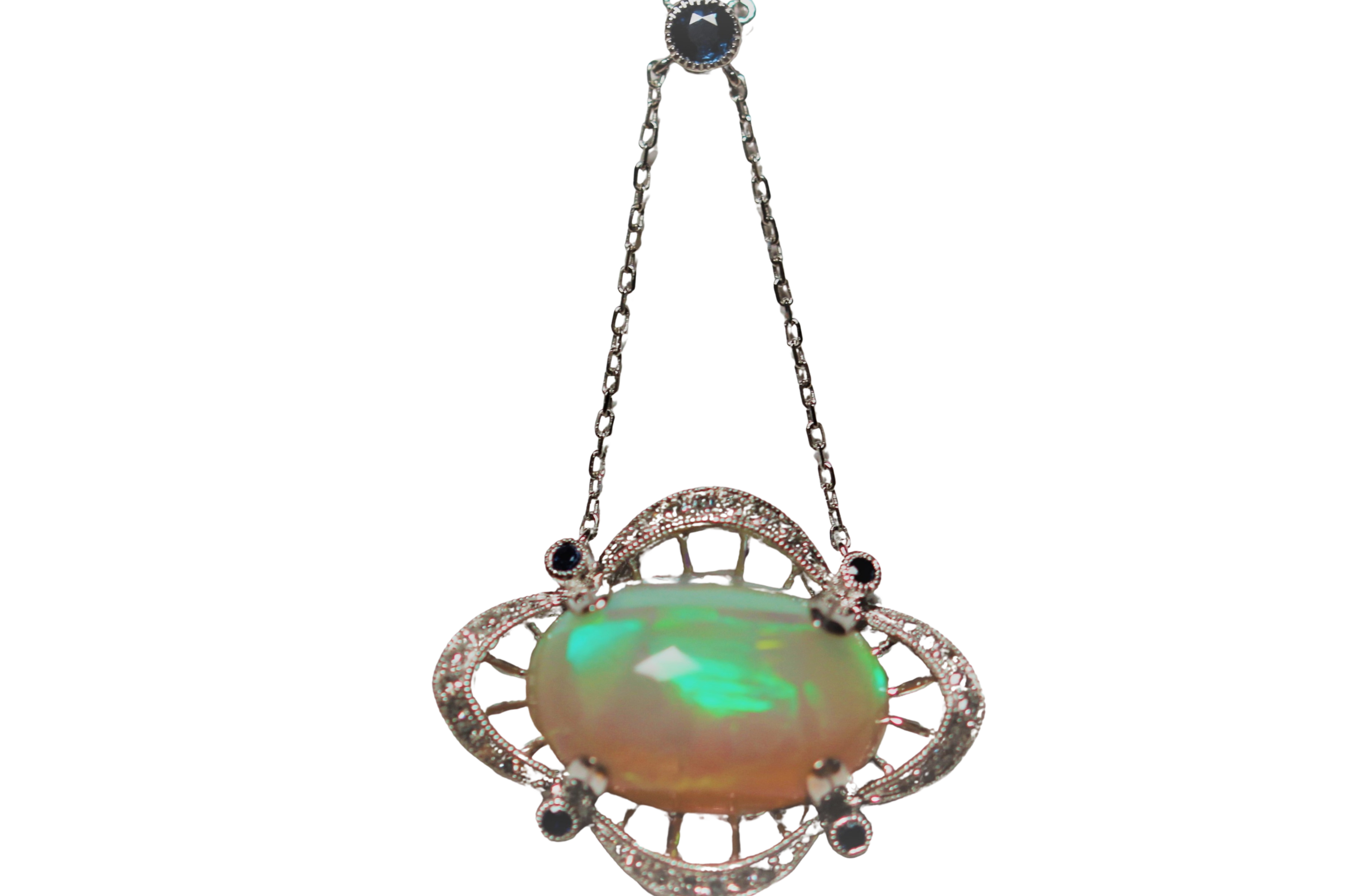
A relatively new find are Ethiopian opals (Welo opals) which have been mined with orange, yellow or reddish body colour like a fire opal but also with the characteristics of precious opal with lovely play-of-color. I think the cabochon opal in the pendant above is an Ethiopian opal.
The tourmaline was only included as an American October birthstone in 1952 and the Jewelry America said it should be a pink tourmaline. However, tourmalines come in a large range of colours and so most birthstone lists just specify a tourmaline. You can find tourmalines in greens, pinks, yellows, browns, blues, black, and lilac, to the red version called rubellite and the paraiba, a vivid blue to green stone.
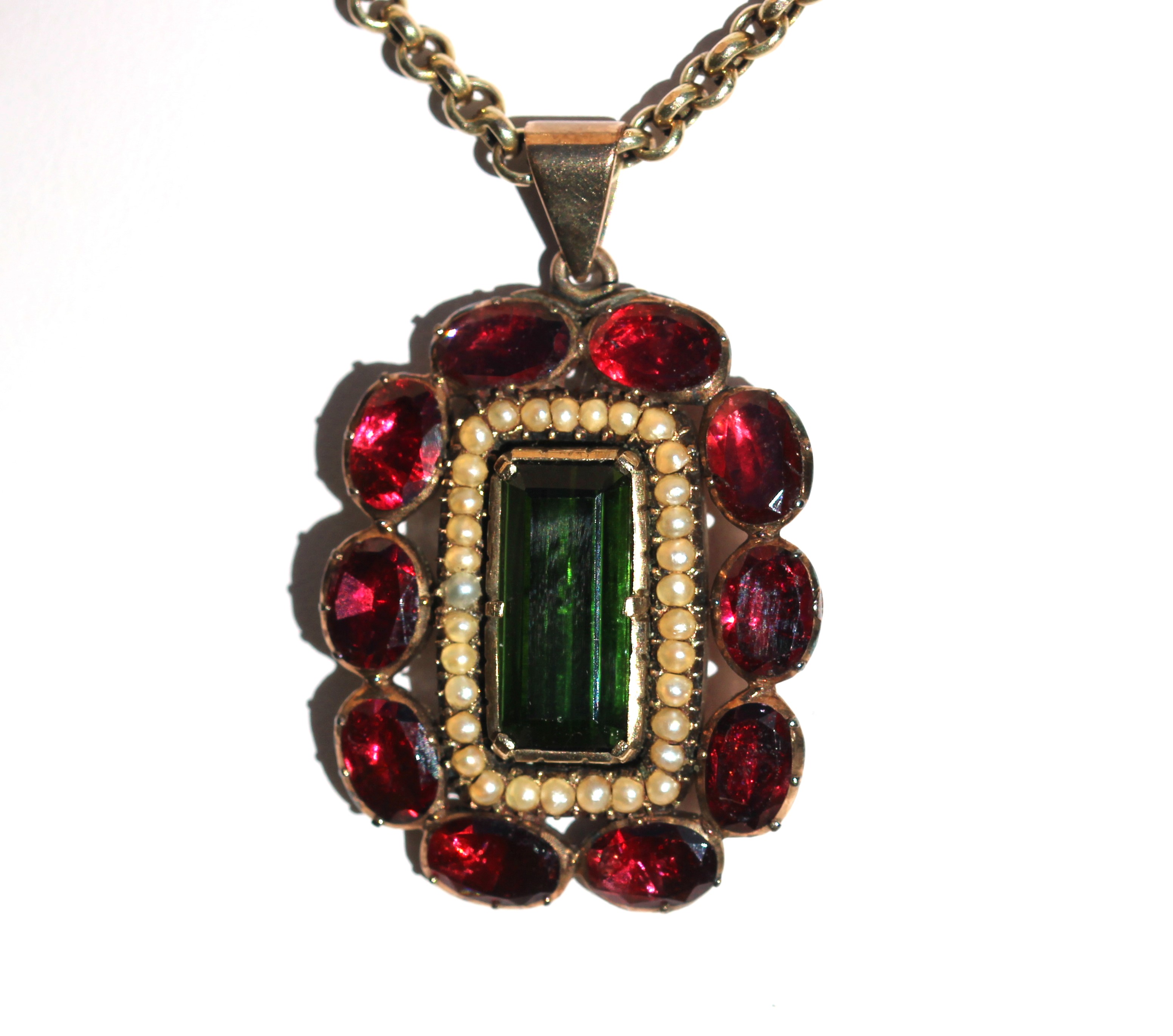
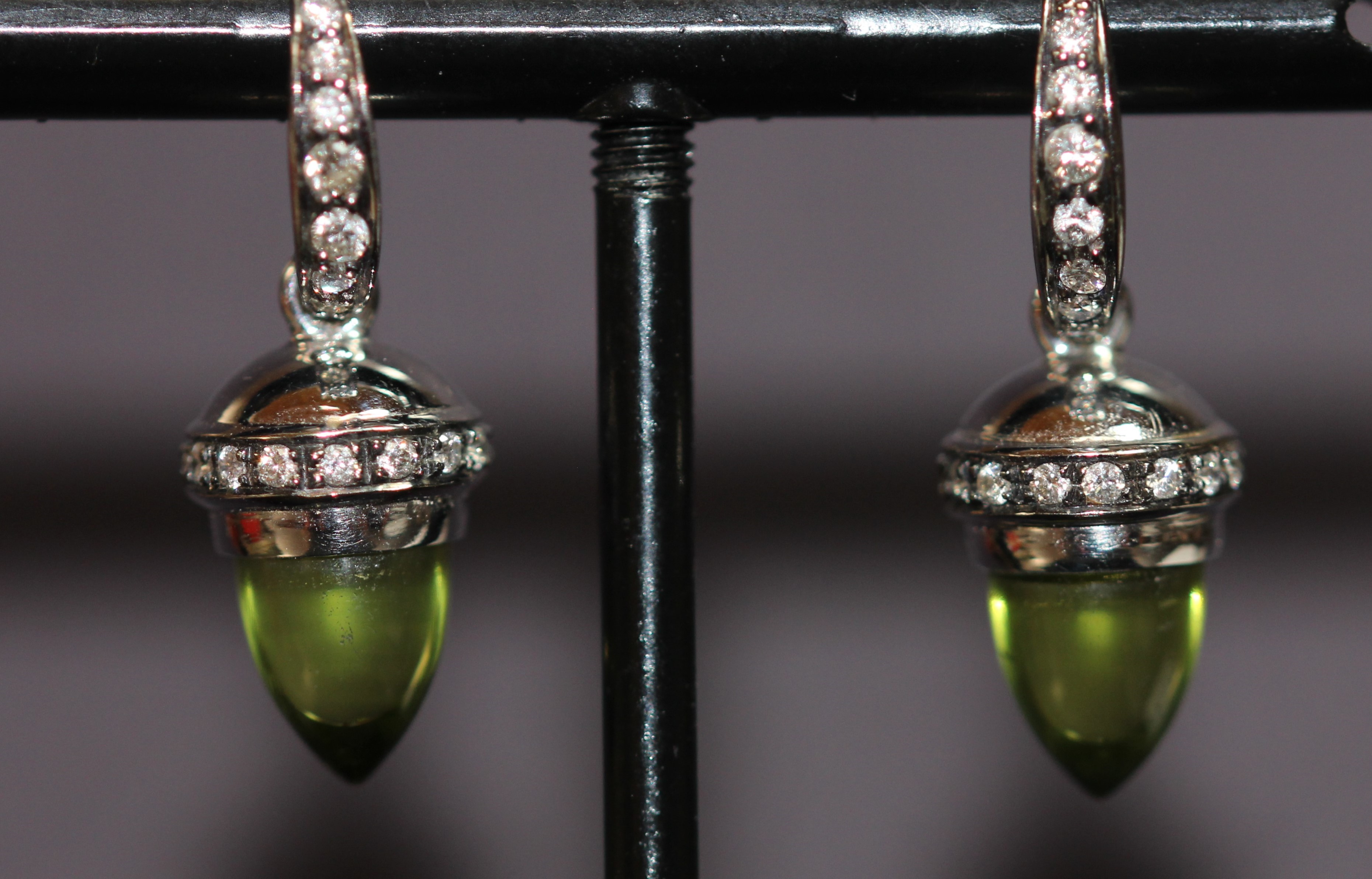
The tourmaline is an often ignored gemstone and was only identified as a separate gemstone family in the early 1700s. It has been used as a gemstone for a long time but was assumed to be another gemstone with a similar colour. There are some beautiful tourmalines as you can see in the antique pendant above with the central dark green tourmaline and the vintage earrings below with lovely olive green tourmaline drops.
 navette jewellery