
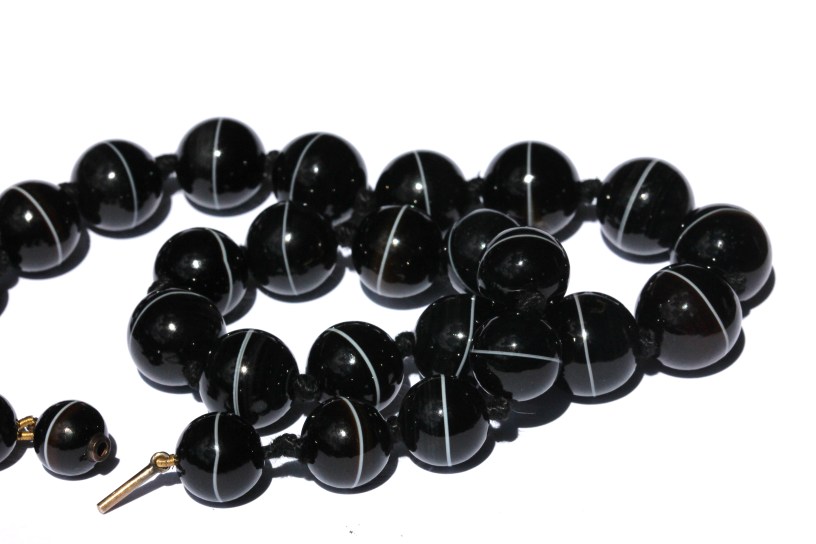
Some of the earliest forms of jewellery were necklaces made of simple round stones with holes drilled into them which were then strung together with leather. Shells and seeds were also used to make simple necklaces. Later, handmade beads were used as well, like the clay faiencé beads of the ancient Egyptians, and then Roman glass beads.
Gemstone beads came next. Soft organic gemstones like amber were first to be used as they were relatively soft and holes could be drilled by hand. Simple strap or bow drills were first used in the 4th or fifth millennium. These were operated by hand and comprised a spindle or drill with a cord wrapped around it which was kept taut by a bow which was pushed back and forward with the hand. The addition of an abrasive paste like a ground quartz paste made drilling a lot easier. Drilling a hole from each end of the gem also helped.
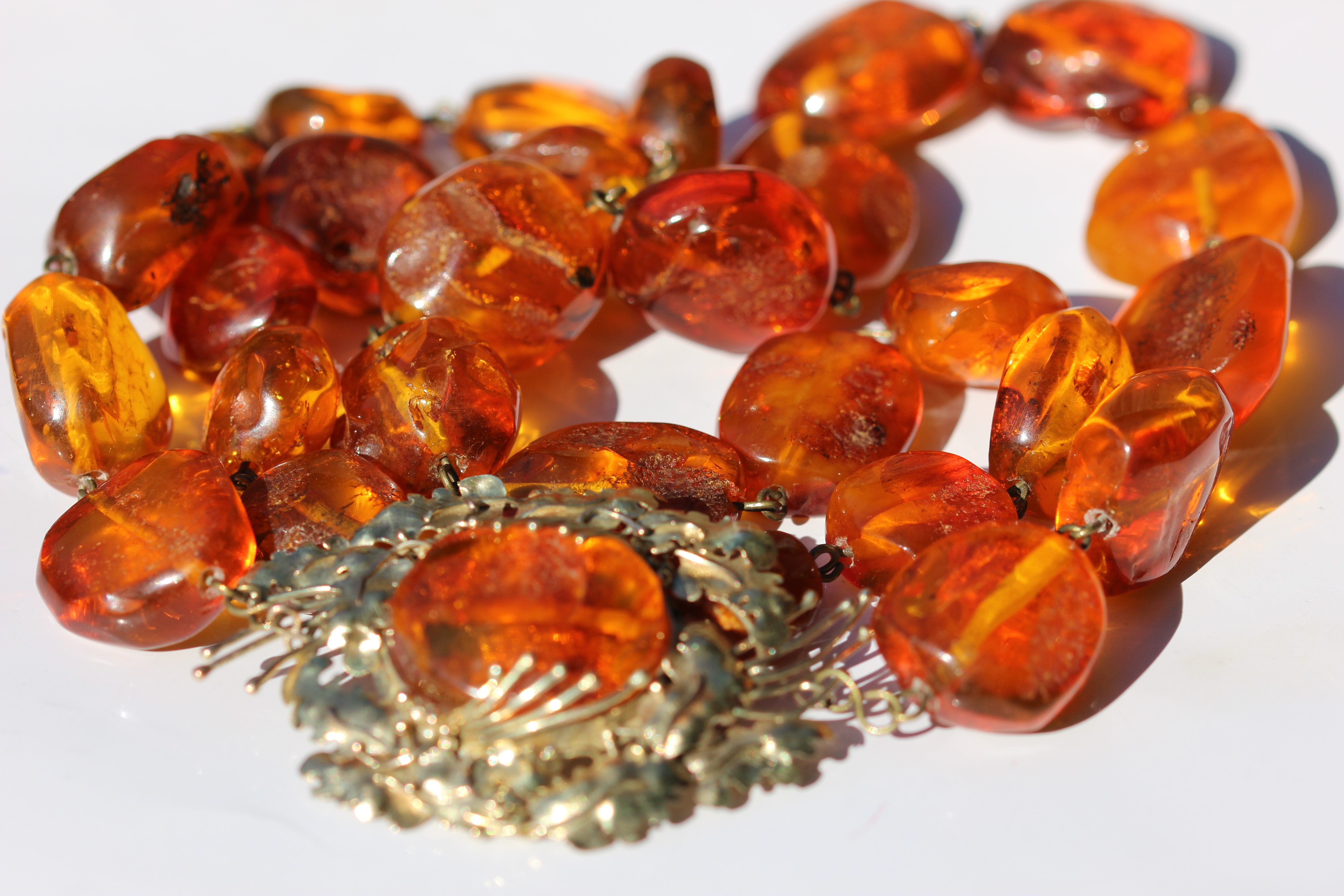
Early gemstones were tumbled to create smooth and polished surfaces. Initially, the process just involved placing the stones in a trough or skin with sand and water and manually rocking it, an intensive process.
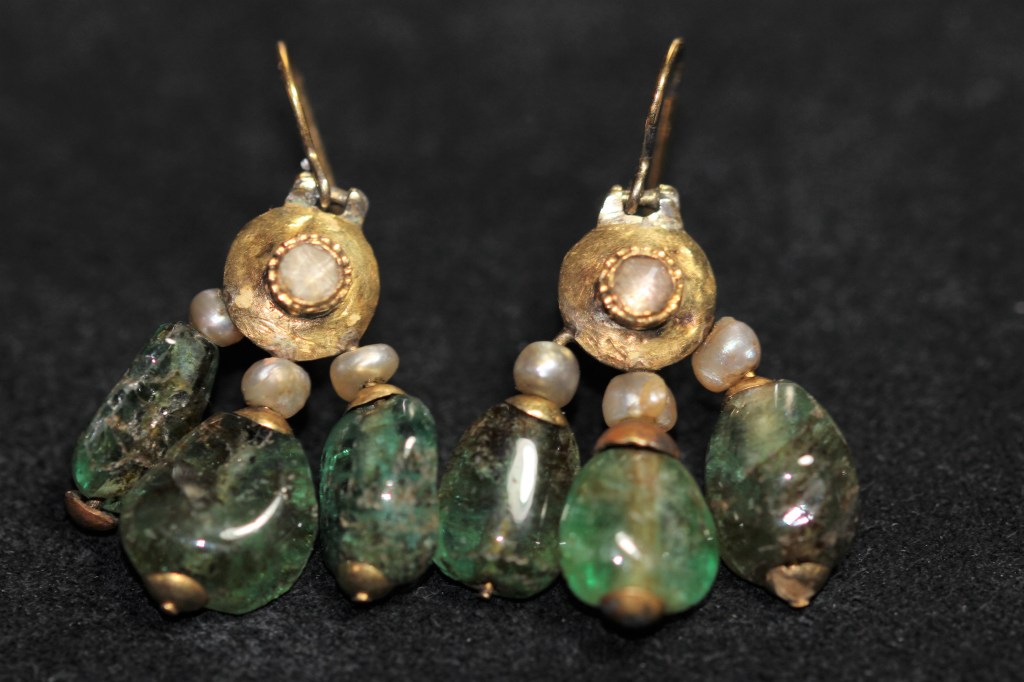
Cabochons are unfacetted gemstones with a smooth convex top and usually a flat bottom. They were made by hand, rubbed against an abrasive surface and, later, against a turning wheel. It was not until the 14th century that the technology to facet gemstones was invented.
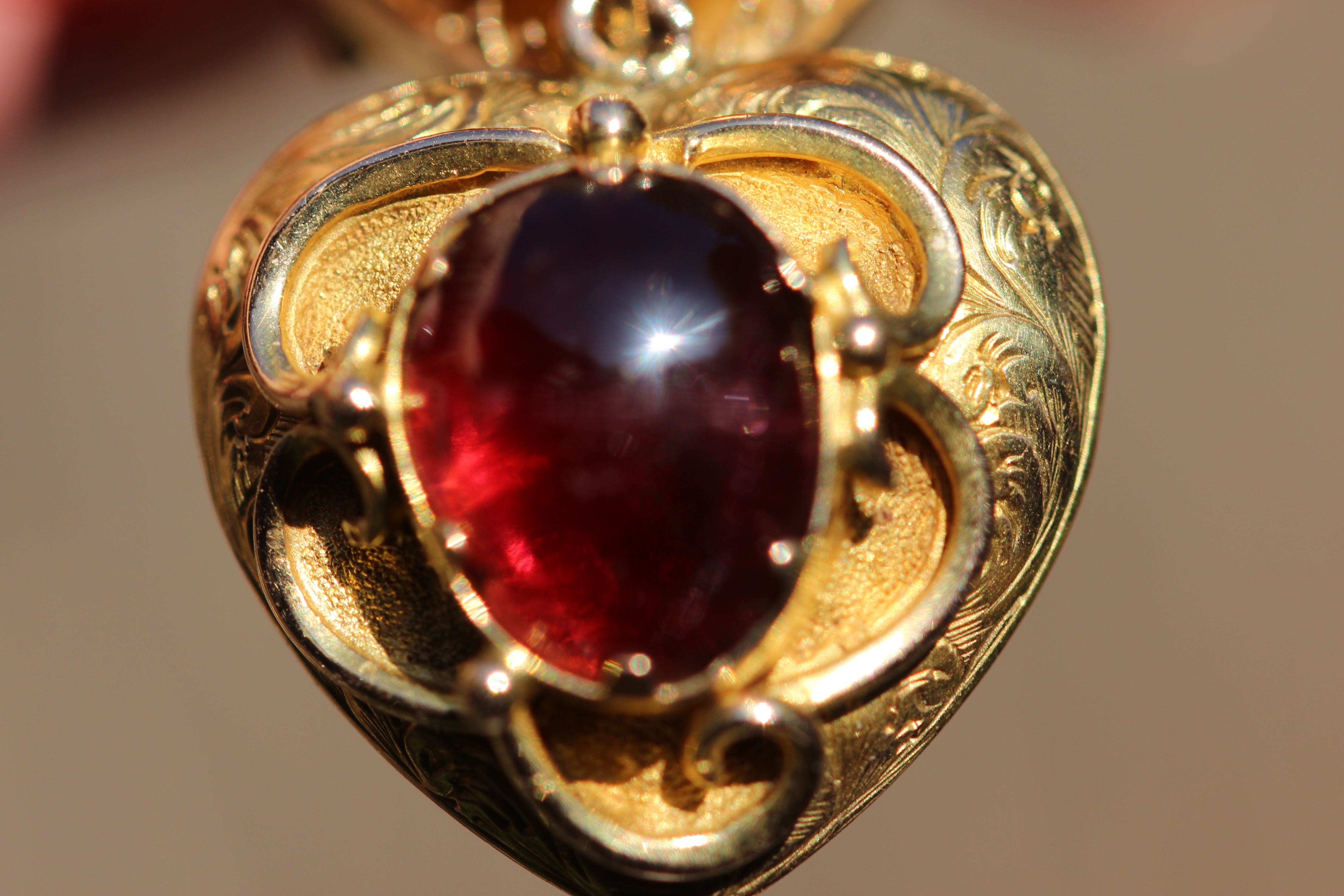
Once faceting of gemstones was possible, generally only opaque stones or those with a lot of internal inclusions were made as cabochons, although red garnets continued to be cut en cabochon. A faceted cut also didn’t show off those stones that were asteriated, that is, shows an internal star like a star sapphire, were chatoyant, that is, shows an internal cat’s eye, or showed iridescence, like opals or labradorite.
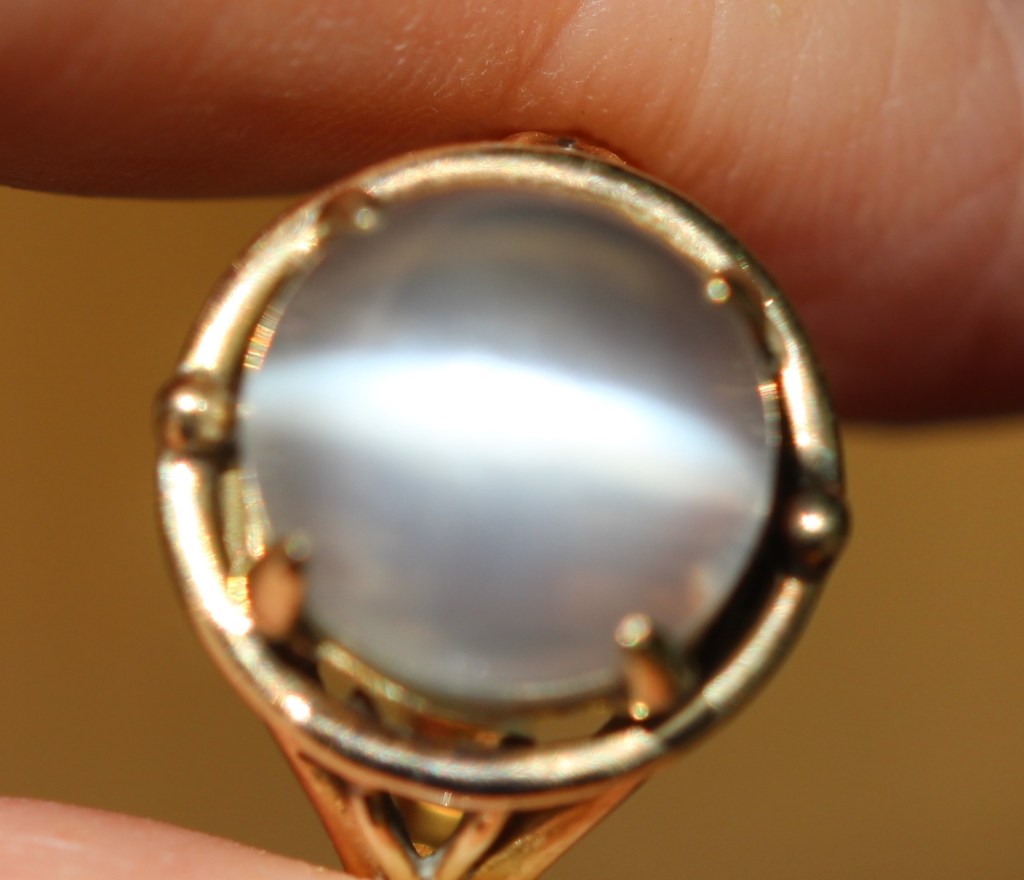
Moonstone cabochon with cat’s eye
 navette jewellery