
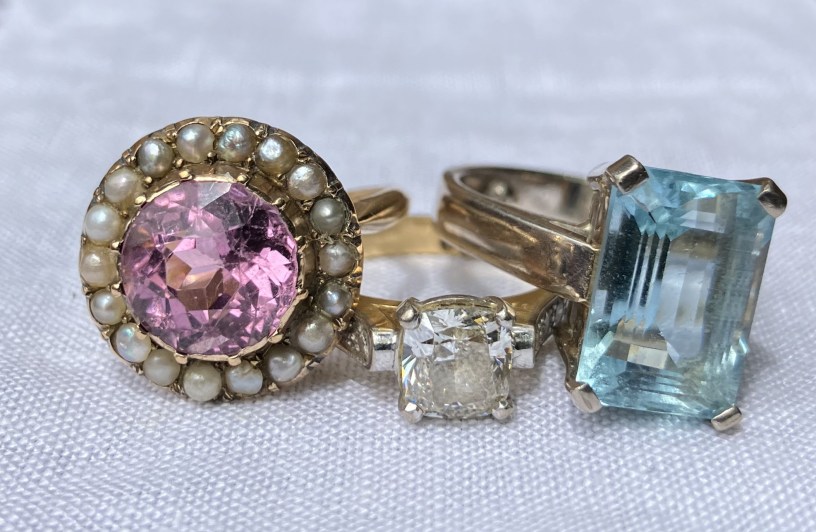
In the late 17th century, a new cut was developed. It became known as the brilliant cut as it reflected candlelight much more than early cuts. The brilliant cut had 33 facets on the crown of the stone above the girdle and 25 facets in the pavilion, below the girdle, a total of 58 facets. This early brilliant cut had a squarish shape and was also known as an old mine cut diamond or an old cushion cut diamond).
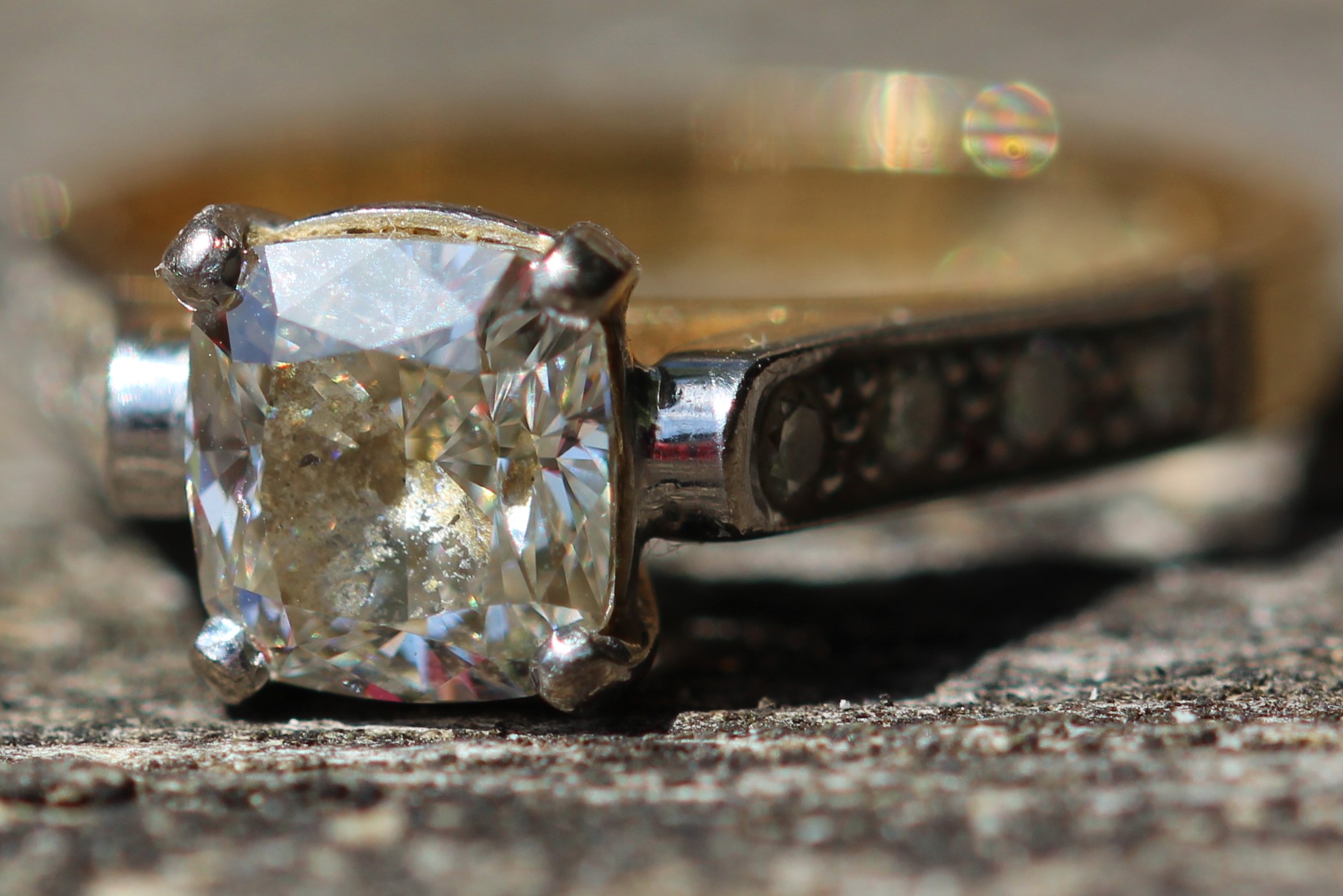
Since the 17th century, there have been many variations to the brilliant cut, some as a result of new technology and today there are lots of different versions, like the heart, the pear, and the princess. The round brilliant diamond, the most common type, was developed around 1900 (Wikipedia). The pink tourmaline in the photo at the top of the post is a brilliant cut.
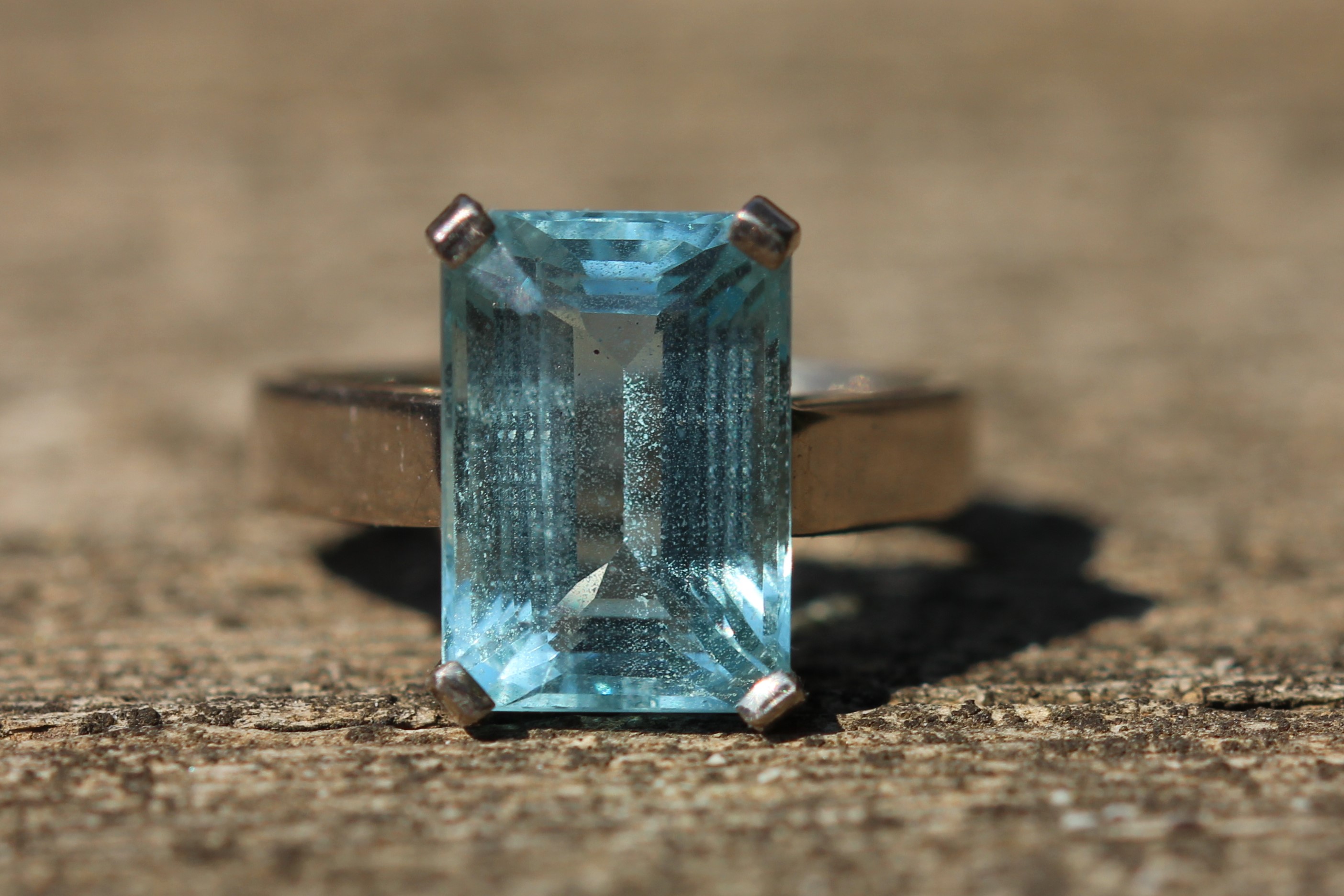
There are many other cuts used for gemstones. Probably the most well known is the emerald cut. This cut was developed in the 19th century to best display large transparent gemstones as it has a large rectangular or square table which emphases the colour of the stone. The corners are cut away (chamfered) and the sides are step cut (Newman). The cut was influenced by the table cut developed in the late 1500s. It is seen to good effect in the aquamarine ring above.
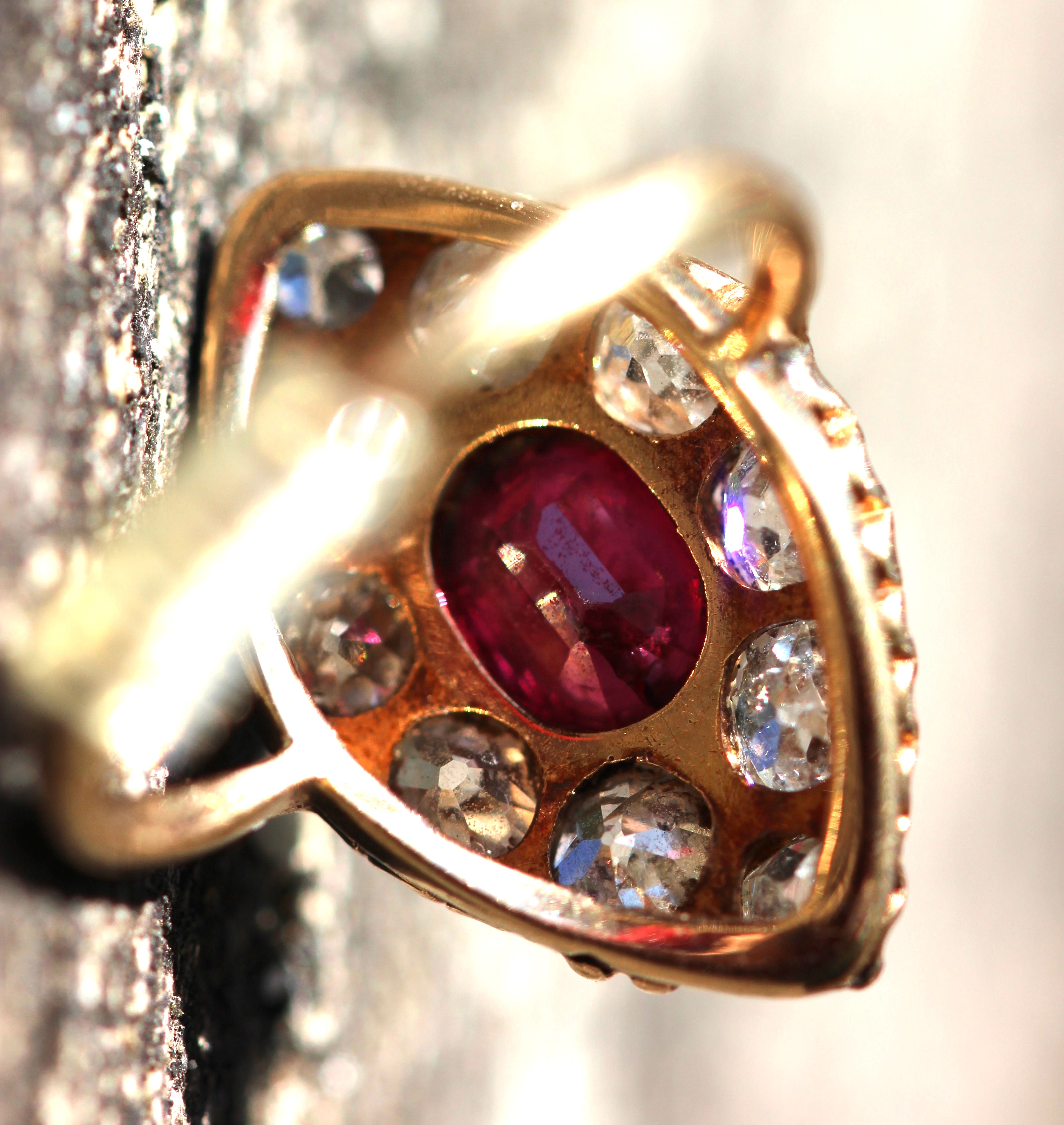
Most coloured gemstones are cut using the mixed cut. This is a combination of a brilliant cut on the top and a step cut underneath. The photo above is the back of an antique ruby and diamond navette ring which shows the step cut. I hope you can see it. It is worthwhile looking at the bottom of your coloured gemstones to how they are cut. With the mixed cut, the step cut pavilion brings out the colour of the stone, like the emerald cut, while the brilliant cut crown will emphasise the brilliance.
References:
Diamond cut, https://en.wikipedia.org/wiki/Diamond_cut#:~:text=The%20first%20brilliant%20cuts%20were,up%20from%20old%20single%20cuts.
H Newman, ‘An Illustrated Dictionary of Jewelry’.
Justin K Prim, YouTube video on the mixed cut, https://www.youtube.com/watch?v=x7RWNRvqRdo
 navette jewellery