
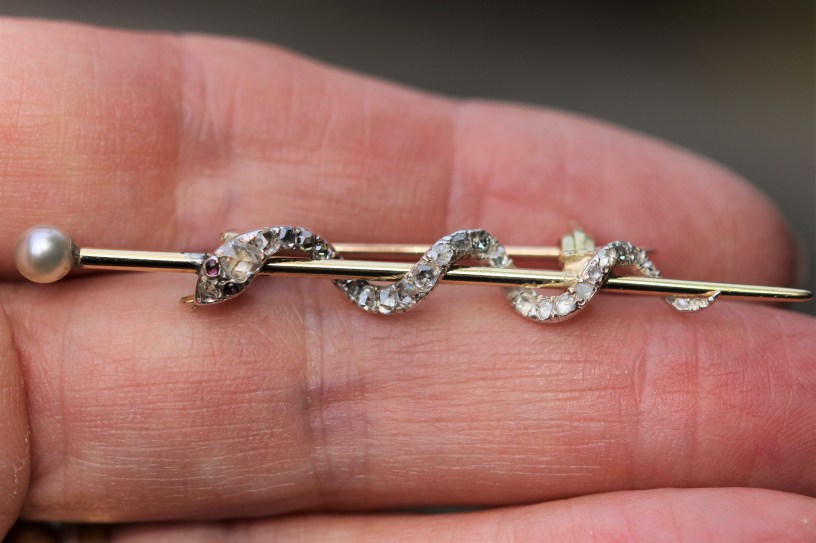
In this post, I wanted to talk again about bar brooches. ‘An Illustrated Dictionary of Jewelry’ defines a bar brooch as: ‘[a] type of brooch in the form of a horizontal bar with decoration along its length or with gemstones or a decorative motif at the centre and gemstones at the terminals.’
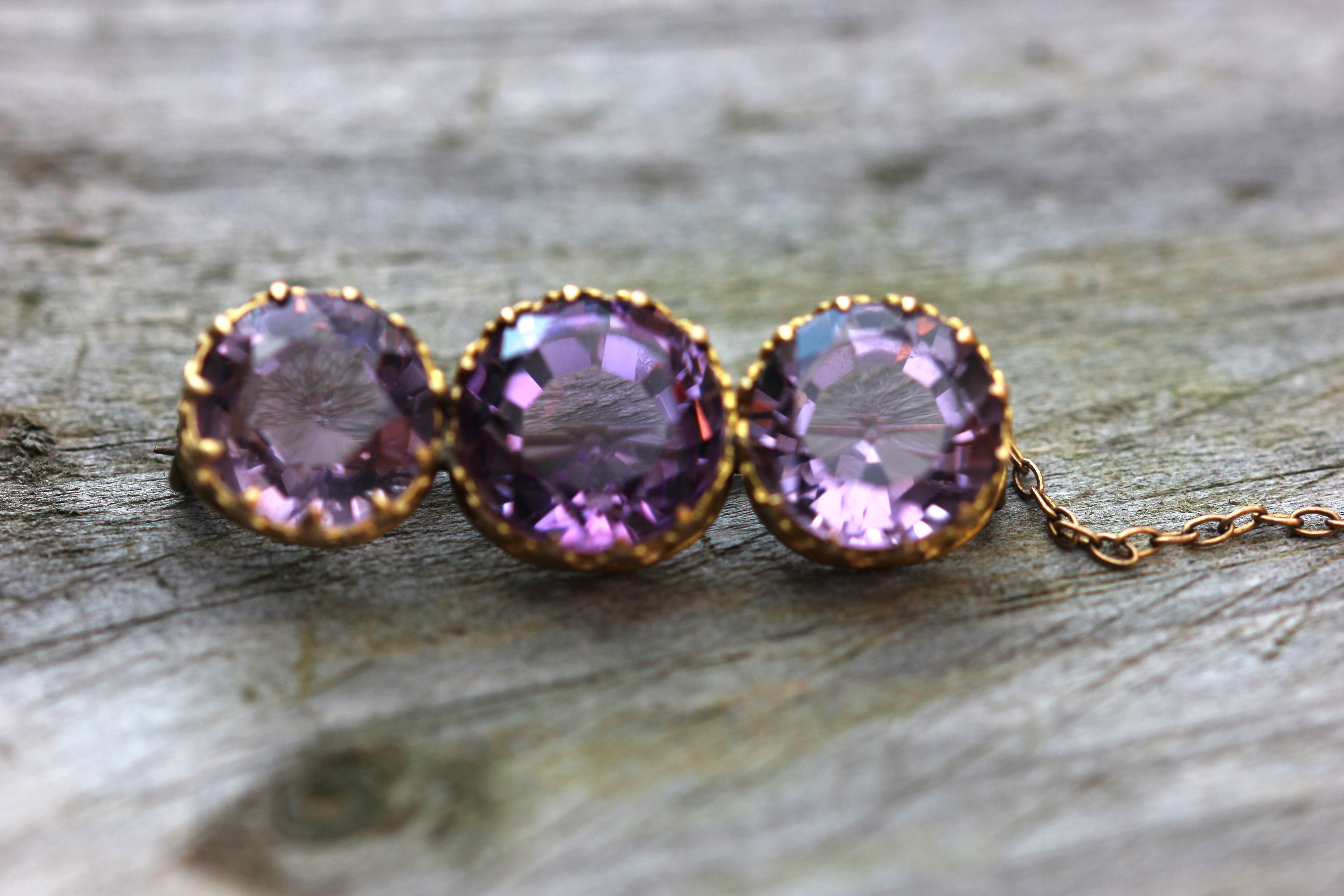
In ‘Understanding Jewellery’, Bennett and Mascetti noted that the simplest form of the bar brooch was a plain gold bar set with a single diamond but that some were ‘decorated with crescents and stars, sprays of leaves and flowers, pheasants and chanticleers, swallows and flies, shamrocks and clovers’ (p230).
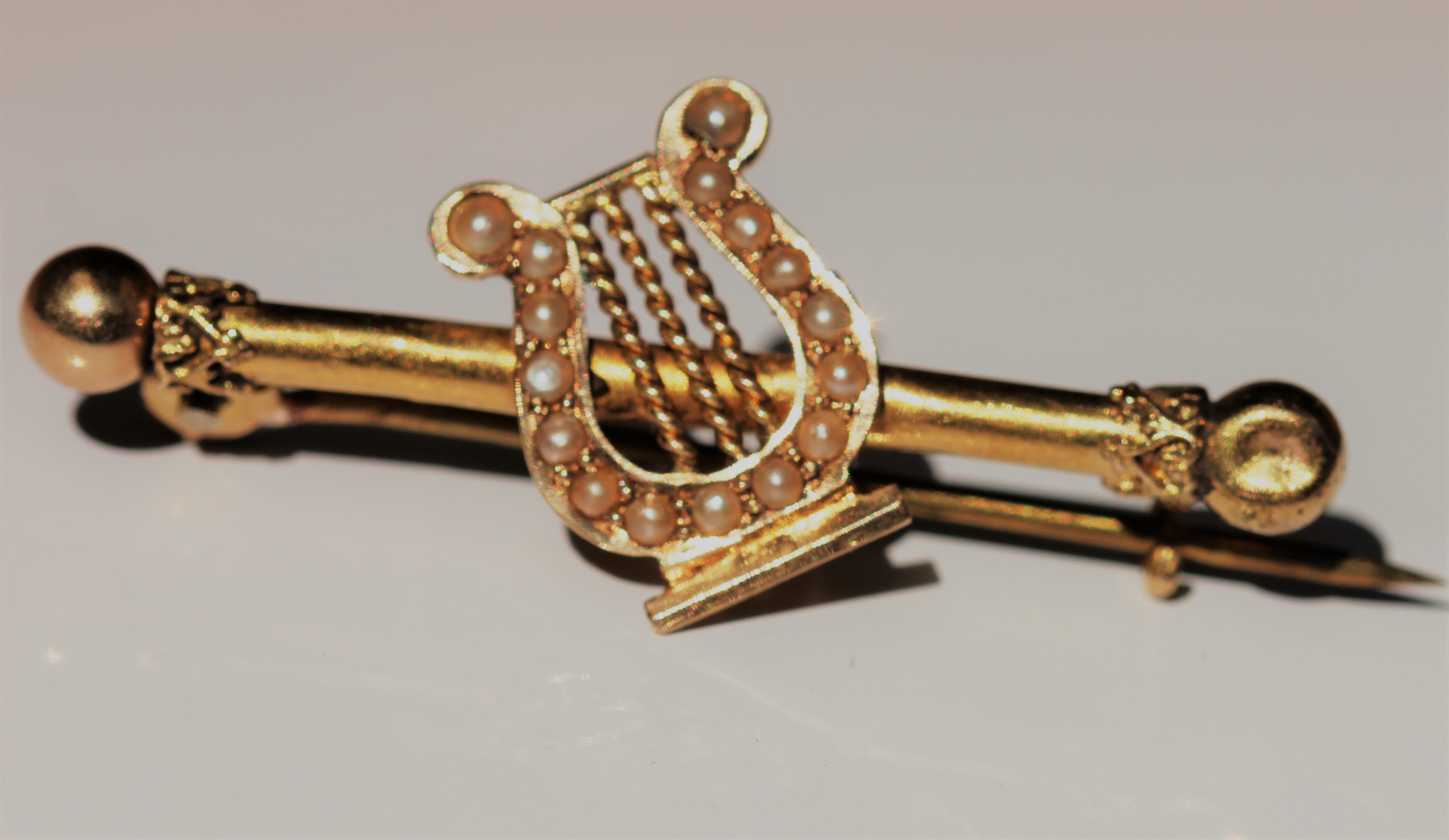
The bar brooch has a long pin and clasp at the back so that it can be pinned to clothing, similar to the ancient fibula brooch used to pin cloaks and garments. The Victorian and Edwardian equivalent was slimmer and lighter and used for ornamentation at the top of a blouse and on light scarves.
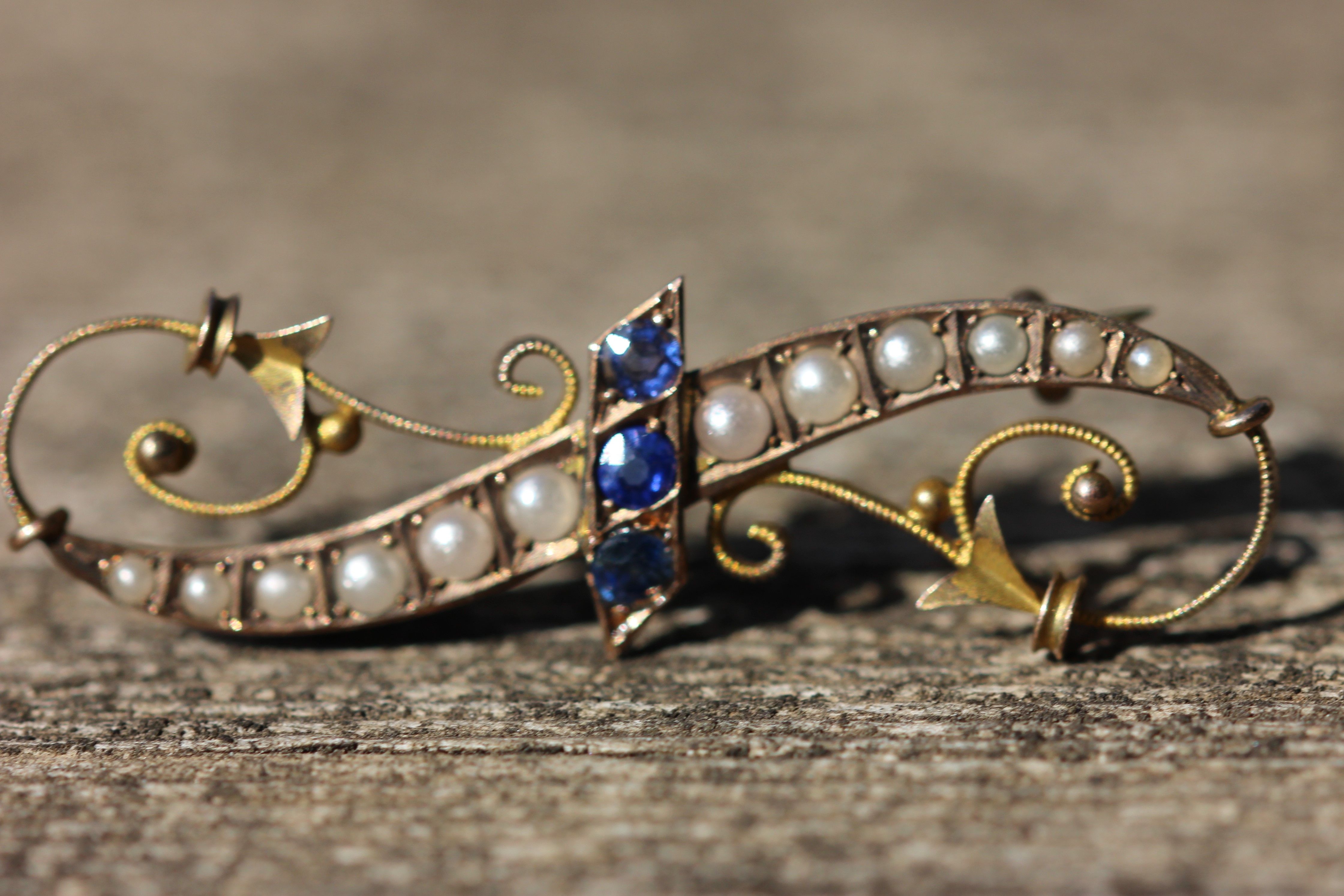
Particularly popular in the late Victorian period, bar brooches varied between brooches to wear for formal occasions and those for day wear. Day wear brooches could be quite delicate, featuring less expensive gemstones like seed pearls while evening bar brooches would be set with diamonds and other precious stones.

References:
Bennett and Mascetti, ‘Understanding Jewellery’, 1989
H Newman, ‘An Illustrated Dictionary of Jewelry’, publishers: Thames and Hudson
 navette jewellery