
New Zealand became a British colony in 1840, the year the Treaty of Waitangi was signed. English settlers had arrived before that, to farm, fish and mine. In 1861, gold was discovered in Otago in 1862 and Westland in 1865, doubling the population. The availability of local gold, the increased population and the arrival of English goldsmiths saw the development of colonial-made jewellery. Inspired by the European trend for depicting nature in jewellery, with leaves, ferns fronds, flowers and so on as features of pieces, jewellers also wanted to incorporate local materials such as greenstone (jade), Paua shell and quartz.
Greenstone or pounamu is a cultural significance to the Maori people but was also an important component of the colonial jewellery produced in New Zealand during the last third of the 19th century and into the beginning of the 20th century. In 1873, Kohn and Sons, jewellers in Auckland sent a collection of jewellery to the Vienna International exhibition of 1873. The collection was of locally made greenstone and quartz jewellery (The Vienna Exhibition, Appendix to the Journals of the House of Representatives, 1873 Session I, H-05).
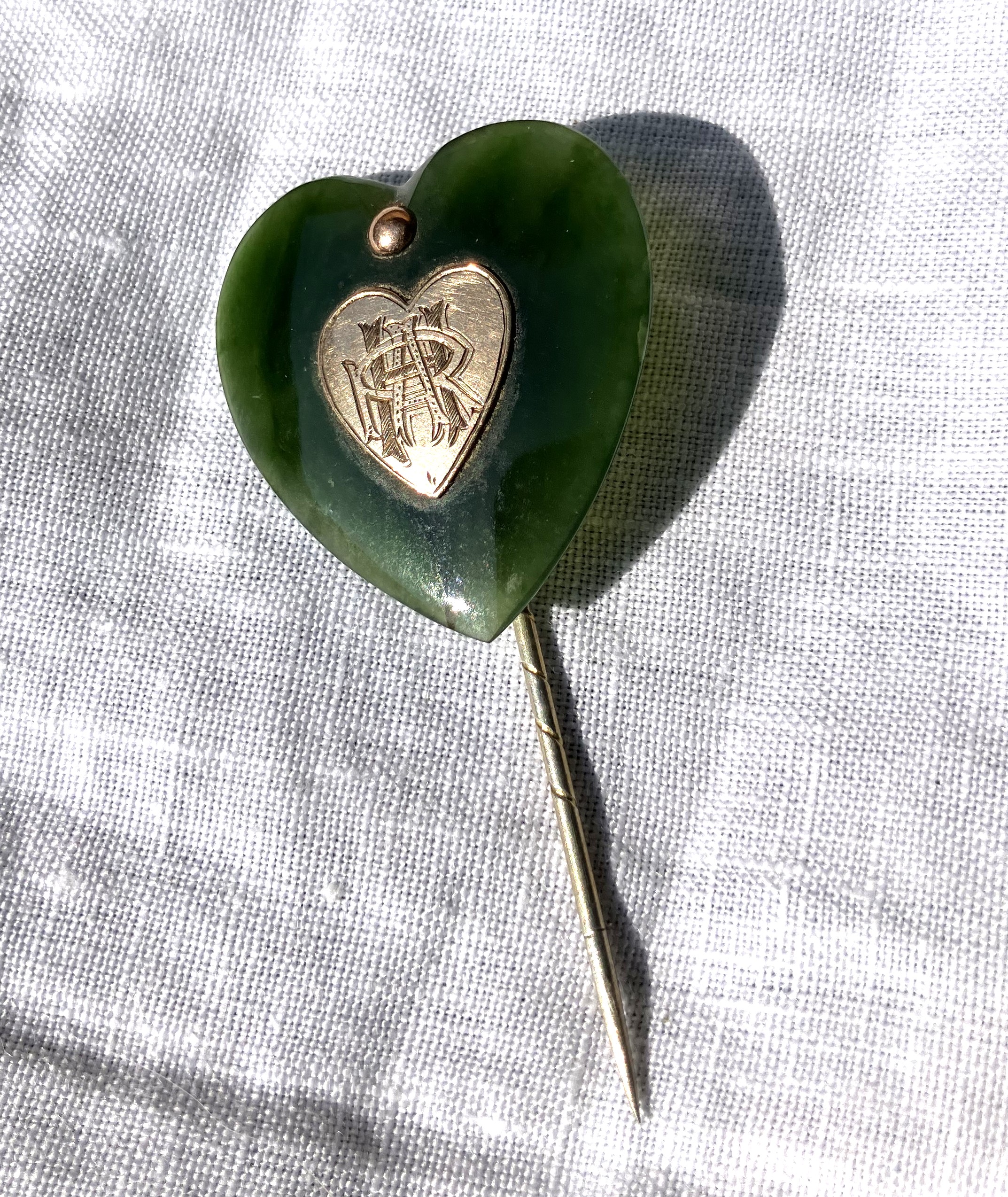
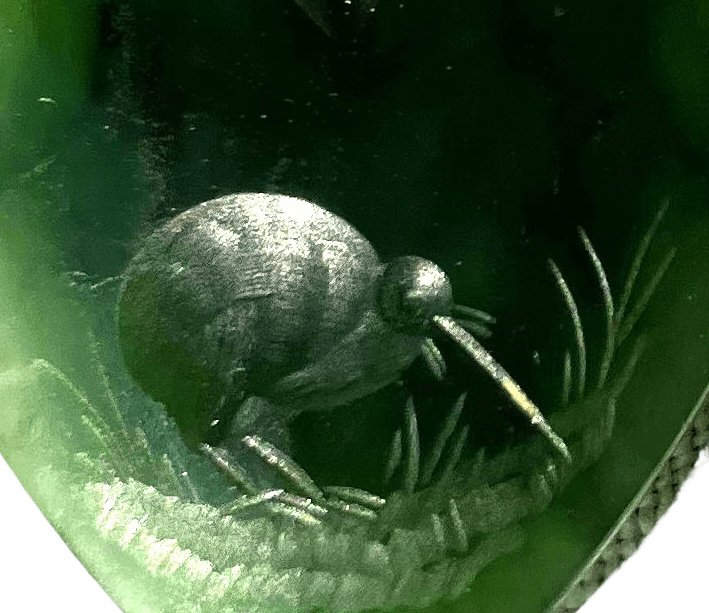
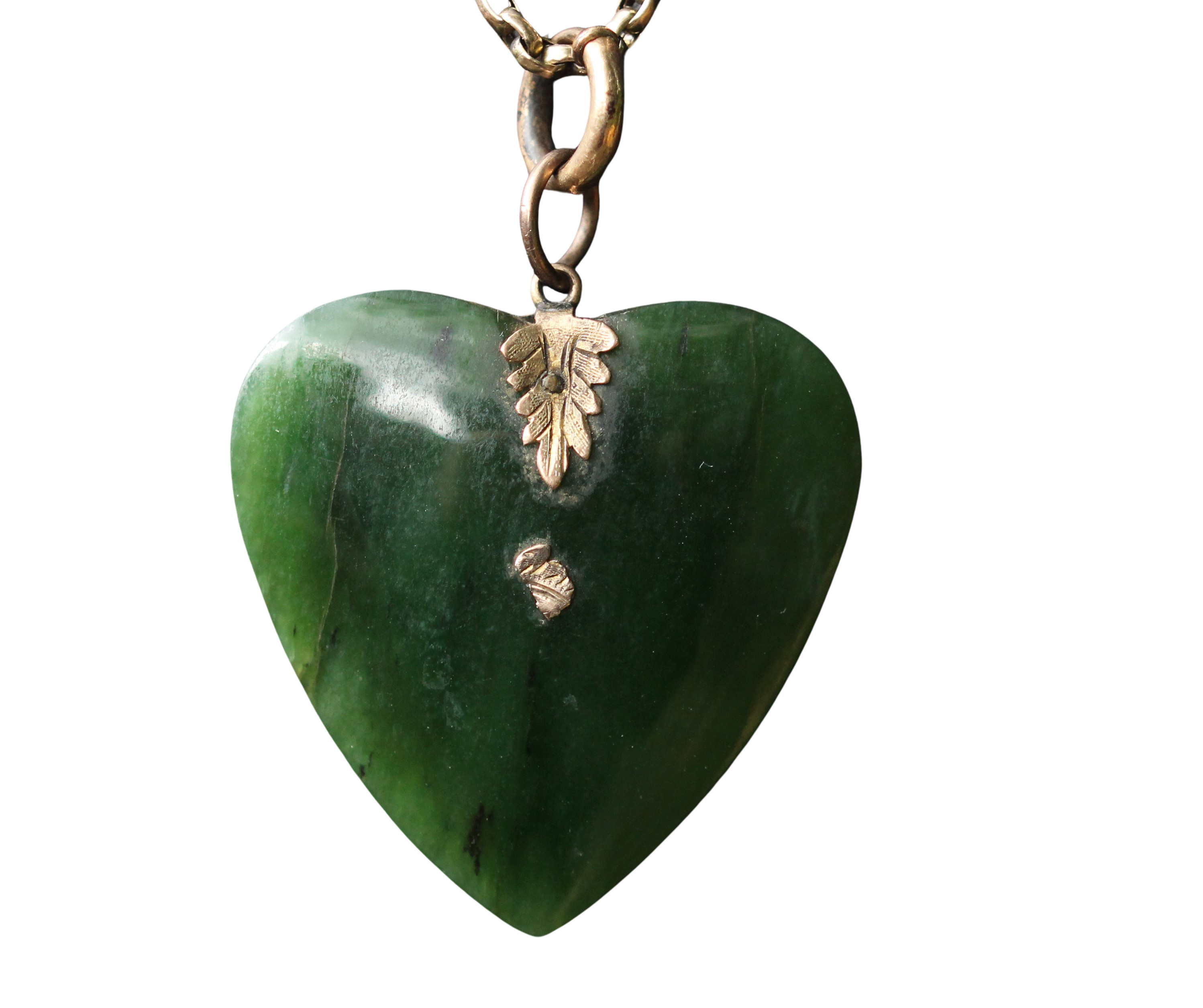
Typical pieces of colonial greenstone jewellery are hearts of all sized with gold bales and some with gold ferns affixed, brooches of all types, some bar brooches with engraved gold ends, others with gold borders, and various types of pendants and fob chains. Some pieces were engraved with kiwis (like the carving in the photo at the top of the post).

Reference:
Museum of Auckland https://www.aucklandmuseum.com/discover/research/crafting-aotearoa/shifting-visions
 navette jewellery