

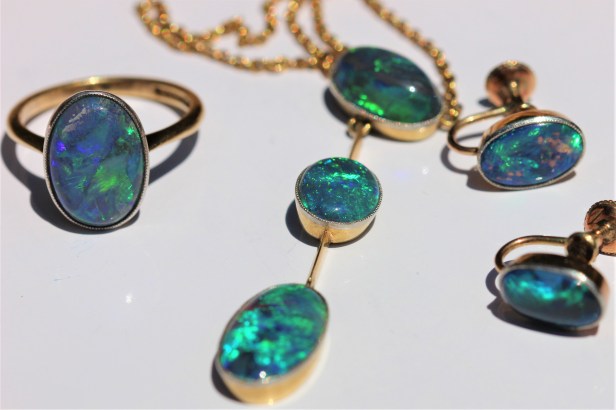
Australia is not known for having many gemstone deposits, with opal, our national gemstone, being the gemstone most recognised. But we have quite a few local gemstones, such as pearls and sapphires, as well as gems like garnets, malachite, agate, quartz, seed pearls and chrysoprase. In more recent times, diamonds and south sea pearls have been major exports. Many of the gemstone finds occurred during the alluvial gold mining activities in Victoria in the 1850s, 1860s and 1870s, and jewellers began to incorporate them into pieces.
The first recorded discovery of opals in Australia was in 1872 in Queensland. Boulder opals were mined and were used primarily for cameo carving. Opals were discovered at White Cliffs in New South Wales in 1877and commercial production began in 1890 but slowed and declined in the early 1900s. Australian white opals can be found in Australian made and some English made jewellery from the 1890s onwards. It was in 1903 that black opals were commercially mined at Lightning Ridge, also in New South Wales.
Other native products began to be used in jewellery. One example is the gold necklace set with cream operculum from Western Australia in the photo at the top of the post. It was made in the mid 1890s.
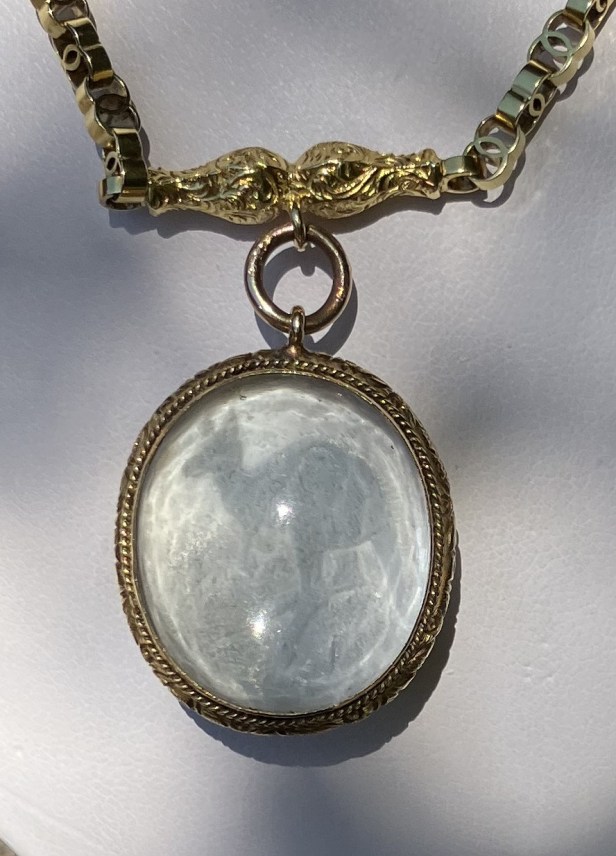
Australian fauna, particularly the kangaroo, koala, kookaburra, lyrebird and emu, began to be featured in 19th century Australian jewellery. Below is an engraving of a kangaroo on emu shell contained in a antique rock crystal locket.
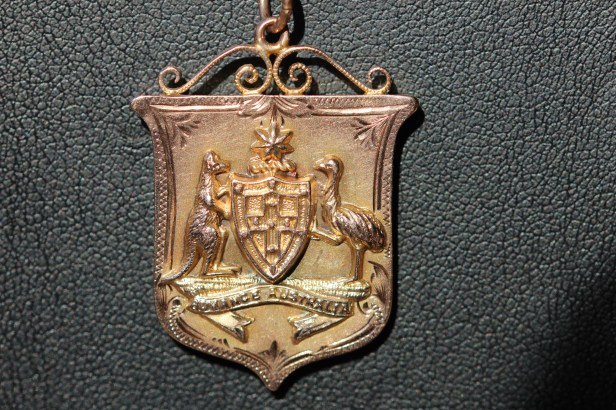
Patriotic jewellery became popular after the Federation of Australia in 1901, depicting the Australian continent, kangaroos, emus, kookaburras, flags, boomerangs or gumleaves, and again during and after the WWI. It was often inexpensive.
 navette jewellery