
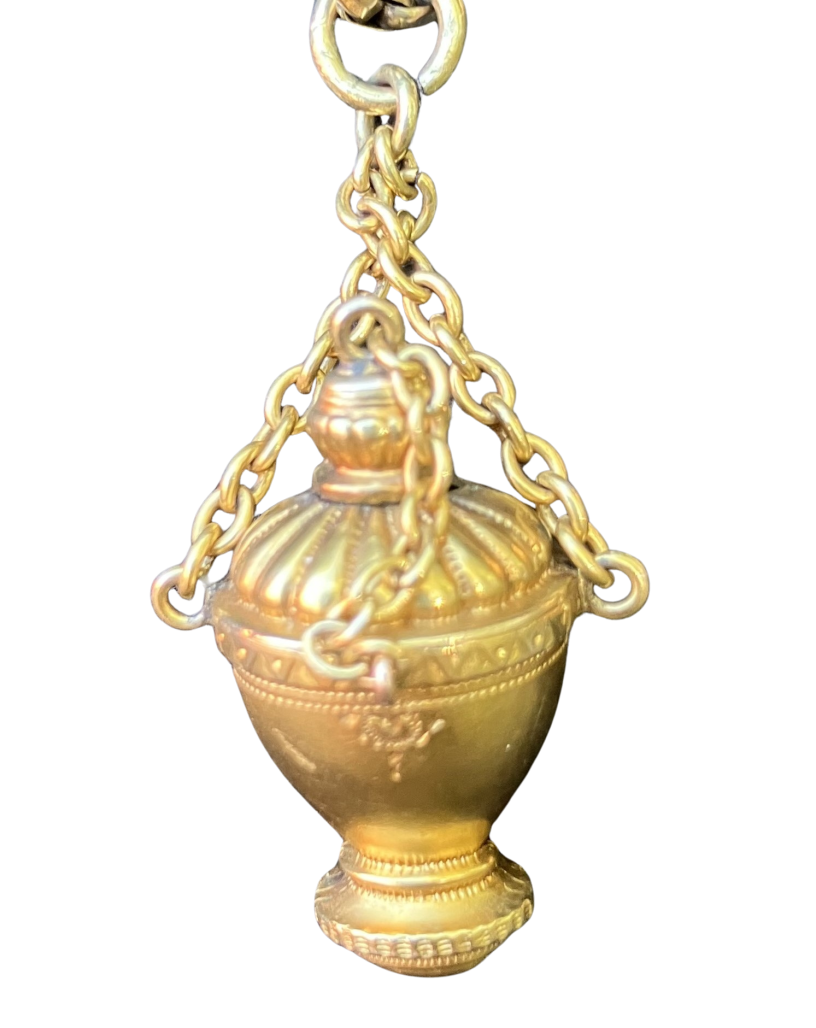
Copying of older jewellery styles has been around a very long time. Renaissance goldsmiths were inspired by the Classical era. The Grand Tours in the 17th and 18th centuries led to copying of cameos, intaglios, micro mosaics and pietra dura pieces, all of varying quality. The archeological excavations in Egypt in the 18th century led to copies of the actual jewellery discovered as well as made up pieces that really had no basis on real discoveries. Etruscan and Assyrian jewellery discoveries also led to copies as well as many deceptive fakes.
A classic example of taking inspiration from earlier eras of jewellery was that of Austro-Hungarian jewellery from the 19th century. The Austro-Hungarian Empire was created in 1867 out of the Austrian Empire and the Kingdom of Hungary. It was to last until 1918. It was the second largest European country after Russia and was an important technological adopter. Increasing industrialization saw a growth in a middle class based in the cities. There was a demand for jewellery and jewellers looked back in history for inspiration, particularly the Renaissance period.
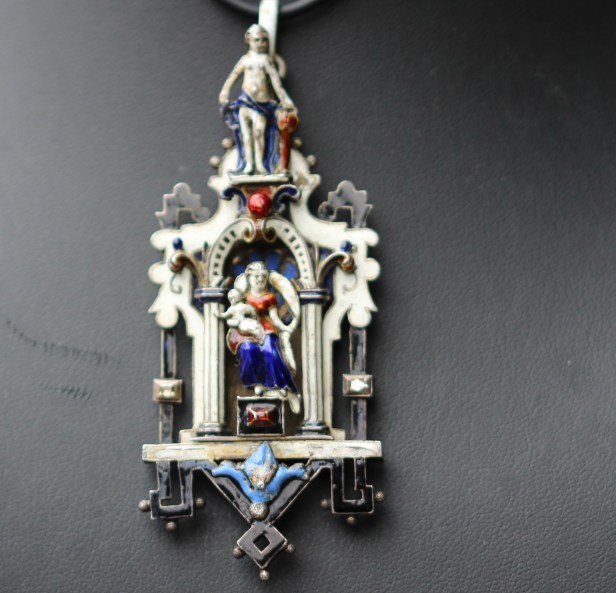
Jewellers produced ornate pieces of jewellery in the form of large pendants covered with enamel, often white enamel decorated with black dots, coloured gemstones and /or paste, and pearls set in gold, silver or silver gilt. Some of these pieces are hallmarked, many are not. The quality can vary a lot. There were lovely pendants with centrally set gemstones, gem and paste set earrings, chunky bracelets, ornate collars and crosses.
Of course, amongst all the copying of older pieces as inspirations, there were also deliberate fakes being made, to sell to keen collectors or museums. The British Museum holds a bead necklace from the 18th Dynasty (Egyptian) which is labelled as a possible fake (https://www.britishmuseum.org/collection/object/Y_EA65279) as well as fakes of early medieval European jewellery (https://www.britishmuseum.org/collection/object/H_1930-1106-1-2). Dr Jack Ogden states that there are a lot of antique pieces of jewellery, particularly ancient jewellery, being produced today (https://www.jckonline.com/editorial-article/ancient-jewelry-market-counterfeit/).
How can jewellery designers protect their pieces from unauthorised copying? Hallmarks have provided some protection to buyers of jewellery for some time but not much protection for jewellers whose work might have been copied. It was only in the 19th century that the law began to offer ways in which a jeweller could protect their jewellery from being copied without permission.
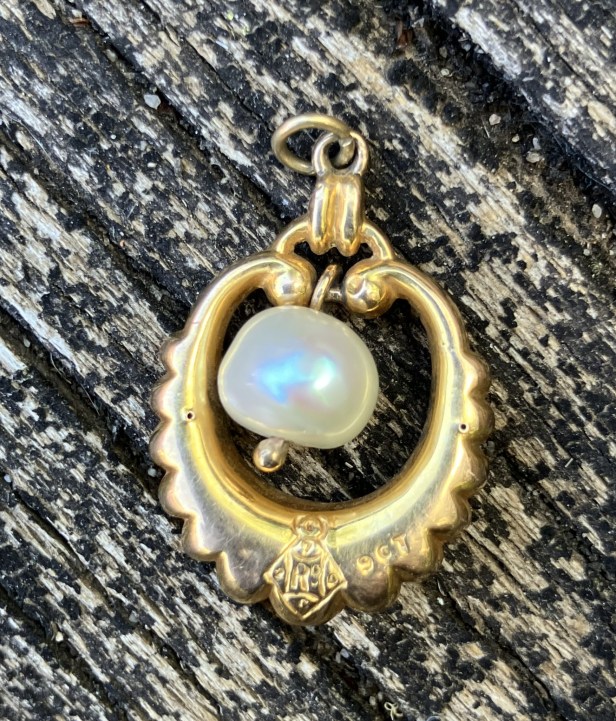
An early piece of legislation was introduced in the UK in 1839, the Designs Registration Act, which extended protection of a form of copyright to ‘ornamental’ designs which included jewellery made of metal. In 1842, a system of lozenge-shaped Registry Marks (see above) was introduced and remained in force until 1884. A numbering system was then used. The 1842 Act only provided protection of designs for up to three years.
The focus of this legislation was on the decorative, rather that the functional elements of an object. Patent law, trade mark law and copyright law, which I will talk about in the next post, would start to provide other protections for jewellery.
 navette jewellery