
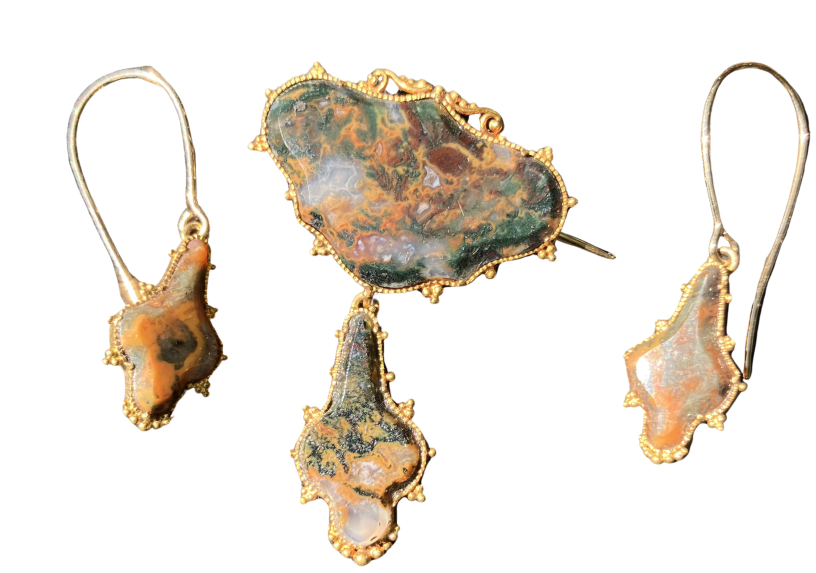
In the late 18th century, agates were in demand for various uses in jewellery, such as the lovely Maltese cross below or the stunning agate demi-parure in the picture at the top of the post. Idar-Oberstein (Germany) was a major European source of agate until its deposits began to run out in the 19th century and it began to import agate from Brazil. Another source of agate during this time was Scotland where the stones were known as ‘pebbles’. The word ‘pebble’ meant a semi-precious stone, rather than a stone taken from a beach or river bank (Laurenson, 117). The term included agates from the Scottish Highlands and quartz from the Lowlands. Supply of Scottish pebbles was always limited, though, and jewellers also began to use imported stones to meet growing demand in the 19th century.
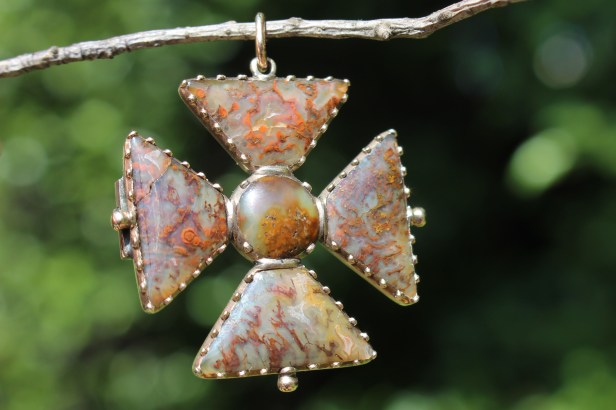
In 1847, Queen Victoria purchased Balmoral Castle in Scotland to serve as her holiday house. for her growing family One of her interests was the jewellery made in Scotland using local ornamental stones or pebbles. She sparked a wave of popularity for Scottish pebble jewellery which was to last for many decades. Originally made in Scotland, as demand for it increased, as noted above, pebbles were imported, at first from Brazil but then from Africa, India, and Germany. As well, parts of the jewellery began to be made in Birmingham. By the 1880s, some jewellery construction was even outsourced to Germany.
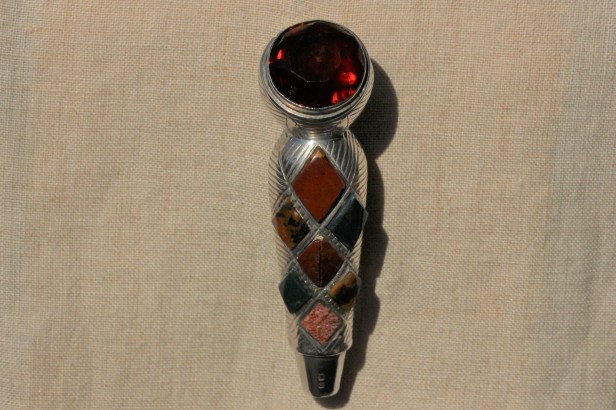
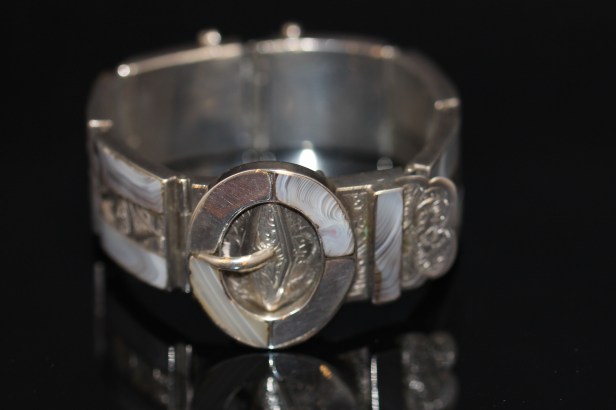
Initially, the jewellery took the form of practical items such as kilt pins and plaid brooches but expanded into every form of jewellery, such as silver bracelets, complete with buckles, heart clasps, belt clasps, anchor brooches, earrings and charms.
Reference:
Sarah Laurenson, ‘The Material Landscapes of Scotland’s Jewellery Craft, 1780-1914’, 2023, Bloomsbury Visual Arts.
 navette jewellery
Great crafting in that bracelet
LikeLike
Yes. I wish I hadn’t sold it as it is so striking.
LikeLiked by 1 person