
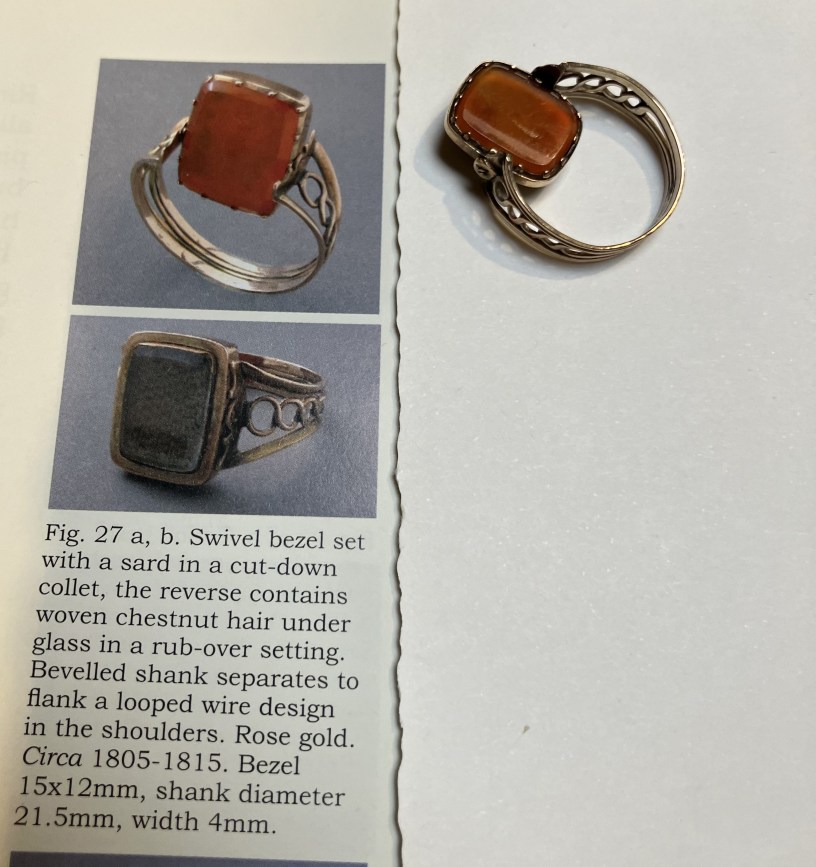
Continuing the discussion on how to date jewellery, inventories, catalogues and reference books are all useful. Jewellers provided descriptions of their holdings in stock inventories in the 17th and 18th centuries, while some jewellers produced pattern books of design drawings, a few of which have survived, for use by their journeymen and apprentices. They can be found in some jewellery museums. In the 18th century, jewellers and goldsmiths began to issue illustrated catalogues for wealthy clients and by the end of the 19th century, such catalogues became available to a wider audience. ‘Victorian Jewellery’, compiled by Peter Hinks, contains excerpts from 6 catalogues, two American and four British, dating from 1894 to 1904 and is well worth obtaining.
Today, auction catalogues from jewellery auction houses provide photos and descriptions of a range of antique pieces., and there are plenty of books around specialising in different aspects of antique jewellery. These provide excellent resources to help with jewellery identification as with the case of the Georgian swivel ring in the photo at the top of the post.
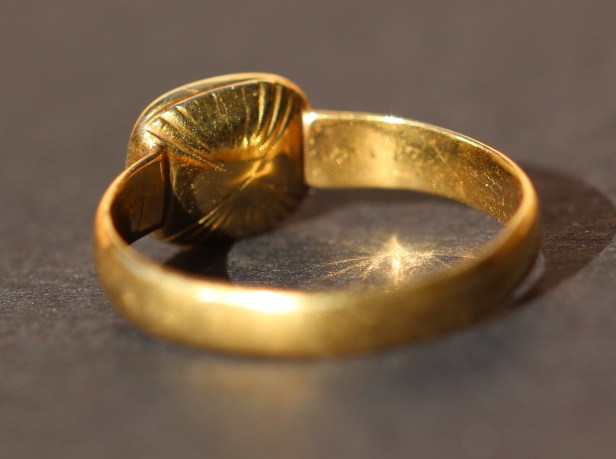
The way a ring has been constructed can also be an important aid in identification of age. The Georgian foiled closed back citrine ring is a good example. The closed back setting of the stone, with a foil back and a cut-down collet is typical of rings from the Georgian period.

However, an important indicator of age is the basket setting of the closed back, where ‘rays’ or fluting give the appearance of depth, as in the photo below.
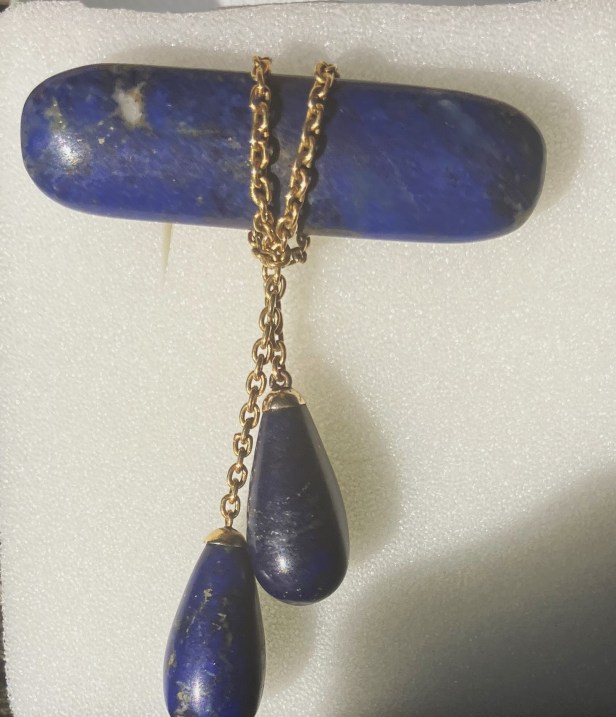
The fittings of a piece of jewellery can assist with identifying age. In the case of this striking lapis lazuli brooch, below, with hanging 18ct gold chains, it is the brooch fitting which is useful. It is a C-clasp and pin from the 19th century.
Finally, the components of the piece of jewellery can help identify it’s age. I recently purchased the aquamarine and diamond earrings (below). They were advertised as ‘antique’. They have no stamps and the ear fittings have been altered. To me, they are not immediately identifiable as being from a particular era, however, they do have six Old European cut diamonds. This style of diamond cut is a transitional cut evolving from the old mine cut. It was developed in Europe, hence the name, and was popular from 1890 to 1930. It is a round cut and has a small flat table top, a higher crown and has a visible round culet when looking through the diamond from the top.

 navette jewellery