
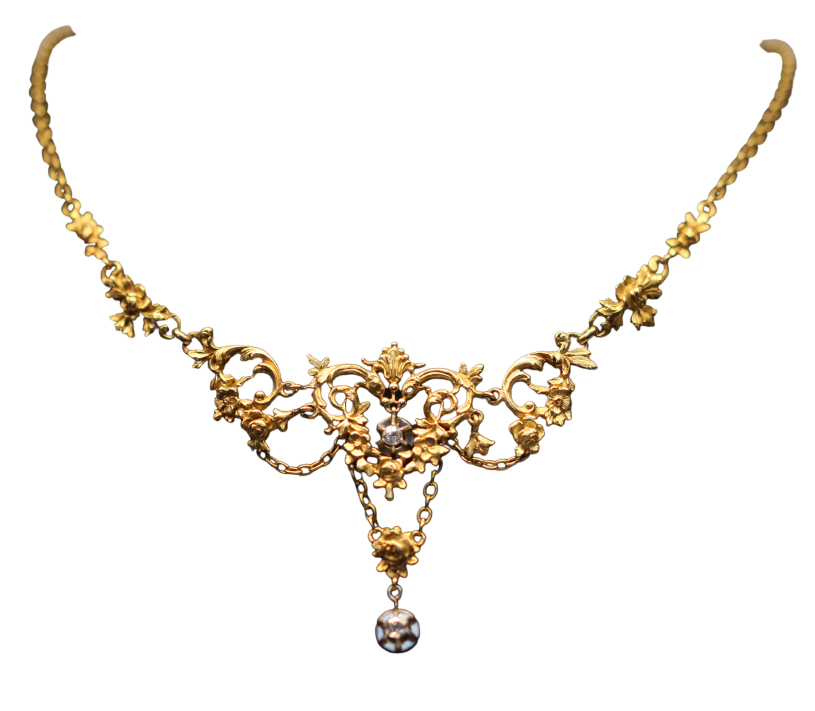
We are now over the middle of 2025 and I realized that I have been overlooking jewellery from the early 20th century. Antique jewellery, which is my main focus, is defined as jewellery that is over 100 years of age. So what jewellery styles were in fashion at the turn of the century and into the first 25 years of the 20th century?
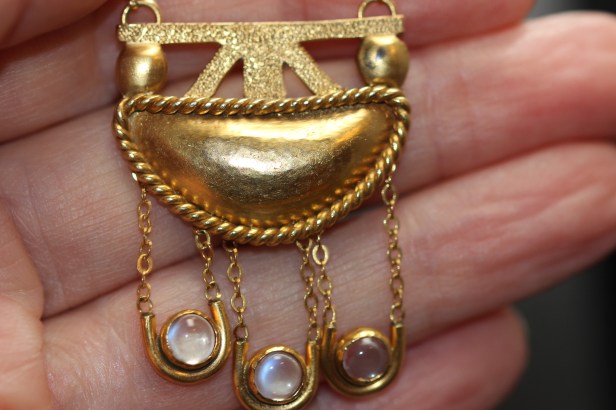
Four main jewellery trends and styles were in fashion at the turn of the 20th century – the Arts and Craft Movement, the Belle Epoque, Art Nouveau and Edwardian. Many of these jewellery trends had already begun in Victorian times. The Arts and Crafts movement in England originated in the mid-19th century as a reaction to the growth of industrialization in Britain. It wanted a return to handmade, traditional skills. It was often influenced by medieval patterns and designs.
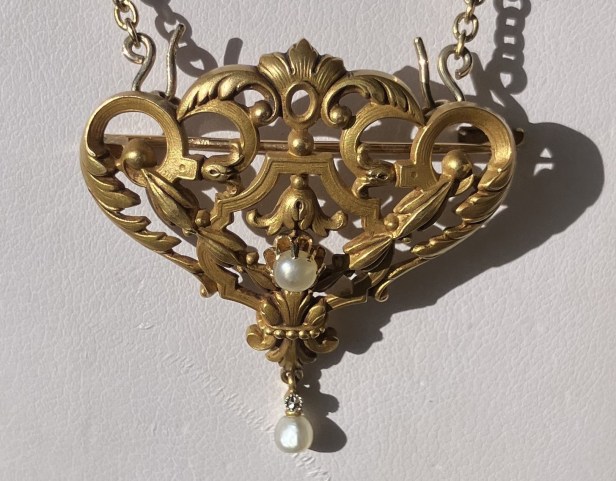
Centred around France, the Belle Epoque period started around the late 1870s while the Art Nouveau period started around 1890. The Belle Epoque period, the Beautiful Age, led to lighter jewellery using garlands and foliate designs with delicate openwork. Swags, bows and tendrils of leaves and ivory were key themes to the jewellery. It was to continue until the start of WWI.
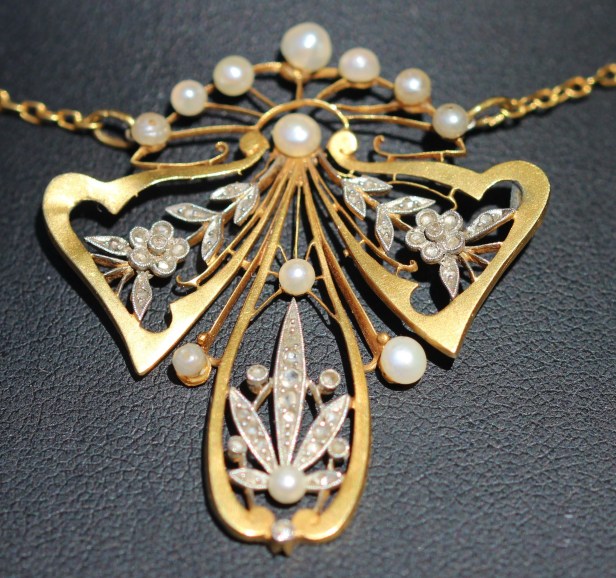
The Art Nouveau period, which emerged from the Belle Epoque period, rejected the mass produced jewellery of the later Victorian period, like the Arts and Craft Movement, and the focus on excessive displays of wealth through jewellery. It led to jewellery which was romantic and flowing, based on nature, and re-introduced the use of enamels and organic materials such as horn and ivory. Softer coloured gemstones were used, such as opals and moonstones. Art Nouveau flourished in France, and also later in Germany (Jugendstil), Austria (Sezessionstil) and Spain (Modernismo), and to some extent in the USA. It also finished at the beginning of WWI.
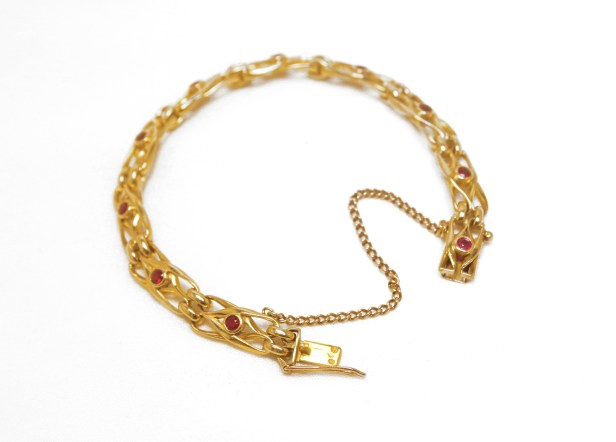
Even the so-called Edwardian period, which technically started in 1901 after the death of Queen Victoria, had started around the 1880s as the severe mourning requirements imposed by the Queen on society began to lesson and the Prince and Princess of Wales became popular. King Edward VII died in 1910 but the period is usually extended to the start of the First World War in 1914-15 as styles didn’t really change until after the war had ended, leading into the Art Deco period.
I will talk about the Edwardian era in my next post.
 navette jewellery
This period between 1890s-1915 when several aesthetics overlap is very important in fashion history. I would love to read more details about it.
LikeLike
Yes. Normally, the discussion about this era is just added on to a book about Victorian jewellery.
LikeLike