
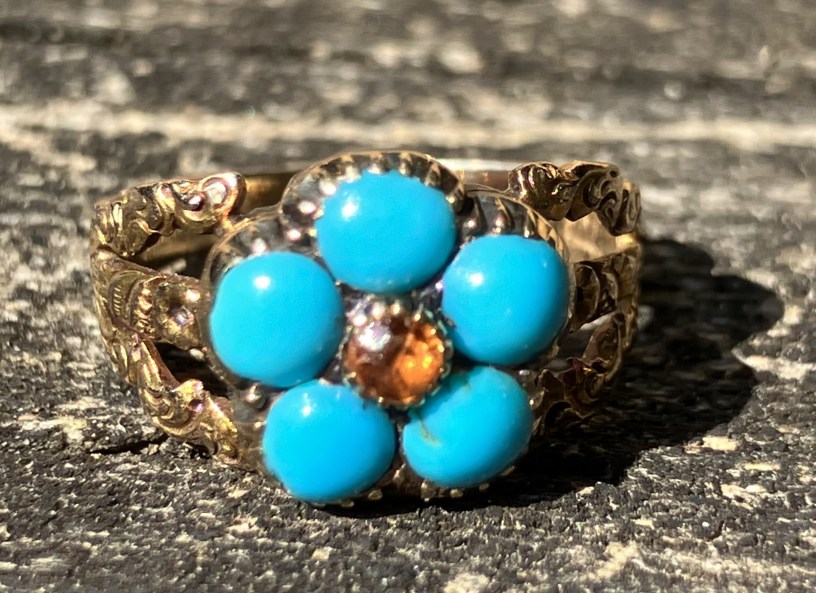
A very popular image used in antique jewellery is the forget-me-not flower. The forget-me-not plant is a plant that produces flowers with five petals and a yellow centre. It comes in colours of pink, yellow, white and blue. Its scientific name is ‘myositis’, meaning mouse ears (referring to the shape of each petal) but it is commonly called a forget-me-not, apparently derived from the German word ‘vergissmichnicht’.
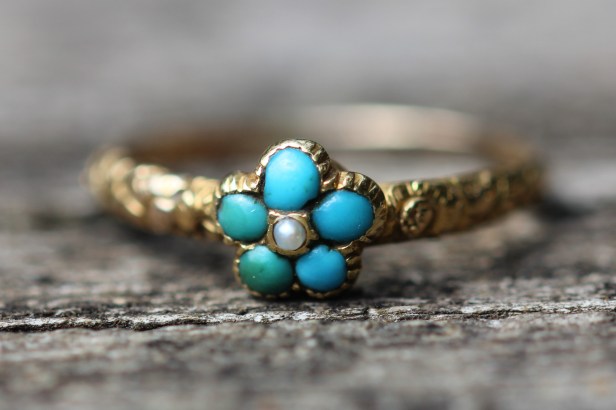
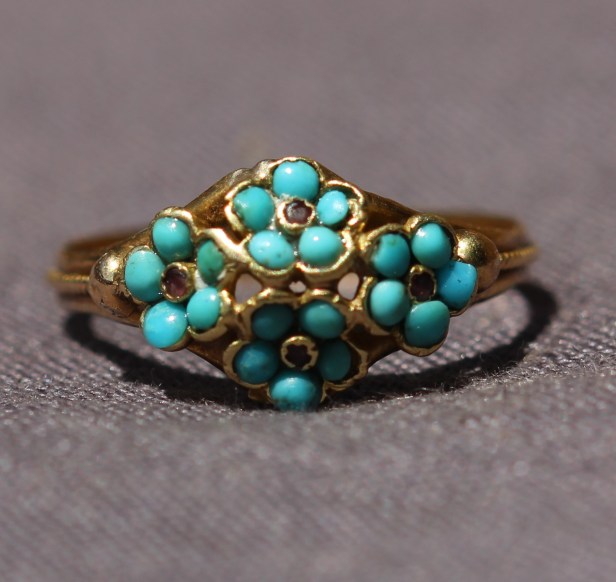
The jewellery in the photographs in this post feature the blue coloured forget-me-not. The flower is associated with mourning as it promises that a person who has died will be remembered for eternity.
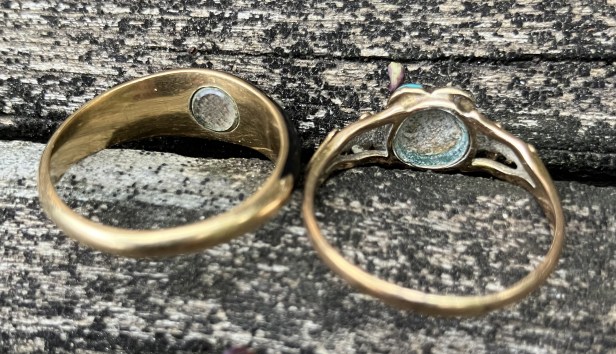
How do we know when a piece set with blue forget-me-nots is mourning or memorial jewellery? One indicator is that they all have a small locket on their back, a place for a small locket of hair to be placed. The glazed cover of the little locket is often missing.
The forget-me-not is found on larger pieces of jewellery, such as the Georgian gold mourning pendant below.
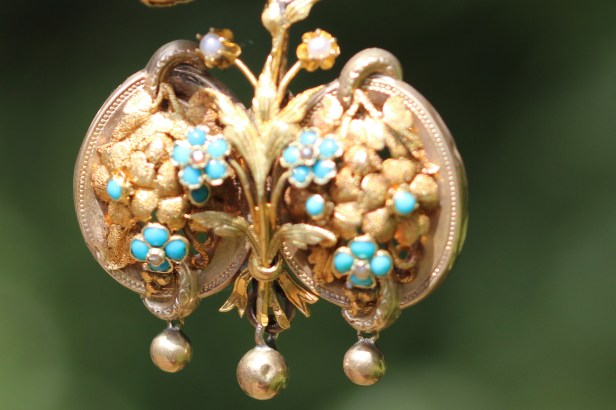
 navette jewellery
I thought only similar white flowers on jewellery are meant for mourning. I did not know about the turquoise flowers. Did you know which other stones they used for the forget-me-nots?
LikeLike
In the Victorian era, jet, onyx and seed pearls were allowed in the first stage of mourning, then amethysts, agates, pearls and diamonds in the second stage and finally gems like turquoise, diamonds, corals and delicate colours in the third stage.
LikeLiked by 1 person