
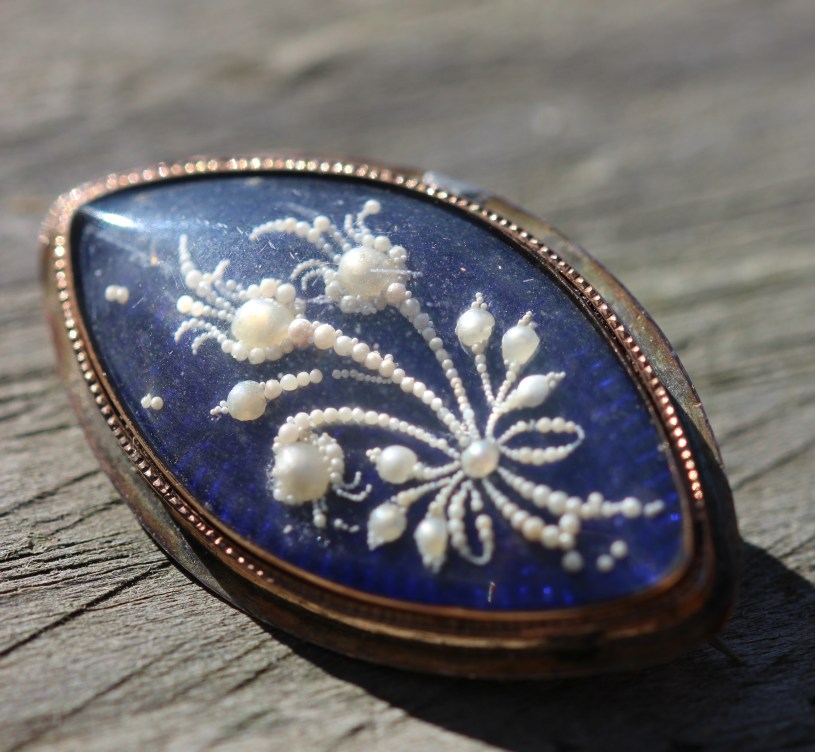
Pearls were thought to be created from the tears of gods. Shakespeare expressed this belief another way when in Richard III, he wrote ‘the liquid drops of tears that you have shed shall come again, transform’d to orient pearls’ (Chadour-Sampson, 74). In the Elizabethan period, pearls were often worn by widows and by mourners as a sign of respect. The Georgian and Victorian periods also held that pearls represented tears and sentimental and mourning rings, pins, brooches and clasp were often bordered with seed and half pearls. Seed pearls were also used to spell out flowers and monograms and the late Georgian brooch in the photo at the top of the post is a charming example of this. The pearls used are tiny and the work is extremely detailed.
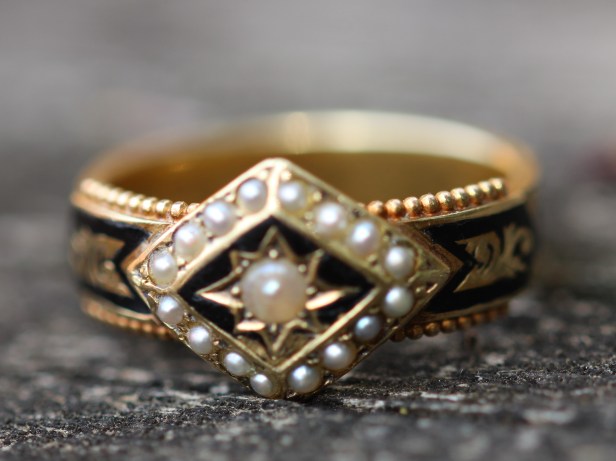
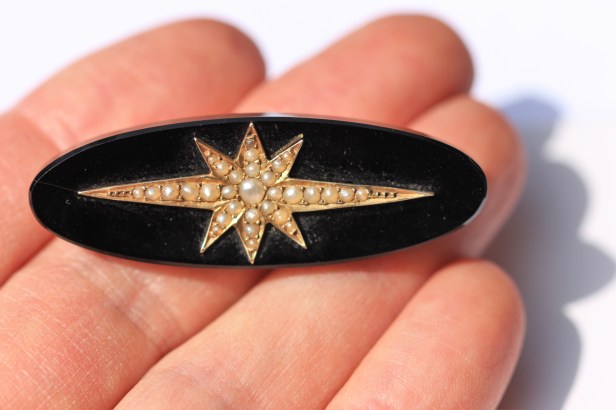
When Queen Victoria entered her decades long mourning for Prince Albert, seed pearls were used for borders around mourning brooches, rings and pendants as they symbolized teardrops of sadness. Seed pearls were also used for creating central patterns on jet and onyx mourning jewellery, as seen in the brooch below.
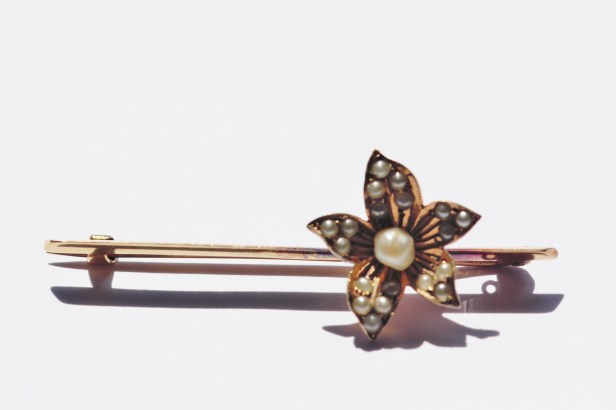
A growing middle class in the 19th century also meant that seed pearls could be used for more affordable jewellery and, in the Edwardian period in particular, they allowed for delicate elegant pieces to be designed which suited the lighter clothing styles.
Reference:
B Chadour-Sampson (with H Bari), Pearls , V&A Publishing, 2013
 navette jewellery