
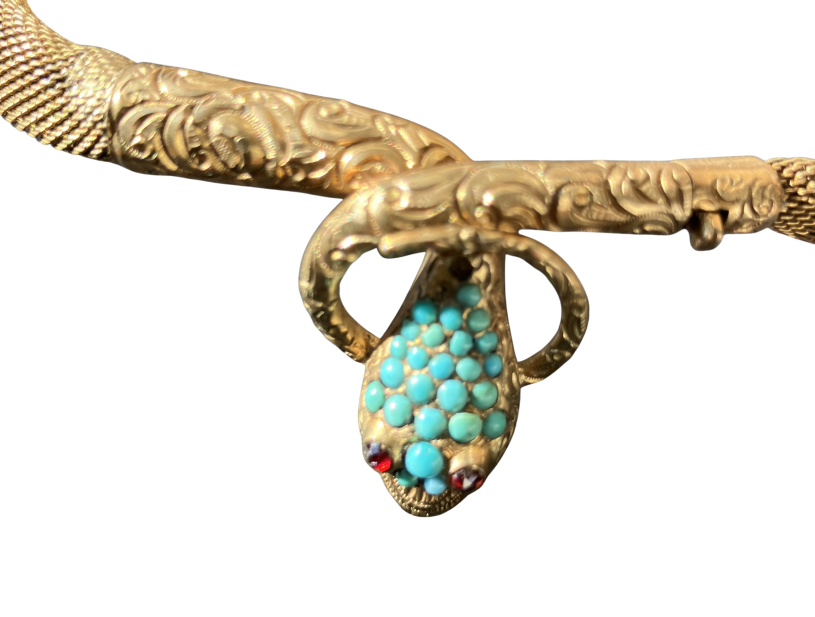
The metal is a lovely gold colour, is very slow to tarnish, and is very durable. It has been used to make beautifully crafted jewellery, particularly during the 18th and 19th centuries, and is often set with valuable gemstones. But it is not gold. What is it? It is actually an alloy made of copper and zinc in different proportions, designed to imitate gold.
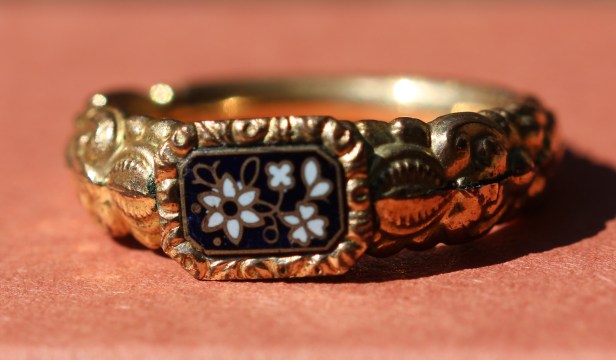
The most recognised gold substitute alloy was developed in around 1720 by Christopher Pinchbeck, described as a ‘clock, watchmaker and toyman’. Chirstopher‘s pinchbeck was an alloy of approximately 87% copper and 13% zinc and resulted in a very good imitation of gold. It is believed that some pieces also received a wash of gold.
Christopher died in 1732 and his son, Edward, inherited the business and the secret formula for pinchbeck. Another son, Christopher, carried on a similar business and was described as ‘the noted Pinchbeck, buckle and knick-knack maker to the King’. In 1733, Edward inserted a notice in the Daily Post warning the public to beware of imposters claiming to sell items made of pinchbeck. Edward Pinchbeck died in 1783 and supposedly the formula died with him.
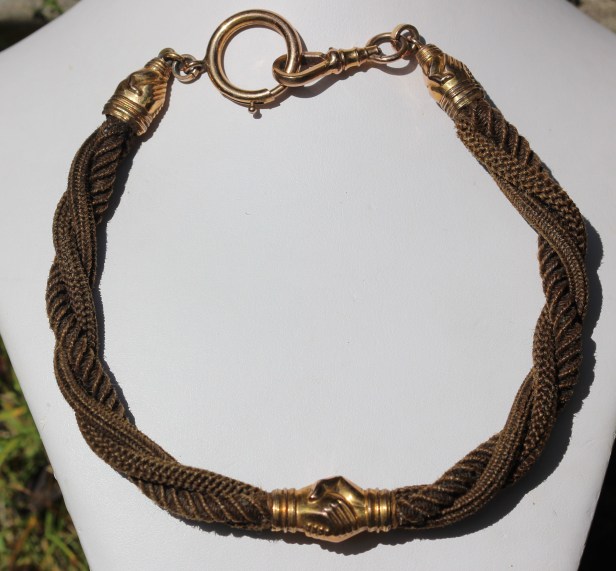
Others developed versions of the alloy. One copy was ‘Mosaic Gold, recorded in the 1830s, was described as an alloy of 66% copper to 34% zinc, with the appearance of 9ct gold (Ogden, 51). Another was ‘Abyssinian Gold’, introduced in 1868, which used an alloy of aluminium and copper, and which looked like 12 carat gold and did not need gilding (Rudoe, 51). ‘Oroide’ gold was trademarked by Charles Courtney Rowe in 1873 and was said to be 82.3% copper and 16% zinc (Rudoe, 57). Another copy was ‘Dorian’ which was registered in 1888, comprising the copper-zinc alloy but with a 20-22ct gold plating.
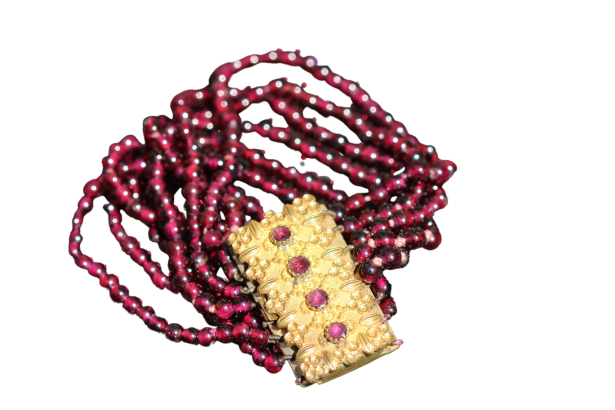
In the 1840s, electroplating of gold became available commercially and in 1854, legislation was enacted to allow for low carat gold such as 9ct to be used in jewellery and so pinchbeck imitations began to lose favour. They were still being introduced into the 20th century however. Some of these later ones included low levels of gold with the copper, zinc or aluminium.
These imitation gold alloys, as mentioned at the beginning of the post, retained their look of gold unlike some gold plated and rolled gold pieces. It can be often difficult to identify the alloys from the latter pieces but when testing the alloys with a touchstone and acids, the alloys test as negative.
References:
Jack Ogden, ‘Some Eighteenth and Nineteenth Century Jewellery Alloys’, 6 Jewellery Studies (1993), 77-79
Judy Rudoe, ‘ From Oriode tp Platinageld: imitation jewellery in the late nineteenth century’, 3 Jewellery Studies (189), 49-72.
 navette jewellery