
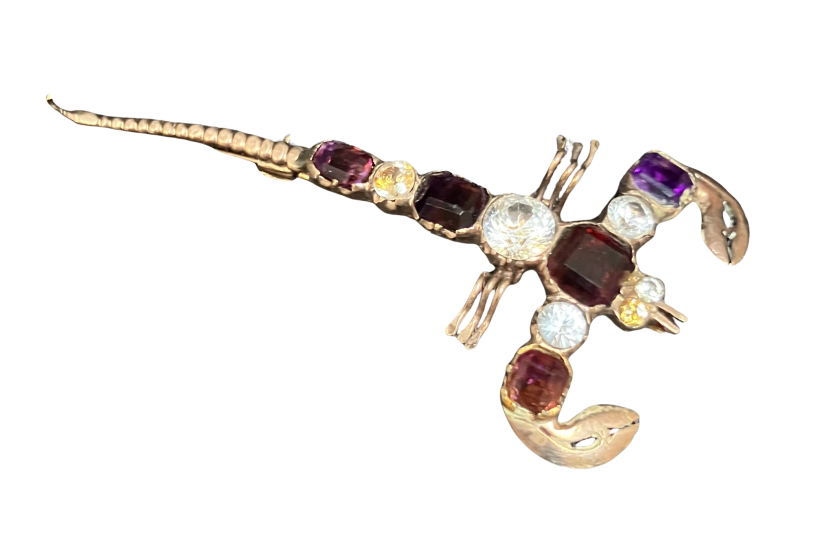
Jewellery has often been inspired by nature, either in the form it takes or in the colours used. Victorians in particular were very interested in nature. One way in which this interest was expressed was in wearing parts of actual animals, such as encasing actual butterfly wings in brooches, including dried exotic beetles in necklaces, or turning tusks and claws into brooches. However, there was also plenty of jewellery produced which just utilized fauna and flora motifs.
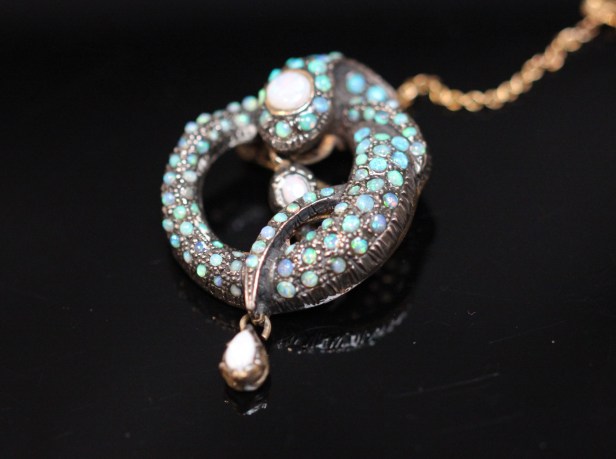
One particular motif which continues to be used a lot is that of the snake. The snake represents eternal love and its coils translate into beautiful flowing bracelets and other jewellery. The early 20th century opal snake brooch above is a lovely example. The head of the snake coils over the top of the coiled body and the tail loops through the body at the bottom of the piece. The head is set with a white opal and another one is hanging from its mouth as well as from the bottom of the tail.
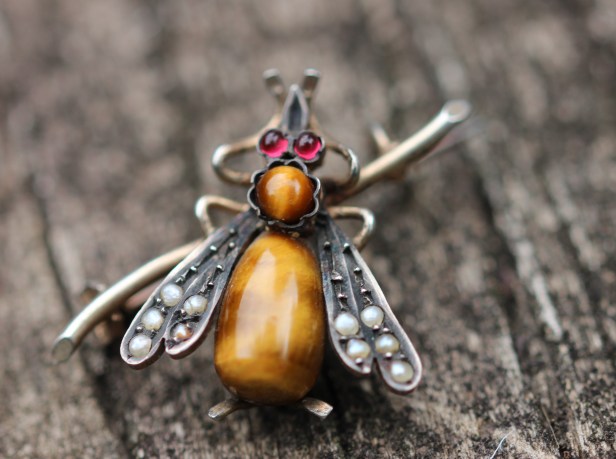
Insect brooches have always been popular. This little gold over silver antique brooch is French and represents an insect with a lovely tiger’s eye body. The eyes are garnets. These little insect brooches were often worn in the hair or scattered over the dress bodice.
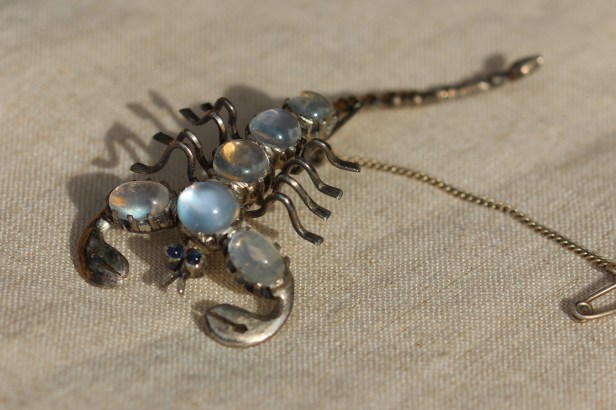
Larger brooches representing archnids like scorpions and set with gemstones were produced in the late Victorian and Edwardian periods. They could be set in gold, like the multi-gem version at the top of the post, or set in silver like the moonstone one above.
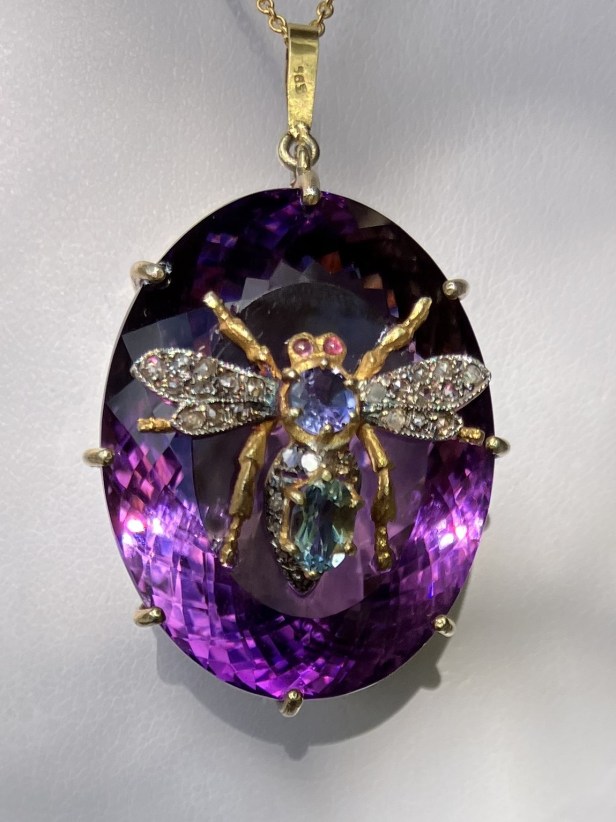
The final piece of jewellery to admire is the modern jewelled insect affixed to the beautiful 70ct amethyst below. The insect is set with a tanzanite, aquamarine and two small rubies as well as diamonds in its wings and on part of its body. Such a striking piece.
 navette jewellery