
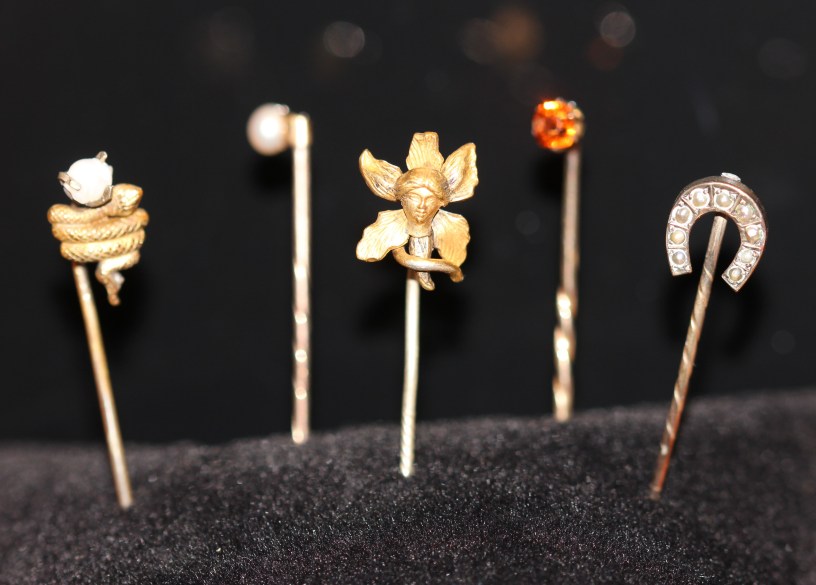
Jewellery in the form of a pin topped by an ornamental object has been worn over a number of centuries, by both men and women. Originally, they were used to pin cloaks and clothing together. By the 18th and 19th centuries, they had become one of the few pieces of jewellery worn by men. Still functional, when they were used as cravat pins but also purely ornamental when used, say, as lapel pins.
At various times, these pins have been described as cravat pins, tie pins, jabot pins, stick pins, breast pins, hat pins, scarf pins, and lapel pins. The size of the pin can vary a lot, depending on its intended use. Pins worn to secure a cravat were generally about 5 to 8cms long, while those with long pins, say, around 8cms to 20cms, were used as hat pins.
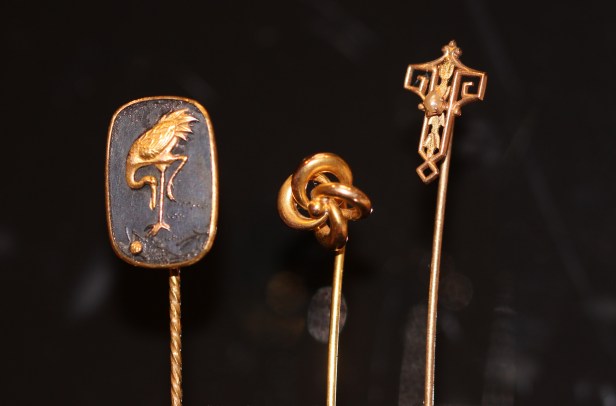
Clothing style dictates how jewellery is worn. One of the most significant items of clothing worn by men in the 18th and 19th centuries was the cravat, now developed into a tie. Stickpins were first used in the early 1800s to secure a cravat. Originally, the pins were smaller and quite dainty, but the pins became longer and the tops more ornate as the century progressed. The pins were straight or might have a have a barley twist to it. They could be gold or a base metal. They came with a clutch or bottom case to keep the stick in place and to protect the wearer although most of these have disappeared.
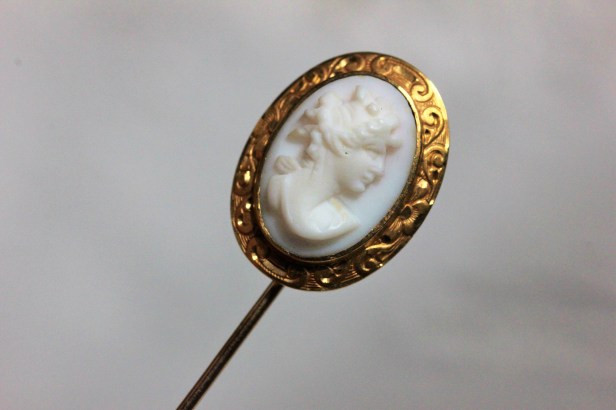
Some stick pins are set with diamonds, others with animal heads, four leaf clovers, sporting symbols like horseshoes, whips and fox heads. Many were sentimental, with hair encased in glazed compartments surrounded by pearls, or containing mourning painted scenes. Lapel pins, originally associated with patriotic gestures and the military, also became popular, replacing the more formal boutonnières.
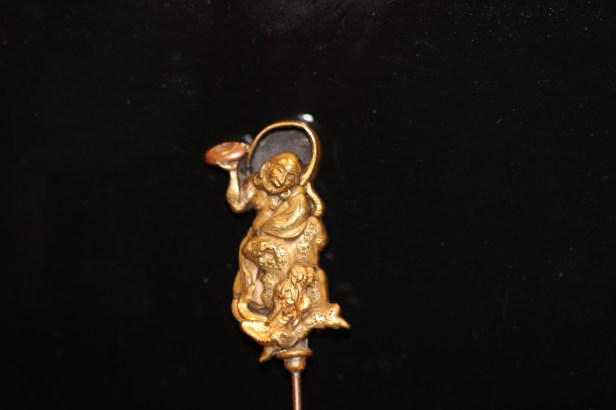
Women also started to wear stick pins to keep their lace scarves in place or as lapel pins, as hat pins or to decorate jackets. In early Georgian times, women used longer pins to be used to skewer ornate wigs into place and to anchor the large hats that sat on top of the wigs. However, the beginning of the 19th century saw the introduction of bonnets and hats that tied up under the chin with ribbons and so hatpins were not needed. Bonnets began to go out of fashion in the middle of the 19th century. Elaborate hair styles came into fashion and long pins became necessary again to skewer hats to the hair. The pins also became fashion statements and they were to remain in use until the start of WWI when hair styles changed again and hats became smaller and tight fitting, no longer needing pins.
 navette jewellery