
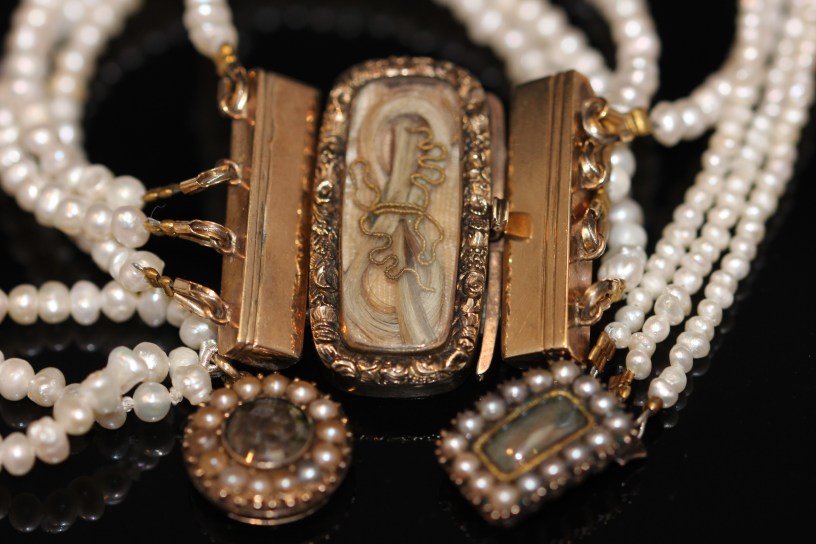
The type of clasp I am discussing here is the box clasp or tongue and groove clasp. As I discussed in the previous post, box clasps are still used for jewellery made today so how can you tell if a piece of jewellery with a box clasp is antique (ignoring other aspects such as design, metal, gem cuts, wear, hallmarks, etc)? I have noticed that there are a few types of box clasps that appear to indicate an antique piece of jewellery.
The first are clasps with a central glazed compartment containing woven or braided hair surrounded by seed pearls usually but sometimes by garnet, jet, paste, other stones or gold embossing. Three examples are shown in the photo at the top of the post. The use of hair in jewellery is just not seen with vintage and modern jewellery.
The next type of box clasp are those with pared down boxes, in some cases, merely a small bar or thin band creating the rectangular slot, as with the picture of the back of the Georgian bracelet above.
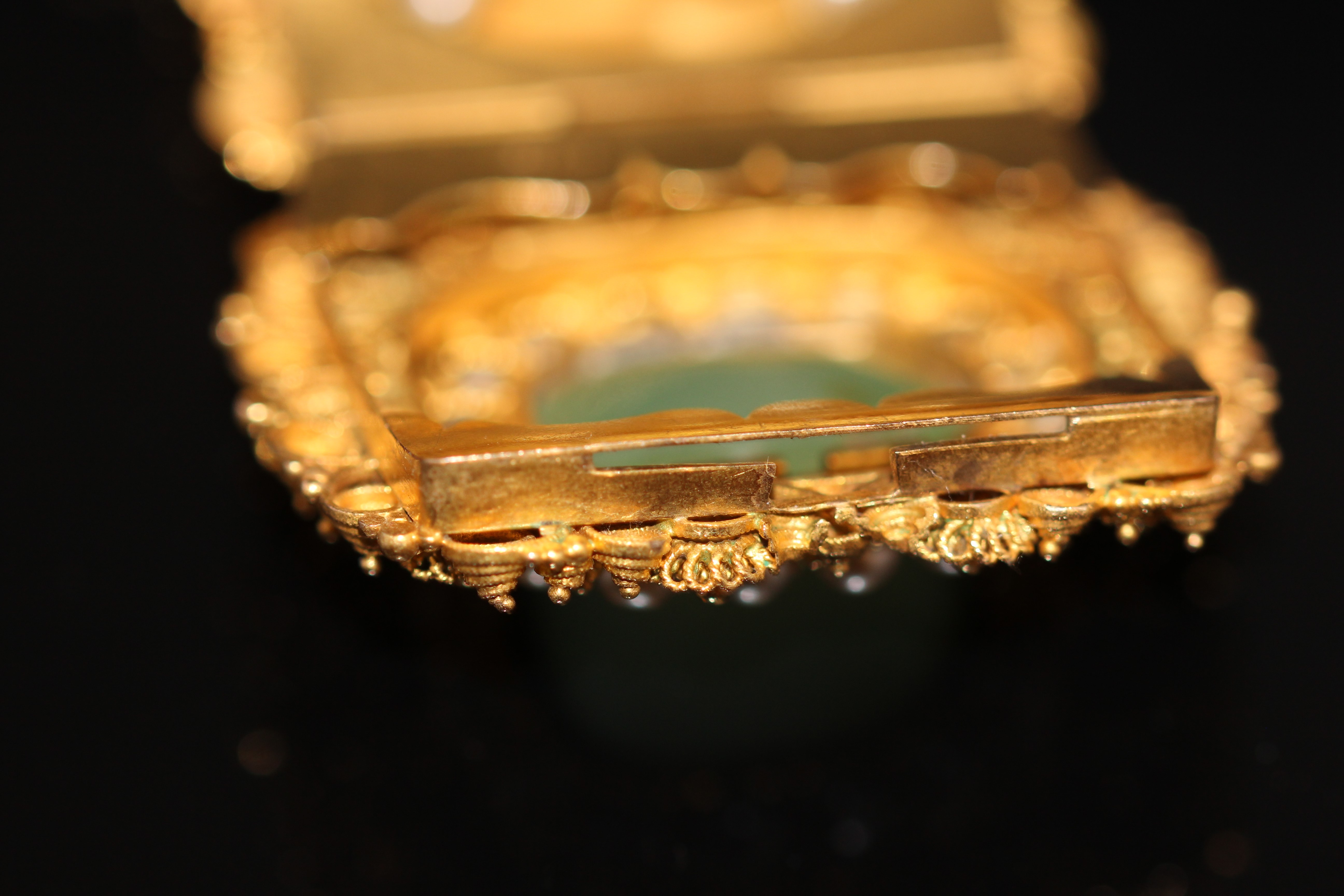
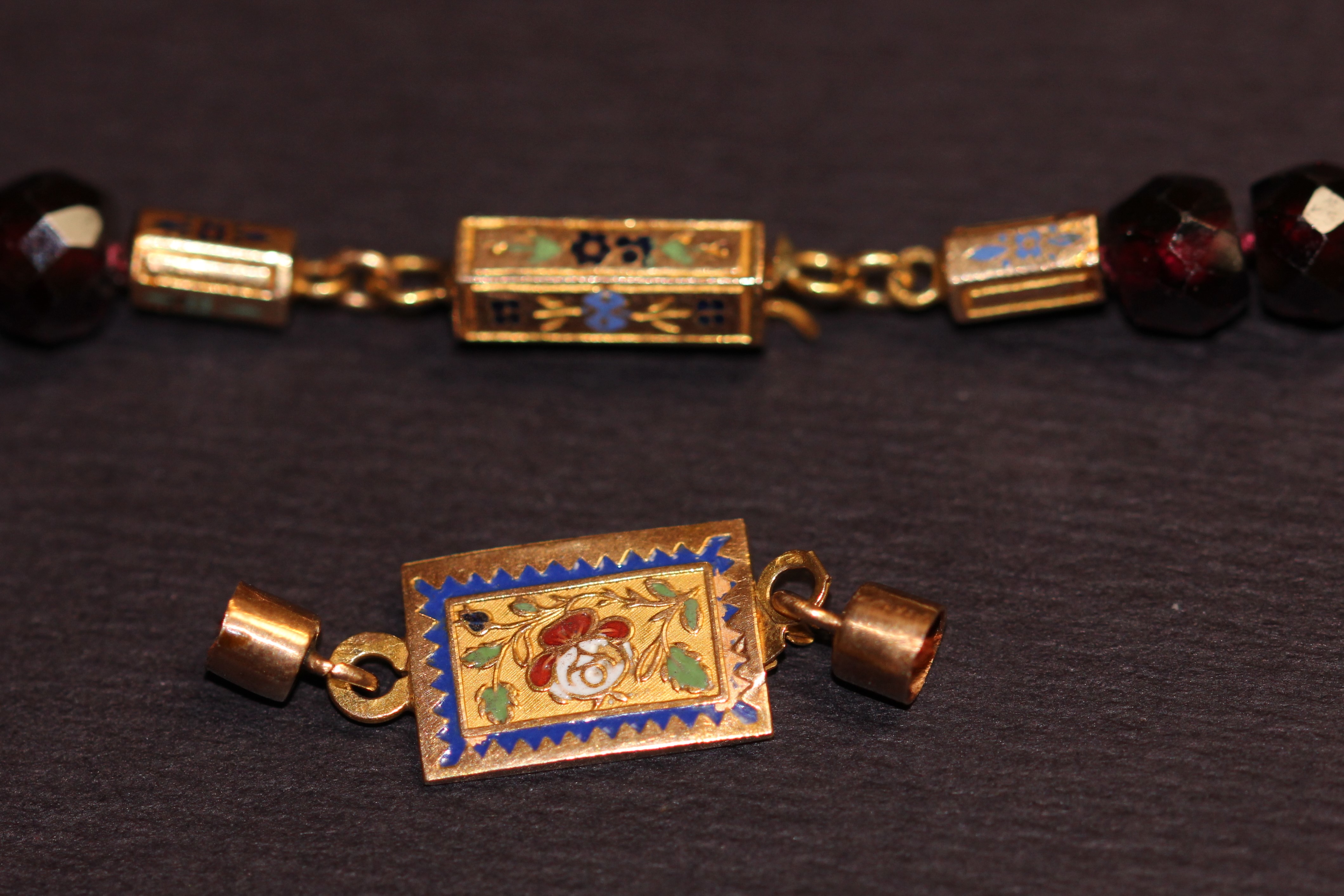
The third category are clasps made in France in the 19th century. The clasps are very distinctive and originated in Normandy. Many are multi-sided boxes. Michael Fieggen in his book, ‘Traditional French Jewellery’, describes them as ‘a cylinder with a hexagonal profile’ (p155). They also came in the form of rectangular plates. They were decorated with enamel flowers and pansies, sometimes, dogs.
Another French clasp from the 19th century has no enamel work but is also hexagonal or cylindrical, with delicate geometric engraving all over. The one in the photo below is large, the body measuring approx 4 cms in length, excluding the bales at each end. Fieggen says that these clasps from the north of France were attached to long chains, called ‘sorcière’ chains, which could be between 120cm and 150cms in length (p117).

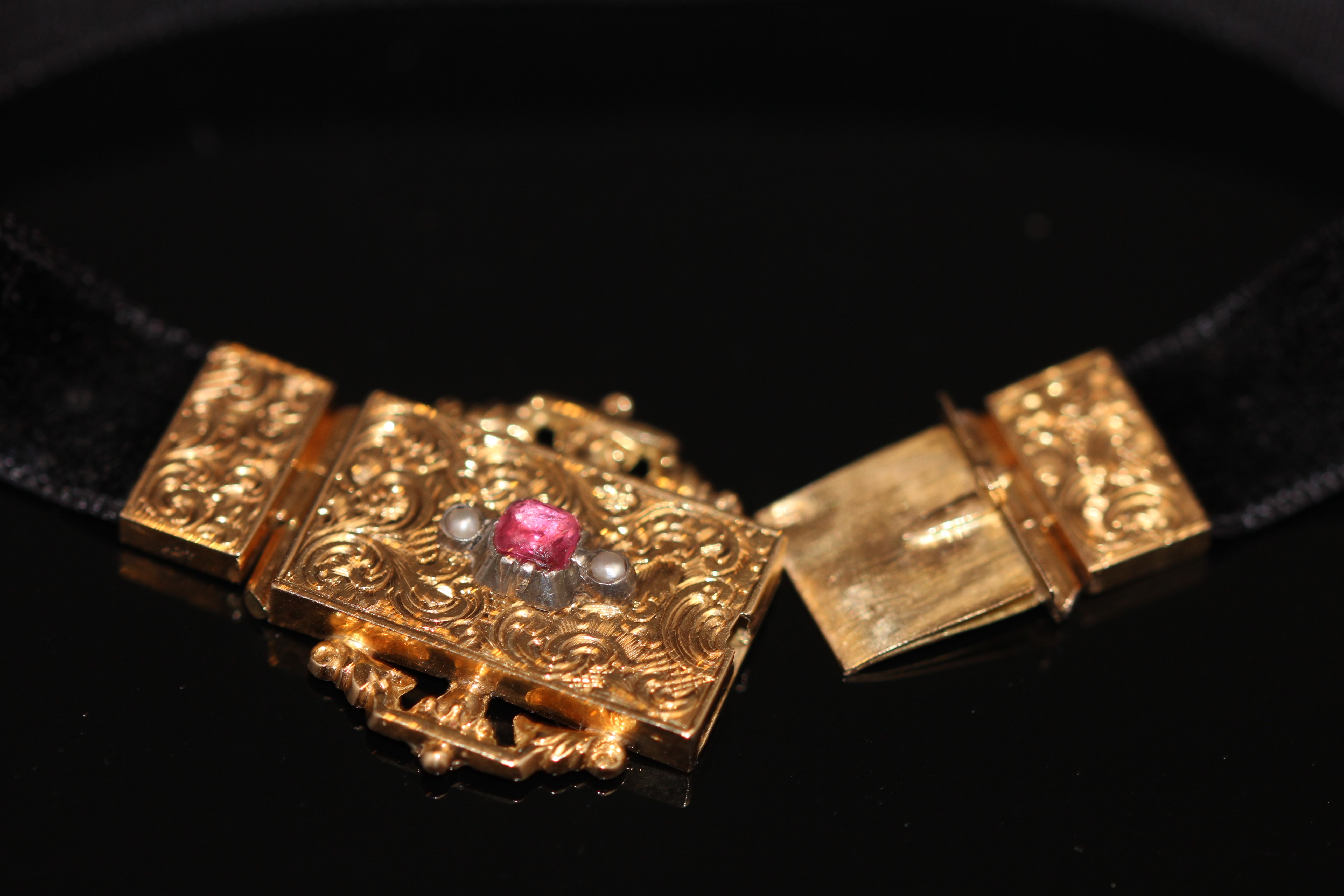
The fourth type of box clasp are those with hinged segments on each side of the central clasp. They were used often for material, hair and beaded bracelets or necklaces. You can see hinged sides on one of the mourning clasps in the photo at the top and in the antique clasp below.
The fifth type of antique clasp are those with cross-shaped slits so that the tongue can be inserted into the box from two different angles. I have only seen them on antique pieces.

So, there are five types of box clasps that can usually only be seen on antique jewellery. That doesn’t mean that modern reproductions of them can’t be found, of course. I will keep looking for more types of antique box clasps.
I’ll talk about other types of clasps in my next post.
 navette jewellery
Really interesting. Thank you
LikeLike
Thanks Dawn
LikeLiked by 1 person