
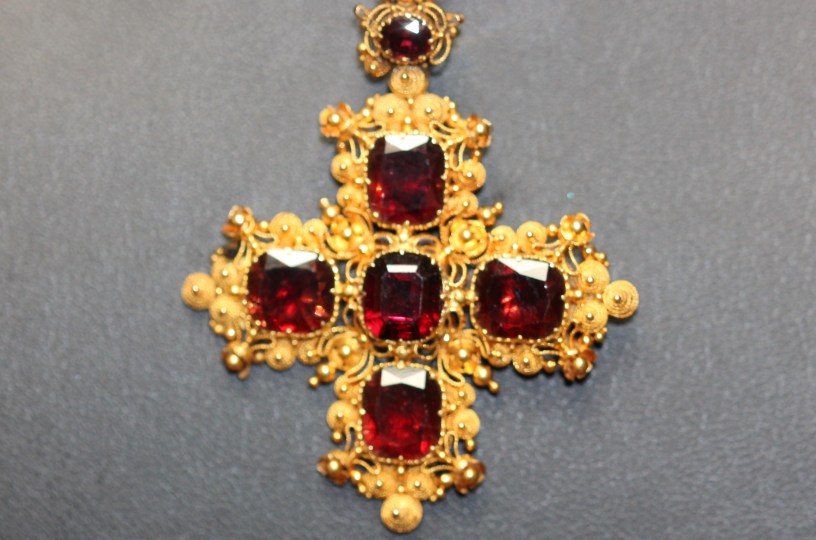
Welcome to the blog in 2024! Let’s start the year by celebrating the beautiful garnet, the birthstone for January. It is one of my favourite stones as it comes in lovely strong bright colours. The garnet is a large and complex family of gemstones with lots of sub groups with similar chemical compositions. However, the sub group that we most associate with the garnet gemstone is that comprised of the pink to red coloured stones, and it is this group from which the name of the gem derives The word garnet comes from the 14th‑century Middle English word gernet, meaning ‘dark red’ which in turn is derived from the Latin word granatus, from granum (‘grain, seed’), believed to be associated with the pomegranate which has red seeds.

The colour of the red varieties depends on the amount of iron or manganese in the stone’s composition. The red almandine garnet contains iron while the deep red pyrope contains manganese. The rhodalite garnet, which is a pink-purple red, falls between these two garnets in colour and contains both manganese and iron.

In antique jewellery, you will find mainly cabochon garnets with some faceted stones. They are normally foiled to enhance the colour, with a small sliver of tinted copper (in the Georgian period), foil made from a leaf of tin (19th century) or aluminium foil (from 1910 onwards) set behind the stone or lining the setting.
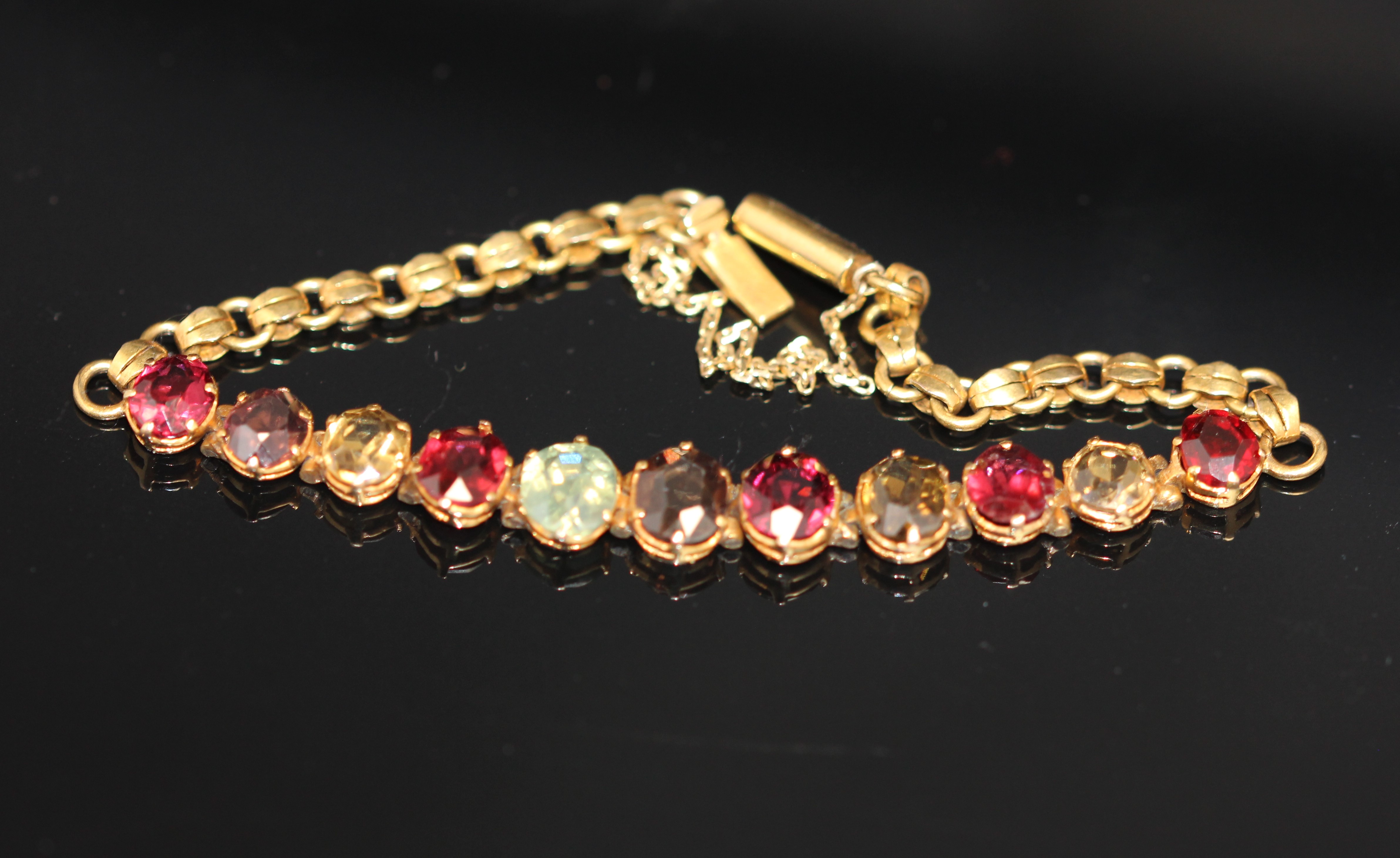
Because of the foiling, it is often hard to identify the variety of the garnet in a piece of jewellery. The cushion cut garnets in the beautiful Georgian cross in the photo at the top of the post are almandines, while the garnets in the earrings and the pendant are a pinkish colour and are likely to be rhodalite garnets. The red garnets in the bracelet are almandines.


That’s interesting and useful, thank you. And beautiful pieces
LikeLike
Happy New Year!
LikeLike