
Gemstones are minerals, rocks or organic materials that are able to be used in jewellery as they demonstrate beauty, durability (although that varies a lot) and, in most cases, rarity. When you study gemmology, the gemstones are broadly grouped into three groups – transparent gemstones, ornamental gemstones and organic gemstones. Much of the focus is on the transparent gemstones, such as emeralds, rubies and amethysts, and on organic gems like pearls but I find that the ornamental gemstones, with their range of colours and beautiful patterns, are very appealing. I thought I would look at groups of ornamental gems based on colour, starting with blue.

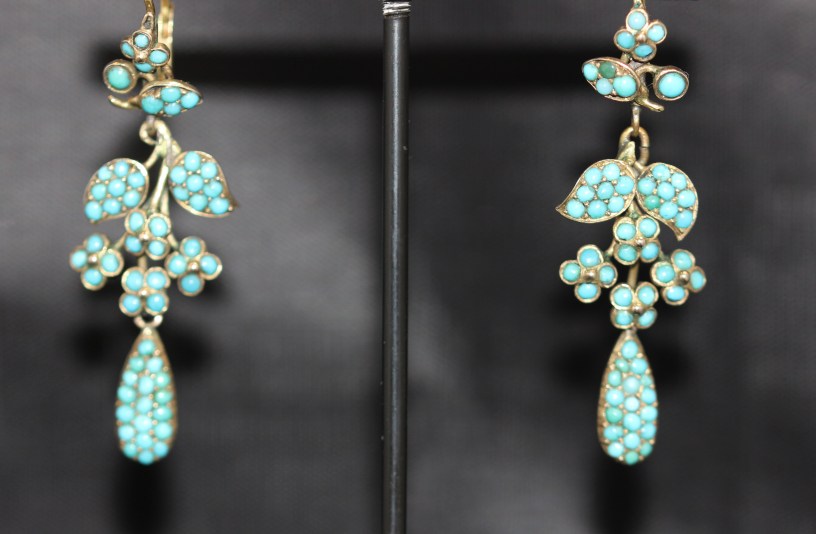
Turquoise is probably one of the most well known ornamental stone. The colour can vary from a sky blue to a greenish blue, depending on where it is mined and whether it has been worn a lot close to the skin (as it absorbs moisture which can darken its colour). It is often interwoven within a matrix of the host rock. This matrix can be hard to spot, like a spider web in some instances or it can be a striking feature of the stone as is the case with the necklace above.
There is a lot of imitation turquoise around now but it was also fairly common in antique jewellery. Glass as well as dyed and heated substitutes, often made from fossilized mammoth bone, were used.
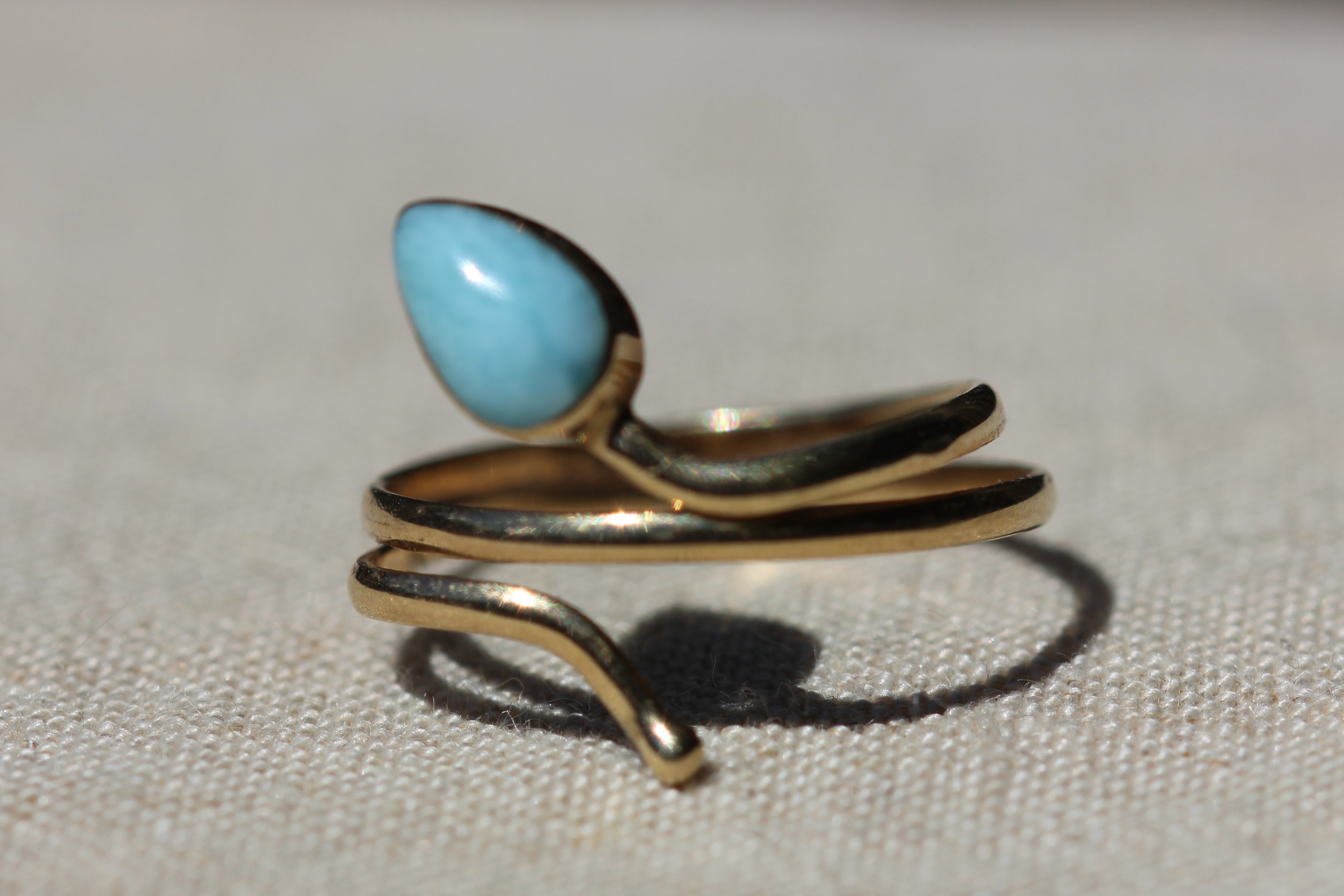
Another pale blue stone is the larimar, a rare blue variety of pectolite, only found in the Dominican Republic.
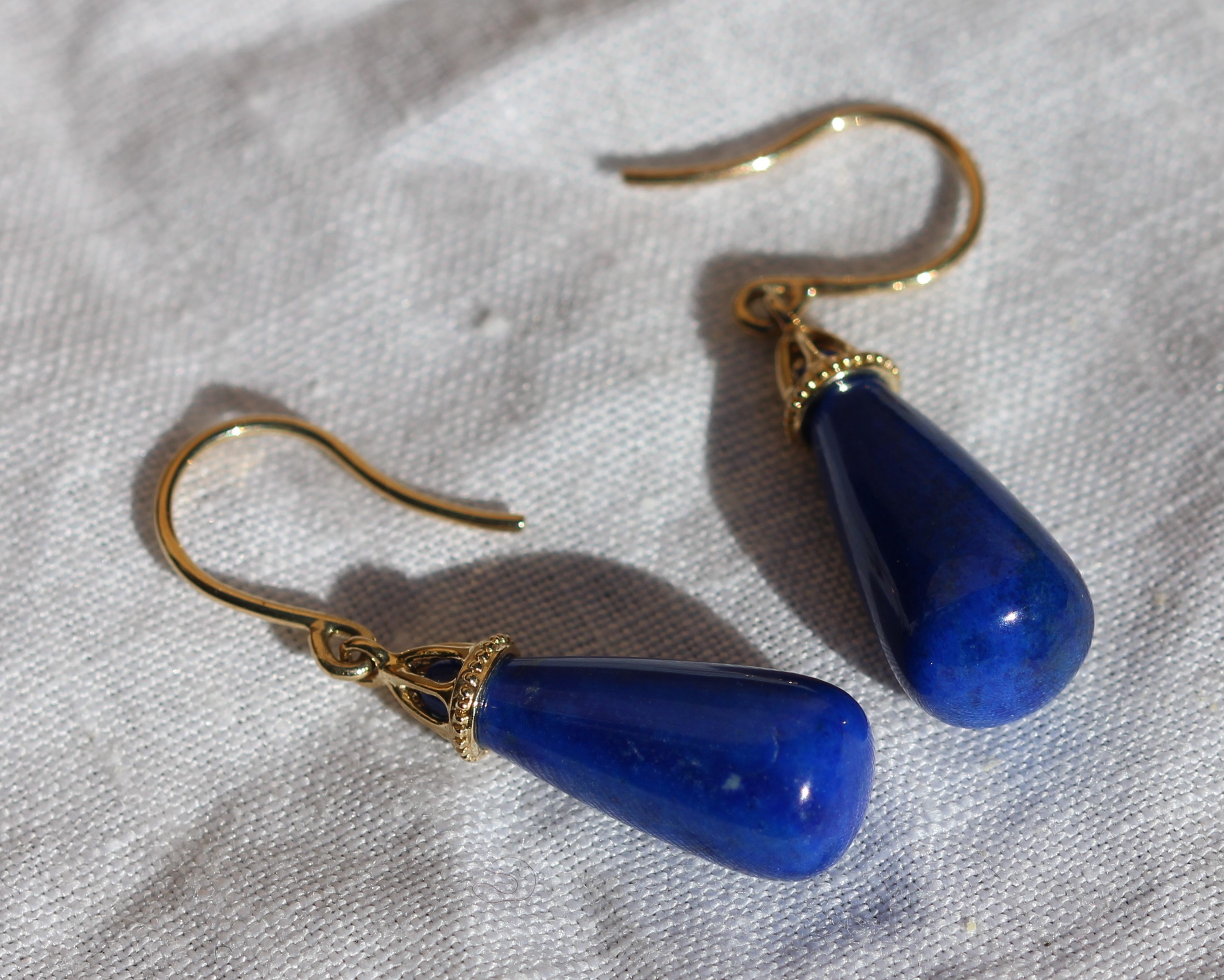
Lapis lazuli is a dark blue opaque stone, used since pre-historic times but never as popular for jewellery as turquoise. It can often have a scattering of pyrite in it. It was used by the Egyptians for scarabs and in jewellery as well as being powdered for use as a cosmetic. It is not a common stone. You can see a few examples of Renaissance, Georgian and Victorian jewellery with it but it was used a bit more in art deco jewellery. It’s a very pretty stone.
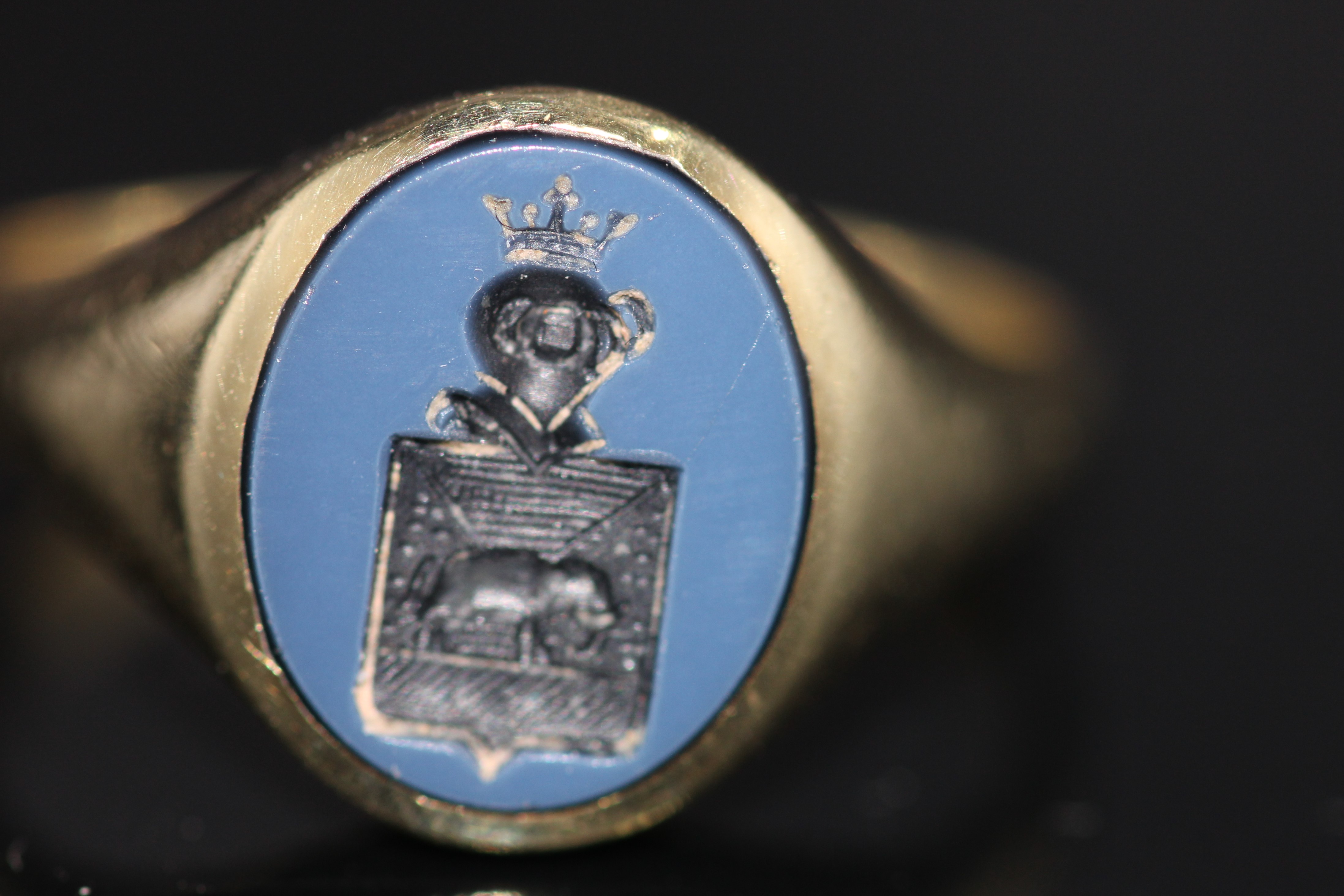
Blue is not a common colour in natural agate but the stone in the signet ring above seems to be natural. The blue surface band has been carved away to reveal the charcoal black bottom band. It does need a clean to remove some dirt in the engraving.
 navette jewellery
Lapis is one of my favourites, turquoise one of my least!
LikeLike
I am surprised that lapis doesn’t seem to be used that much as the colour is so beautiful.
LikeLiked by 1 person