
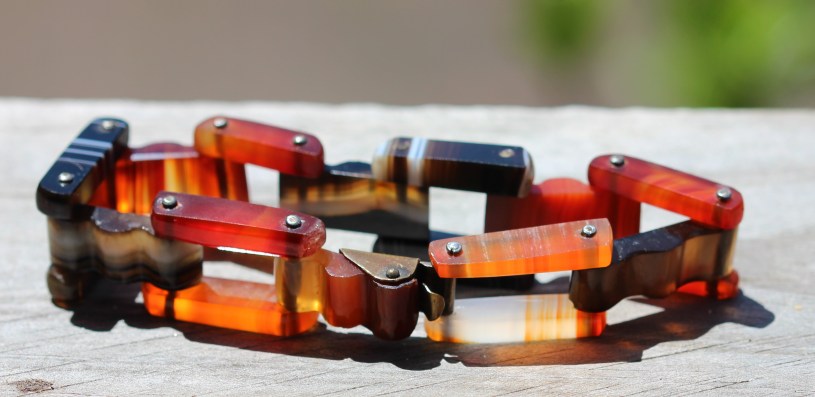
The final colour I am looking at is orange. Most of the mineral orange ornamental gemstones come from the category of microcrystalline (also called cryptocrystalline) quartz gemstones. This category of quartz contains varieties of chalcedony gemstones, such as agates, carnelian, sard, sardonyx, chrysopase, jasper and bloodstone. Pure chalecedony is white but the addition of iron oxide results in an orange, red orange to dark orange brown translucent gems called carnelian and sard. Sard is generally a darker colour than carnelian.
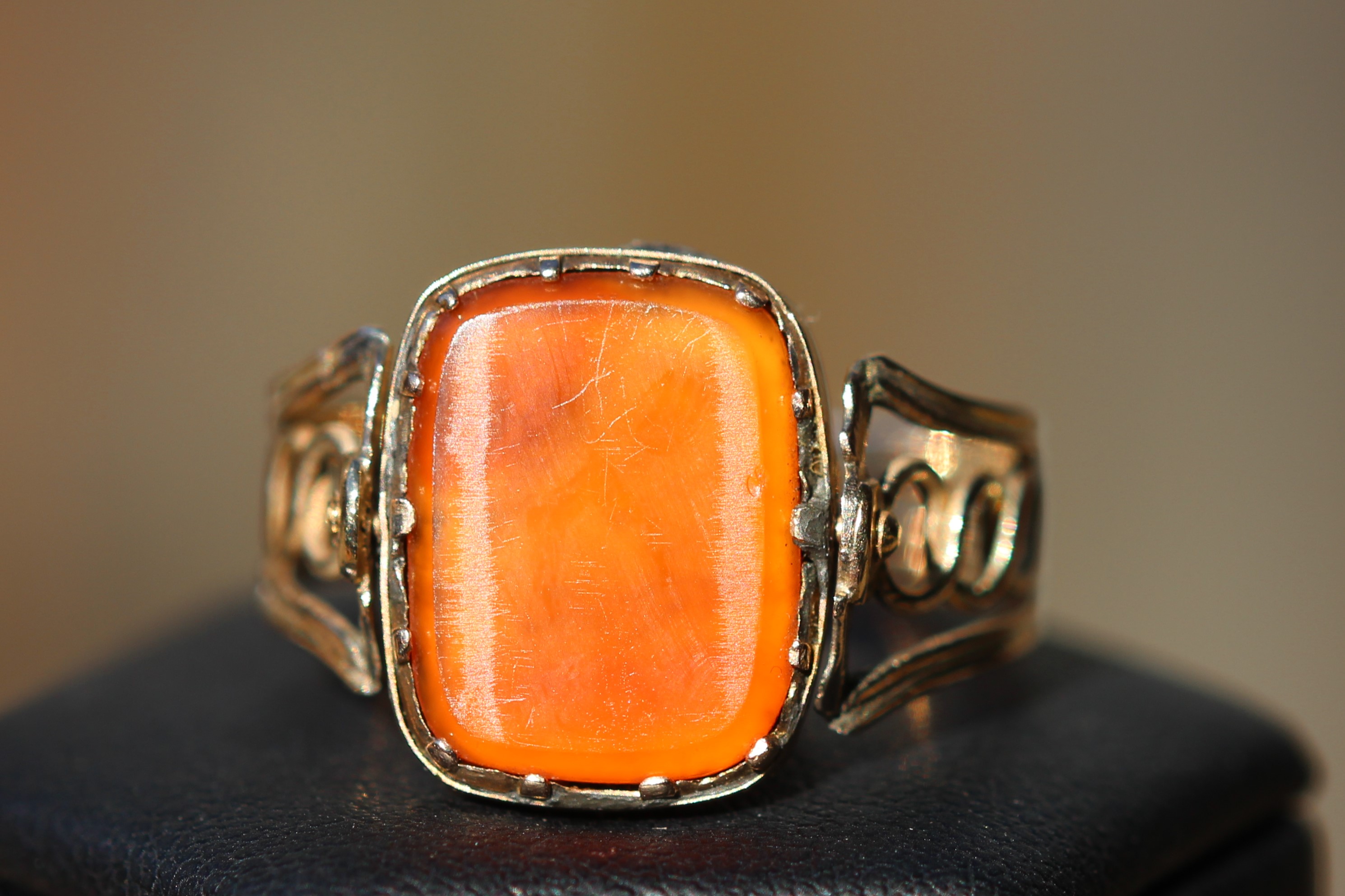
The antique swivel ring above has a large carnelian gemstone with vibrant orange colour.
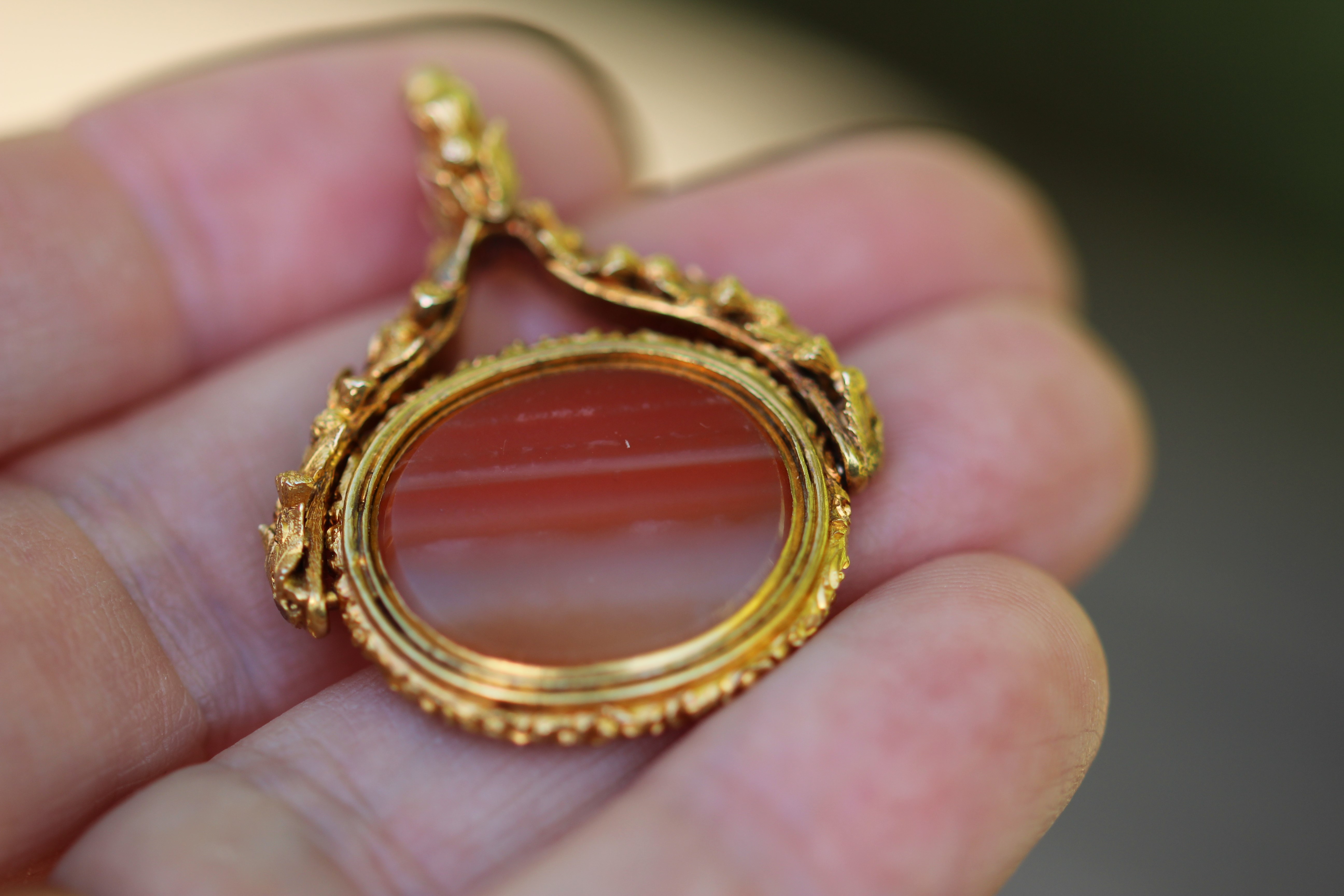
Sometimes these stones contain white bands and they are then called carnelian onyx or sardonyx. The bands are layered in parallel bands as you can see in the fob below. You can also see clear parallel banding in the bracelet pictured at the top of the post.
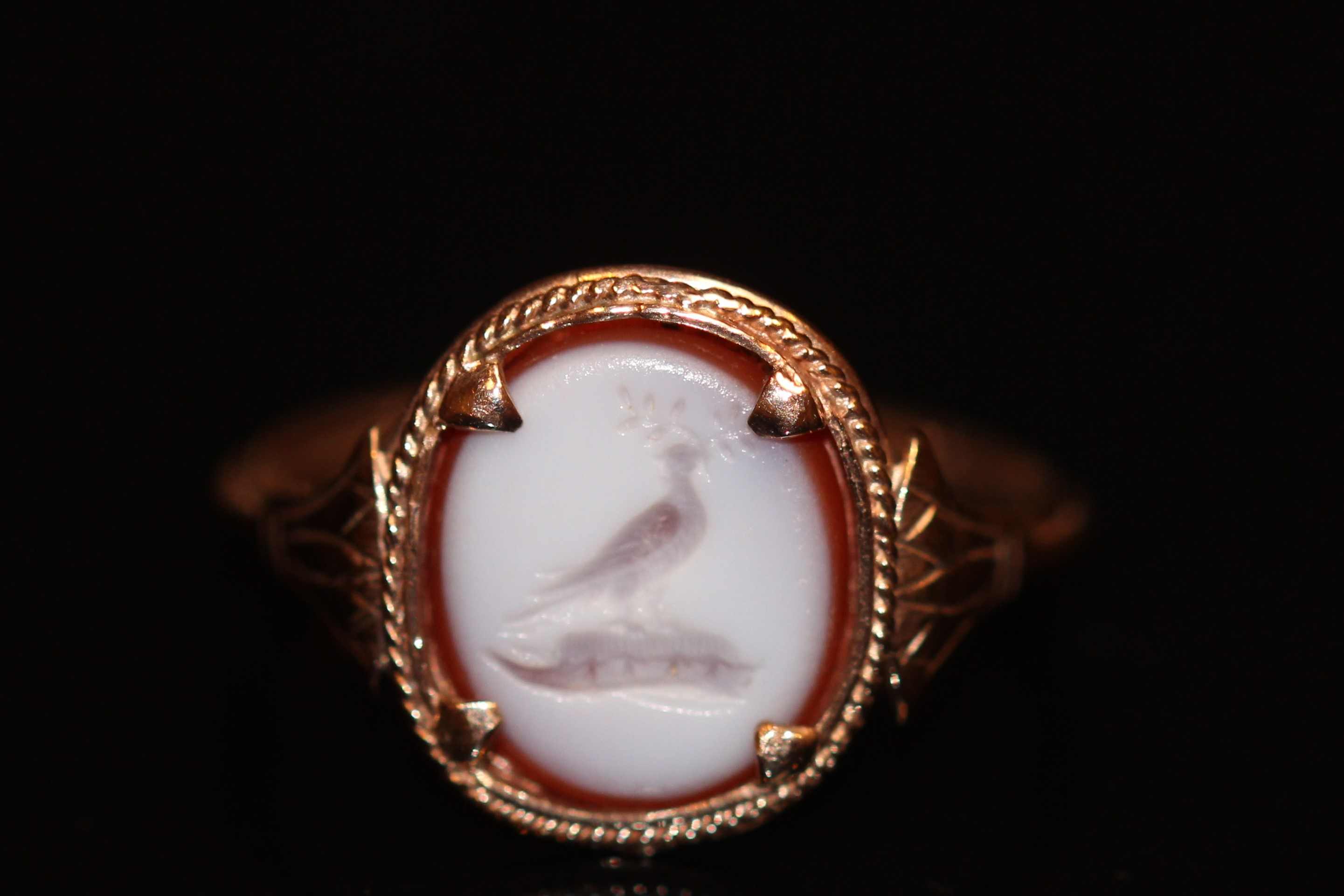
Another way in which the orange and white bands can be displayed is seen in the signet ring above, where the white layer has been carved to show a bird sitting on a branch.
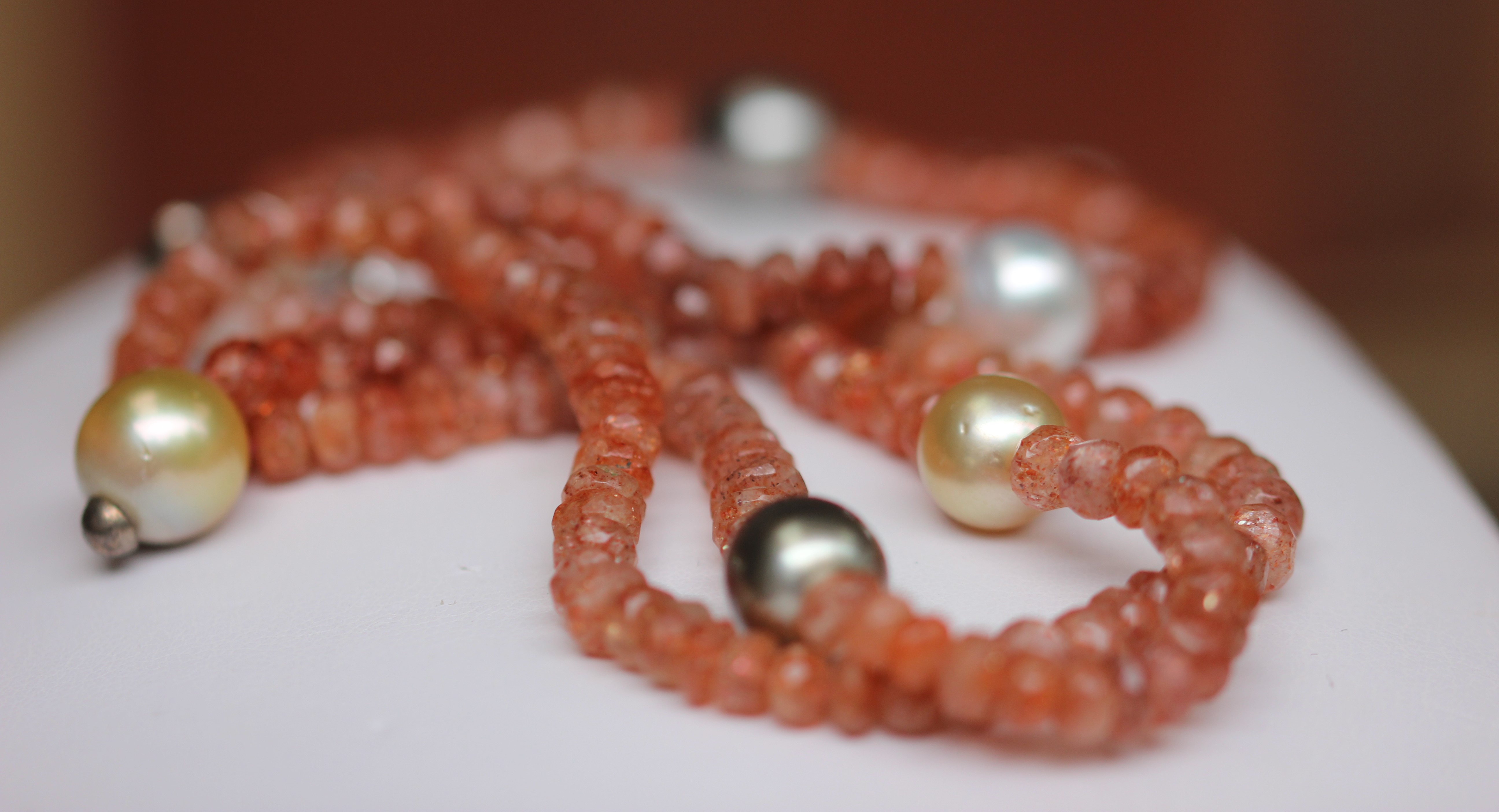
There are other orange translucent and transparent ornamental gemstones like sunstone (from the feldspar family), fire opals and mandarin garnet (a type of spessartine garnet). It can be difficult often to find these as gem quality stones. And of course there are gems like amber and coral, but they are not classified as minerals.


Beautiful examples. Thank you
LikeLike