
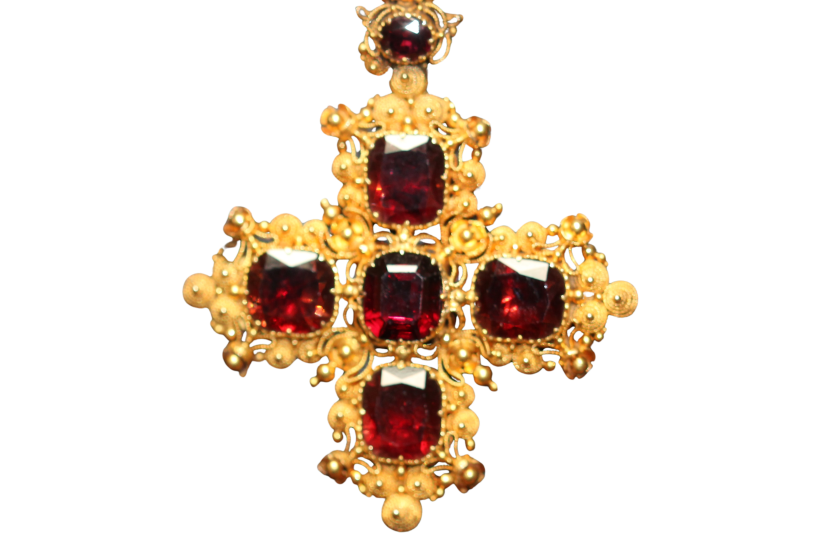
I wrote about jewellery crosses a few years ago but I have more to show you. Crosses can take a number of forms (and I am excluding the crucifix from this discussion as the focus is the decorative cross). Normally, a cross has an upright bar and a cross bar. With the Greek cross, the cross bar is half way down the upright bar and both bars are the same length. Then there is the Latin cross where the cross bar is a third of the way down the upright bar. The Byzantium cross is similar to the Latin cross but the ends of each bar widen while the Celtic cross has a circle around the cross bar. Another cross used a lot in antique jewellery is the Maltese cross. This is a cross which is similar to the Greek cross except that each tip of the bars is flared.
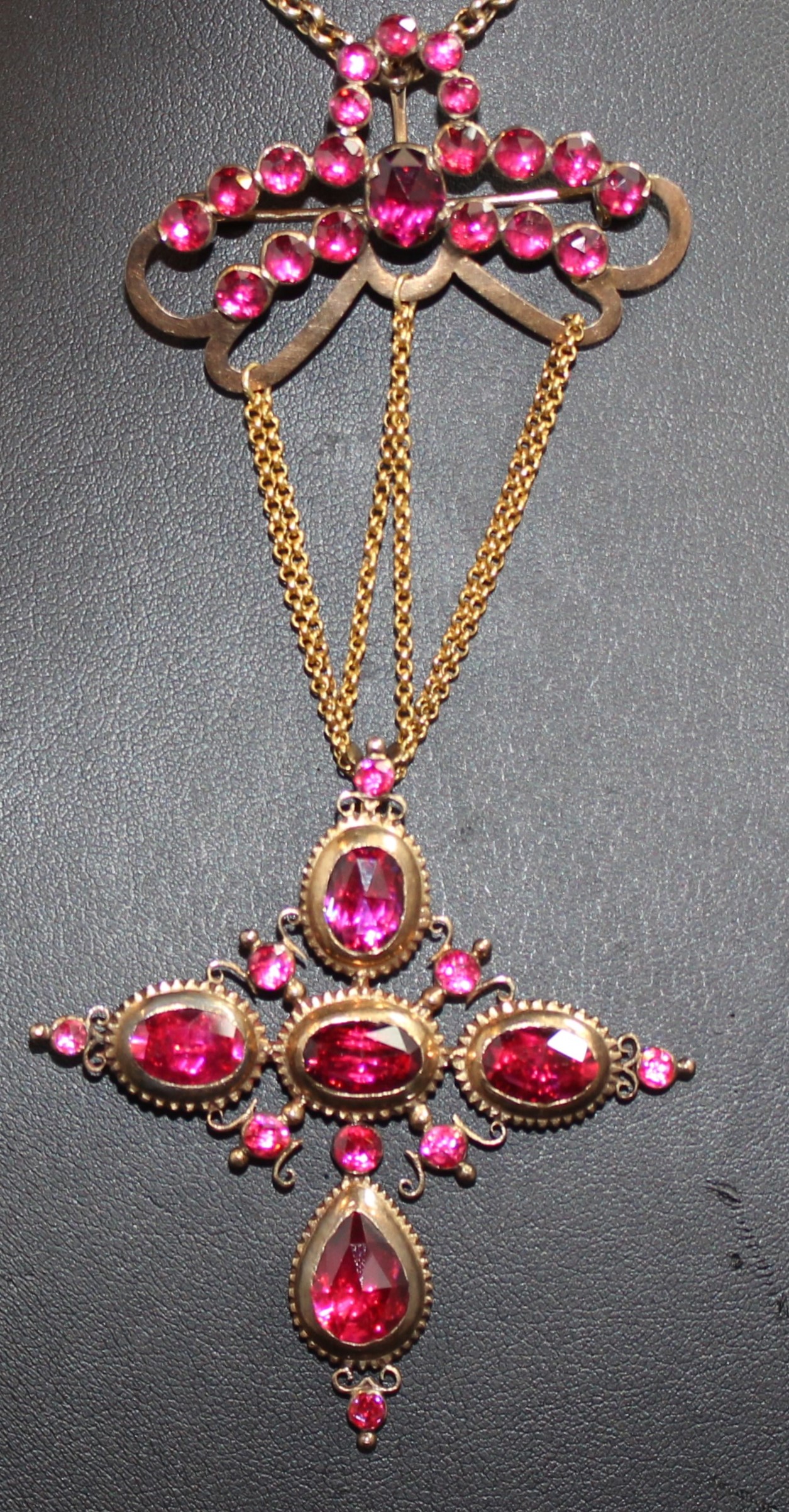
The antique cross above is a Greek style cross called a “croix badine”. It is a traditional cross from the Languedoc-Roussillon region of France. It is made in rose gold, with bezel-set rose-cut garnets, foiled, and comprises two parts, a cross suspended from a matching knot or bow with a loop with a brooch fitting. According to Michael Fieggen, in his book ‘Traditional French Jewellery’, p102, ‘badine’ means that the lower part of the cross moves freely. In this case, it is because it is hinged. It is quite stunning, and is 12cms long.
The next cross I want to highlight, another Greek style cross, is the one at the top of the post. It is Georgian, with ornate cannetille work and it is set with foil backed almandine garnets. It was probably once a brooch and the bale is likely a later addition.
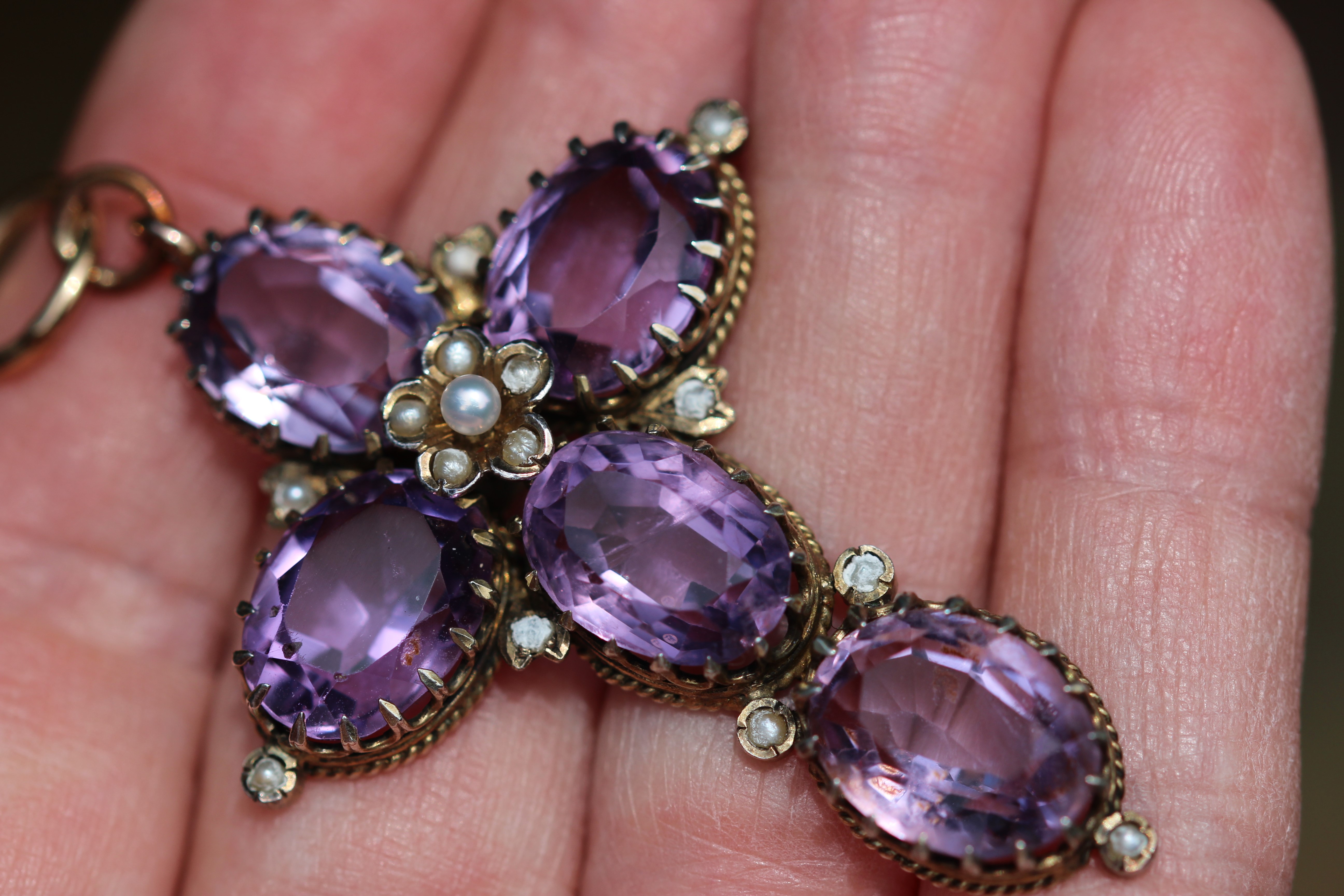
The third cross above is late Victorian and is a Latin style cross. It is made up of five oval claw set amethysts set in gold and silver. In the centre of the cross is a small flower set with split seed pearls. There are nine seed pearls around parts of the cross.
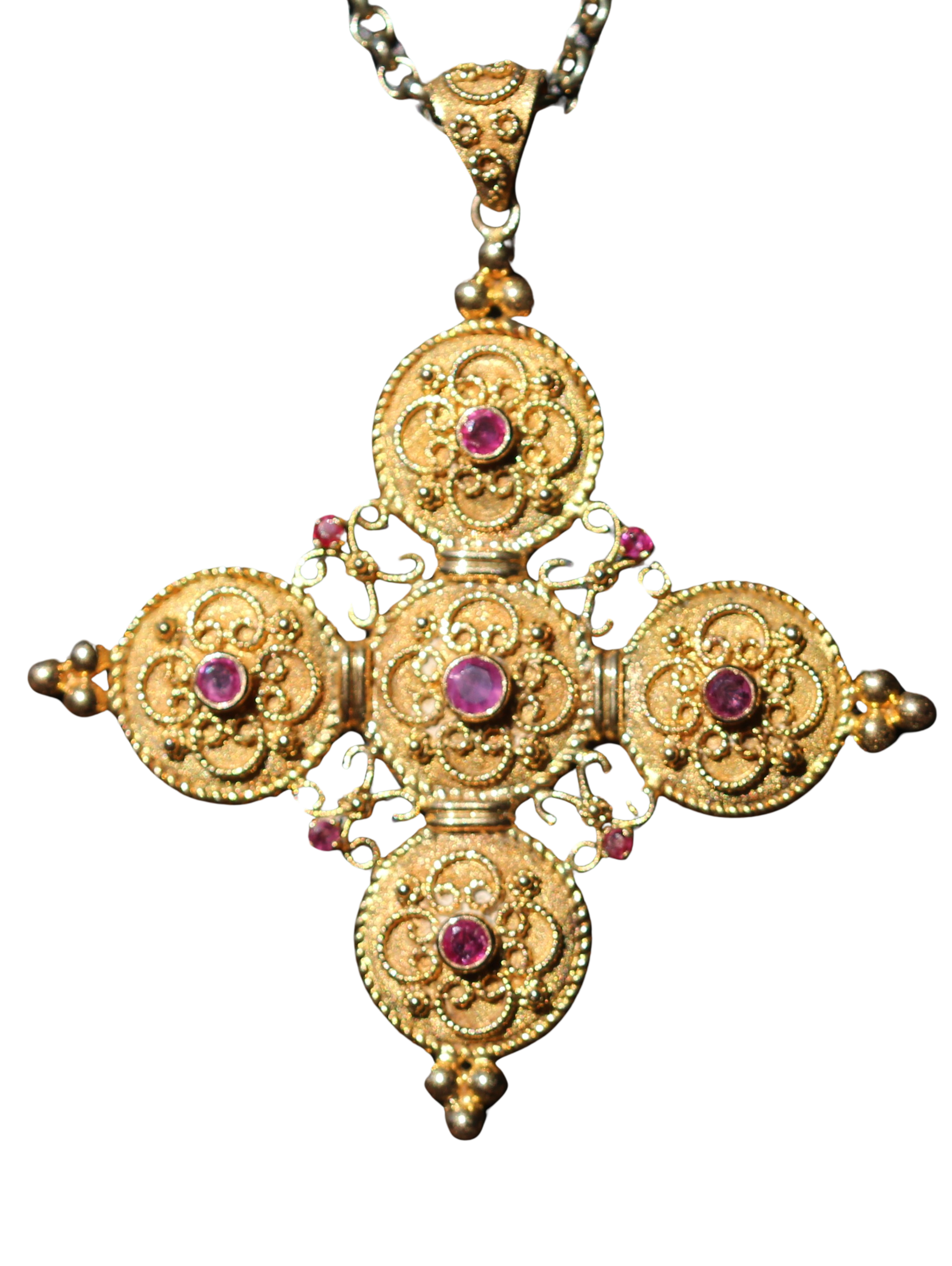
The final cross is another spectacular one. It looks antique, with the lovely rope work and small gold balls typical of the early 19th century, but is actually from the 20th century. It is set with little round rubies.
 navette jewellery
Lovely. Thank you
LikeLiked by 1 person
There is no doubt that red and gold look good together.
LikeLiked by 1 person
They are gorgeous
LikeLiked by 1 person
Thank you!
LikeLiked by 1 person