

We have used pins for personal decorative purposes for centuries. It may have been used initially for the practical purpose of holding a tunic, robe or cloak together but that didn’t mean that it could be ornamental as well. The fibula was an early pin that had both a practical and decorative purpose. It comprised a straight pin which was threaded through the garment and then caught up behind a part of the brooch. Then the pin was bent and coiled into a circle, becoming the forerunner of a safety pin.
The next main developments in decorative pins were the Celtic penannular brooch which had a circular shape and a long pin, and the ring brooch, which was popular in the 13th century. These had no clasp to hold the pin and it was not until the 14th century that clasps began to be used on brooches. They took the form of a C-clasp. The trouble with the C-clasp though was that it had a sharp point which was exposed and could catch fingers or clothing.
In 1849, Walter Hunt invented the safety in or, as he named it, the dress pin.

He described it in the patent documents as follows: The distinguishing features of this invention consisting the construction .of a pin made of one piece of wire or metal combining a spring, and clasp or catch, in which catch, the point of said pin is forced and by its own spring securely retained. They may be made of common pin wire, or of the precious metals.
The main feature, then, is a spring which holds the pin end firmly inside the clasp so it can’t stick into clothing or the body. Hunt sold the rights to his design for $400.00usd and others went on to make a lot of money from the invention.
Hunt went on to explain in the patent application that: Any ornamental design may be attached to the bar C, (see Figs. 6, 7 and 8,) which combined with the advantages of the spring and catch, renders it equally ornamental, and at the same time more secure and durable than any other plan of a clasp pin, heretofore in use.
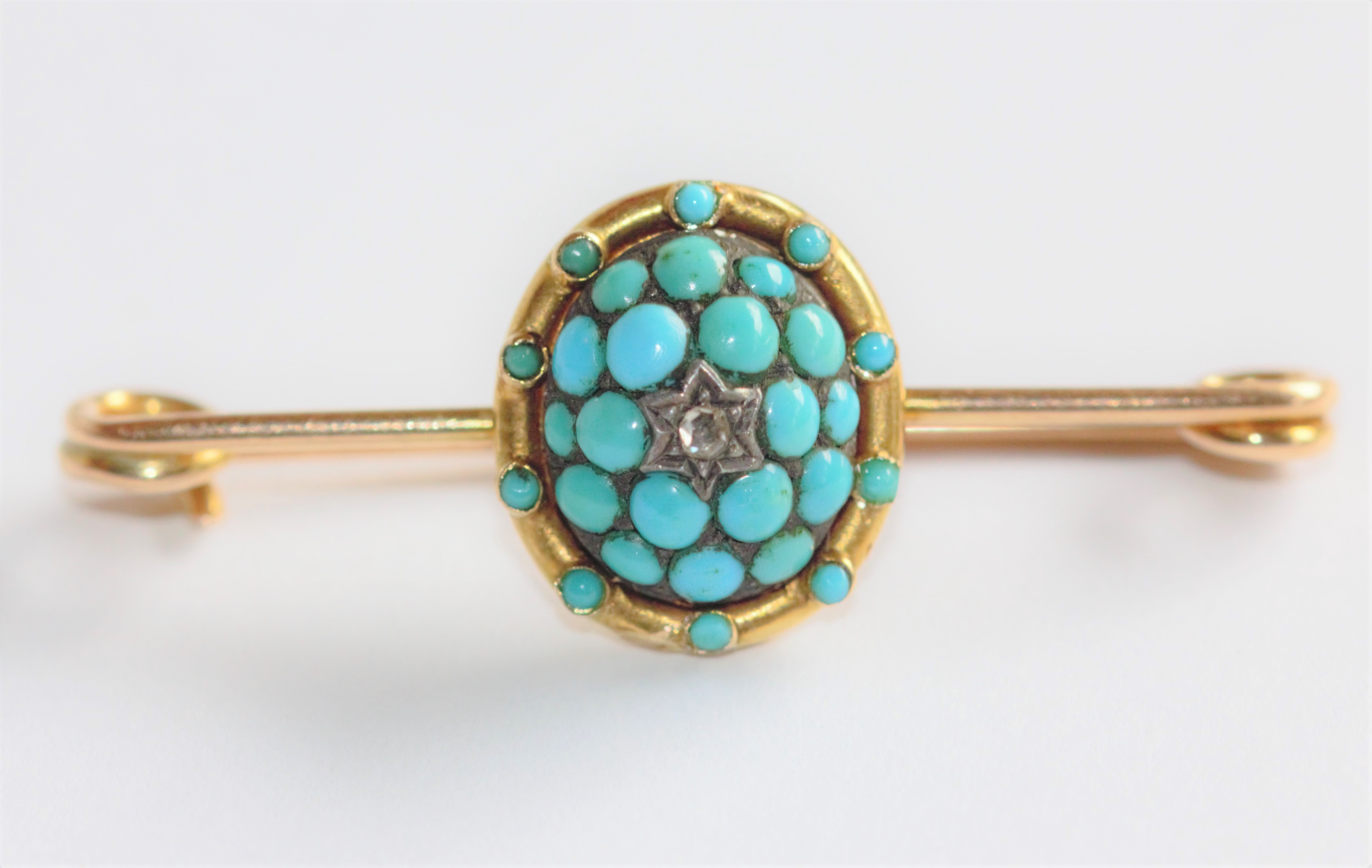
The safety pin had a lot of uses apart from with jewellery but it was used for brooches as can be seen in the Victorian turquoise bar brooch in the photo above. Other brooch clasps which protected the wearer from the sharp end of the pin were invented, like the European trombone catch which came in the mid 1850s and the cone-shaped clasp from the 1880s, but it is the safety pin which is still with us today.
 navette jewellery
Thank you. This is brilliant! I’ve never thought about the background to the humble safety pin before. Ta.
LikeLike