
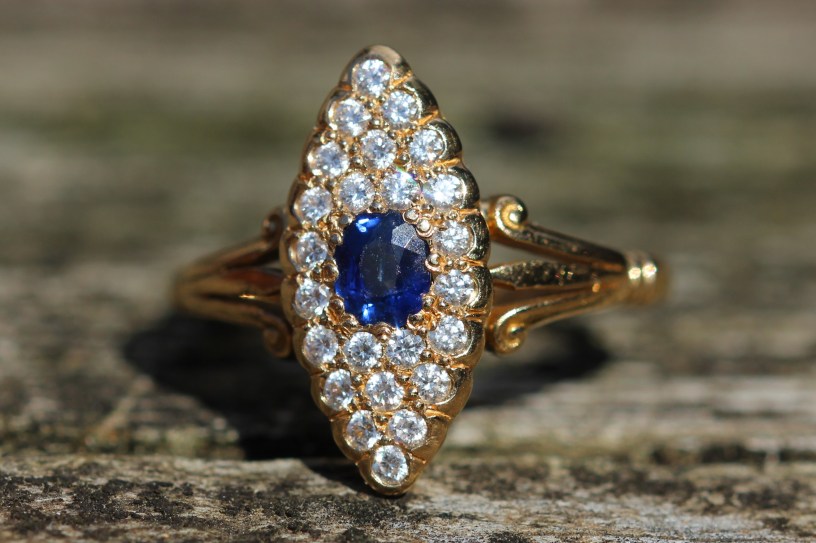
Colour plays an important part in most jewellery (apart from those pieces set with diamonds as they rely more on their fire and brilliance than their colour). Blue gemstones in particular are lovely in jewellery but there is a tendency to just think about sapphires, those intense blue gems, as in the ring at the top of the post. But there are lots more blue gemstones. There are transparent ones like topaz, tanzanites, aquamarines, and zircons, some like labradorite and opal that show a play of colour, and some opaque ones like turquoise, lapis lazuli and agate. There are many more, some quite rare, like blue diamonds, and others just not commonly used in jewellery like blue spinels, tourmaline, iolite, and apatite.
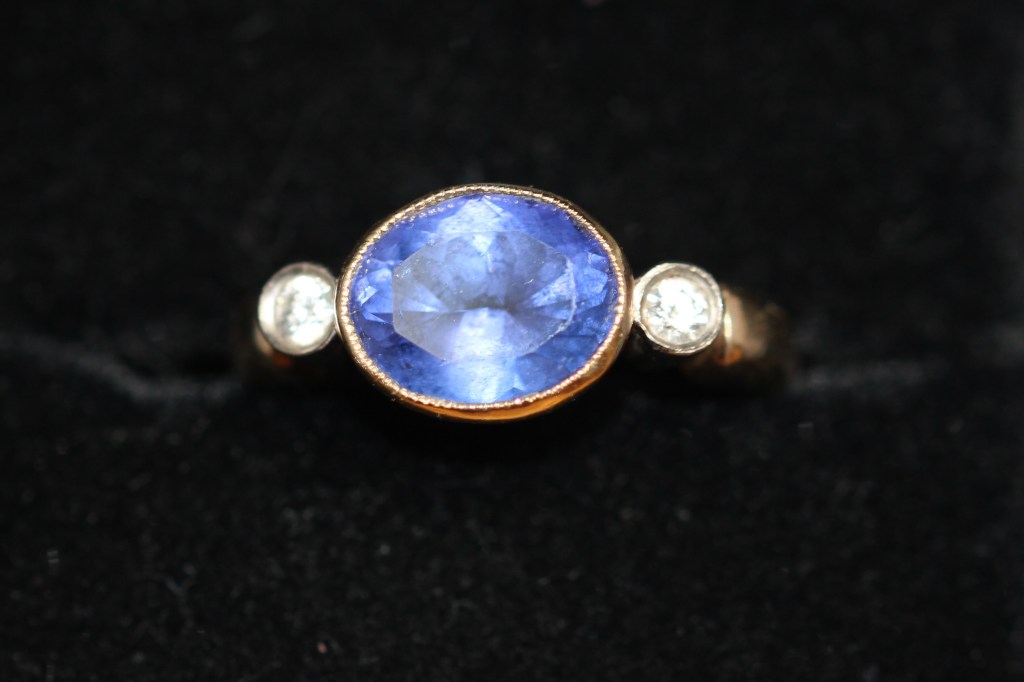
So let’s just admire some blue jewellery. The first piece is a modern tanzanite ring, see above. Tanzanite is a member of the Zoisite family of minerals and is a fairly recent discovery. A deposit was only discovered in Tanzania in 1967. Tiffany’s bought the rights to sole distribution and Henry B Platt, Tiffany’s Chair at the time, named the new gemstone ‘Tanzanite’. The firm promoted the stone extensively and managed to get it accepted as the third gemstone for December.
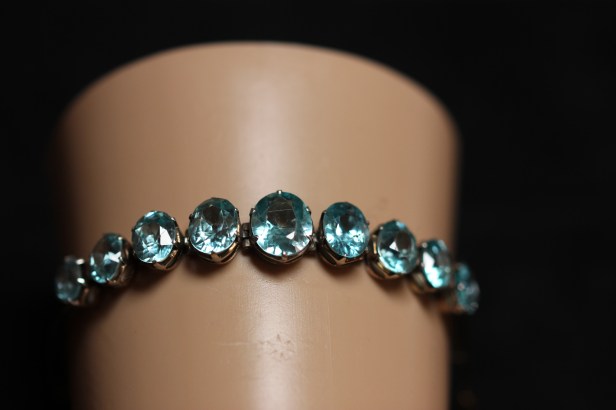
Then there is the zircon. The zircon comes in a range of colours but blue is the most common one now. Because they are highly refractive, they reflect a lot of light and so show sparkles and fire, which can be seen in this striking bracelet above.
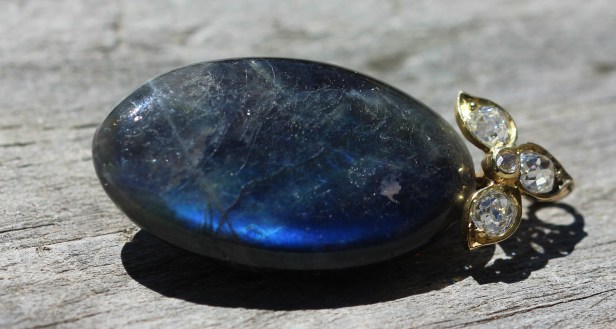
Next, is labradorite. Labradorite belongs to the feldspar family of gemstones and derives its name from where it was first identified – Labrador, Canada. Generally, labradorite gems are translucent to opaque and can display a lovely metallic iridescence in blues and greens. The iridescence is named labradorescence after the stone itself. The antique below is a lovely example of labradorite.
Finally, lapis lazuli which is a dark blue opaque stone, used since pre-historic times but never as popular for jewellery as, say, turquoise. It can often have a scattering of pyrite in it. It was used by the Egyptians for scarabs and in jewellery as well as being powdered for use as a cosmetic. You can see a few examples of Renaissance, Georgian and Victorian jewellery with it but it was used a bit more in art deco jewellery. The modern ring below is a good example of the lovely colour.
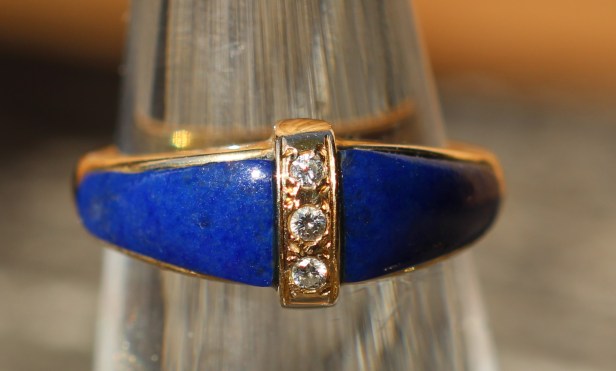


Two of my faves there. Labradorite and lapis.
LikeLike
I have to admit, I keep going back to that labradorite pendant and playing with it. It’s just so beautiful at every angle.
LikeLiked by 1 person