
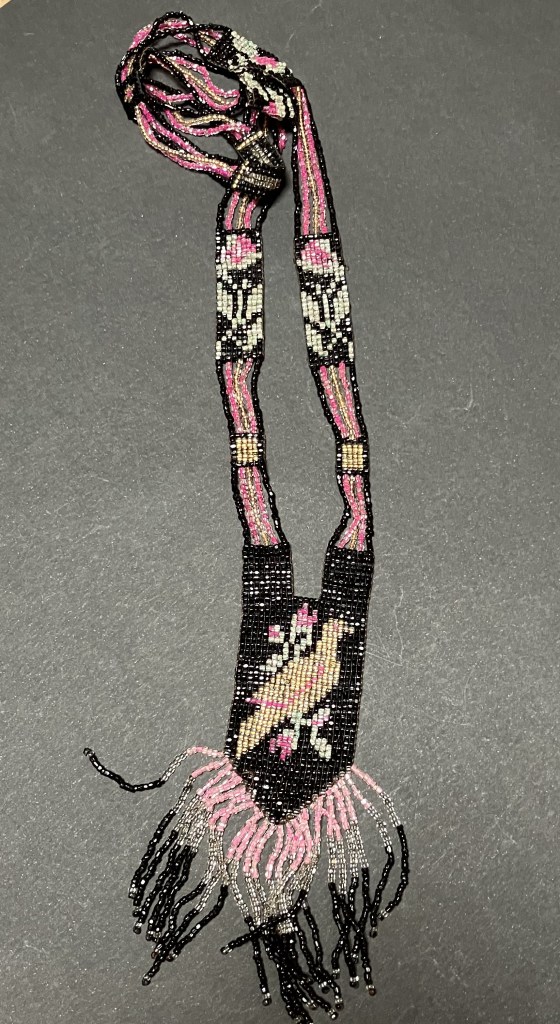
The Art Deco era began in 1919 and finished in 1939, so the period between the two world wars. It was a time of frantic attempts to celebrate life, after the horrors of WWI. Soldiers who had survived wanted to forget the past while women, who had assumed many of the roles of men during the war years, wanted to continue with some of the freedoms they had enjoyed. The clothing and hair styles of women changed to reflect this, with trousers being worn during the day and hair cut short. Evening wear was different, with long line sleeveless dress and dropped waistlines (Bennett & Mascetti, p288). Long dangling earrings were popular in the evening along with long sautoirs and lots of bracelets.
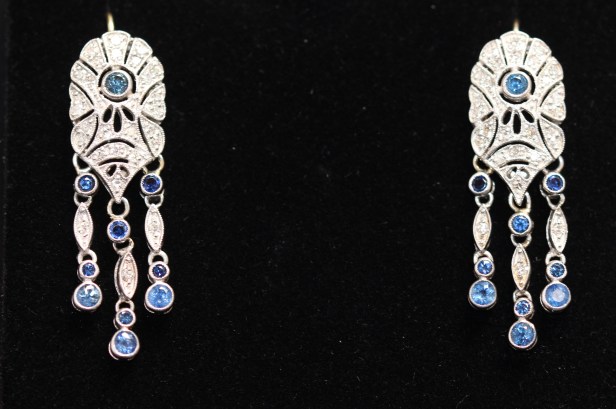
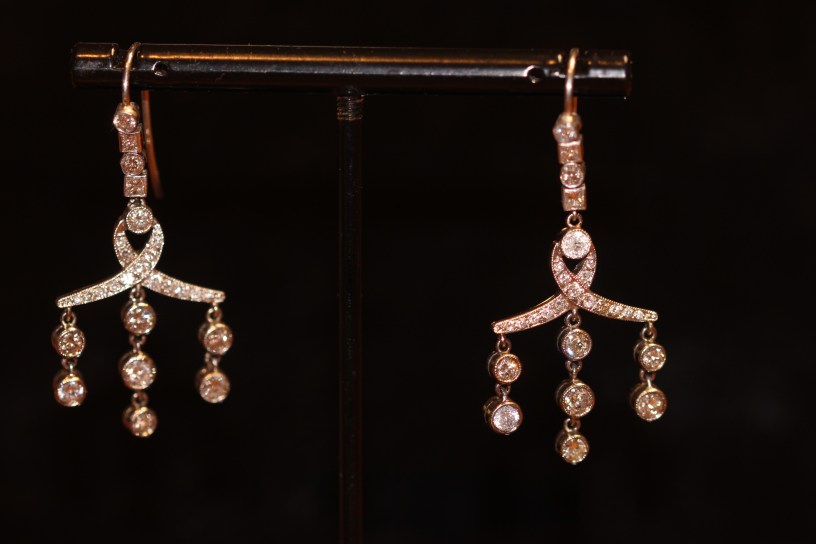
Art Deco jewellery is recognizable by its shape. It used geometric designs – circles, polygons and combinations of the two. The earrings at the top of the post are a lovely example of a geometric shape as are the diamond and sapphire diamonds above. Diamonds were used a lot but coloured gems, particularly in the shades of green, blue and red, were used. Black gems and enamels were used as a contrast. The gems were calibre cut, that is, specifically cut to fit the design of the jewellery, placed tightly against one another to create a seamless pattern. They are frequently channel set, as is the case with the bangle below.

Inspirations for jewellery came from the excavation of Tutankhamun’s tomb in Egypt in 1922 and from Oriental, South American and African designs. Delicate filigree work in platinum was used for rings and brooches in particular. It was a time, too, when high class jewellery houses, like Tiffany & Co, Lalique, Boucheron, Cartier, Chaumet and Van Clecf & Arpels, flourished. However, costume jewellery also developed into a dominant sector in the jewellery industry. Slim diamond set watches became popular.
It was a period of great enthusiasm and colour until the Great Depression in the 1930s, leading to a slightly more somber mood. There was a move away from platinum to gold as the latter was surprisingly less expensive than the former. Bracelets became wider and pairs of clips became a necessary possession, worn on each side of a neckline or jacket lapel, or in hair.
Reference:
Bennett, David & Mascetti, ‘Understanding Jewellery’, 1989, Antique Collectors Club Ltd


Fab examples
LikeLike
Thank you
LikeLiked by 1 person