
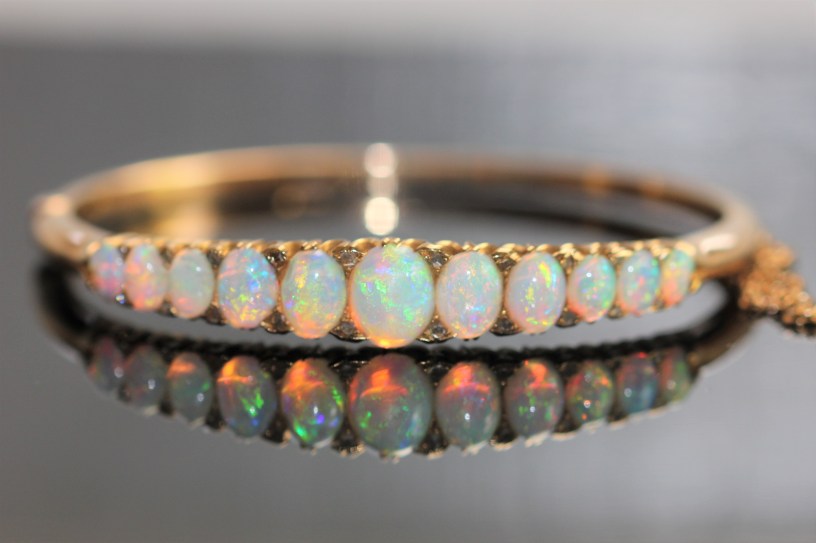
My next grouping of bracelets and bangles contains those where the focus is primarily on gemstones rather than on the metal in which they are set. Often the metal setting can be quite eye-catching but it is the gems set in it which catch the eye first. The first piece is a 9ct gold bangle set with 11 graduated oval crystal opal cabochons in a claw setting. The opals show a lovely delicate play of colour. This style of bangle was popular from the 1890s and into the Edwardian period.
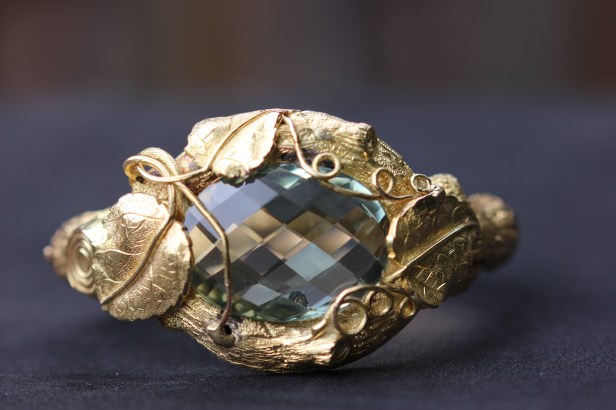
The next bangle, above, is quite stunning. It is Victorian bangle which is set with a large light green prasiolite (a green quartz). The name ‘prasiolite’ comes from the Greek: prason, which means ‘leek-green’ and lithos, which means ‘stone’. The band of the bangle has been engraved so that it imitates a piece of wood, with knots and bark. The sides are also imitating wood but are overlaid with leaves and tendrils. It is the gemstone, however, that dominates.
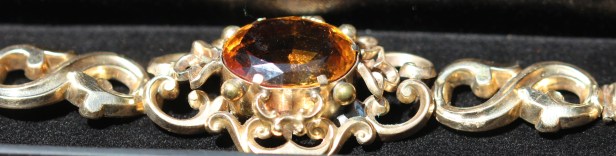
The third piece below is a 9ct gold Victorian bracelet. It has a scrolled hollow gold band but has a large central oval citrine. Again, the band is attractive but the gem draws the eye.
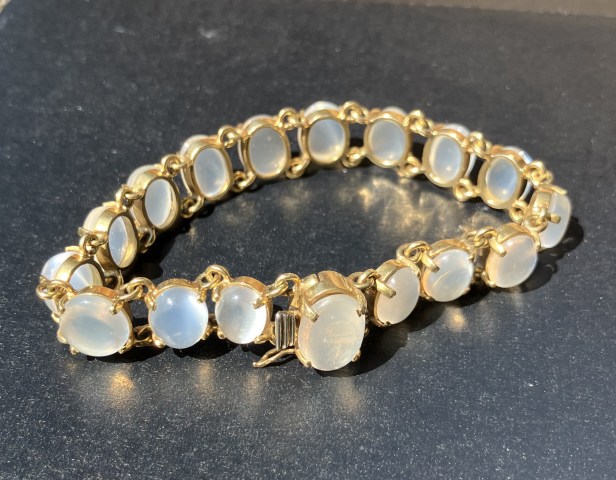
The next two bracelets have fairly ordinary gold bands but lots of gemstones. The moonstone bracelet below is vintage, 18ct, and has 17 oval claw set moonstone cabochons. Sixteen of the cabochons are approximately the same size, with a larger cabochon on top of the clasp. The gemstones show lovely adularescence.
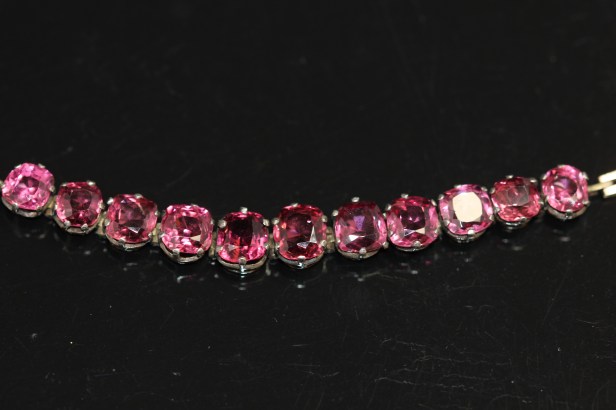
The final bracelet is set with 11 lovely pink tourmalines. This style of bracelet was popular from the late Victorian period until the 1920s. There are expensive versions of these bracelets made with diamonds, some are comprised of stones of the same one colour, like tourmalines, zircons or moonstones but multi coloured ones, also known as harlequin bracelets, were most common. They were made for every day use and are quite light.
So many beautiful pieces!
 navette jewellery
So many beautiful pieces indeed!
LikeLike