
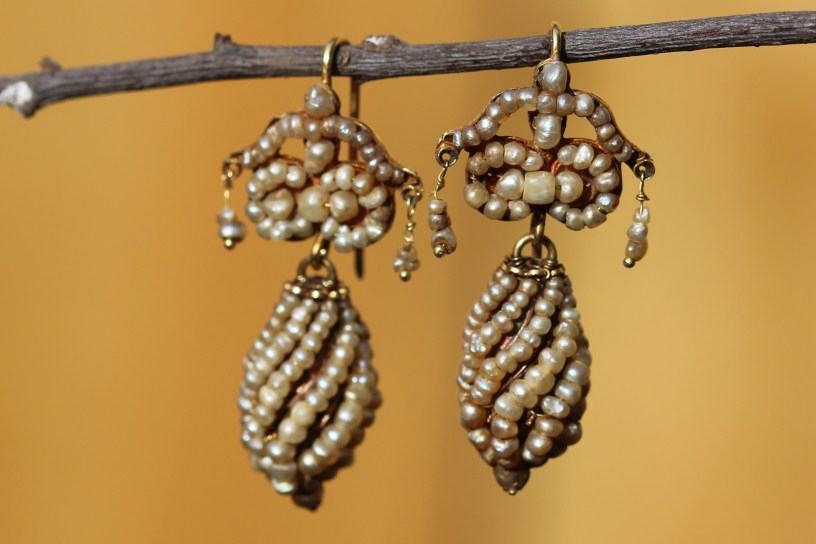
So many pieces of antique jewellery contain pearls. Not the prized big natural pearls that only the very wealthy could afford but seed pearls and small natural pearls that were used as borders and highlights to gem settings. Seed pearls are natural small, round and nearly round pearls generally less than 2mm in diameter, although we often label any small pearls as seed pearls even though they are larger than 2mm.
The other small pearls used in antique jewellery were half pearls, small pearls that either had been cut away from the shell of the mussel and so had a flat side or were the better halves of defective pearls. They ranged in size from 0.5 mm to 0.75mm, up to 4mm in some cases.
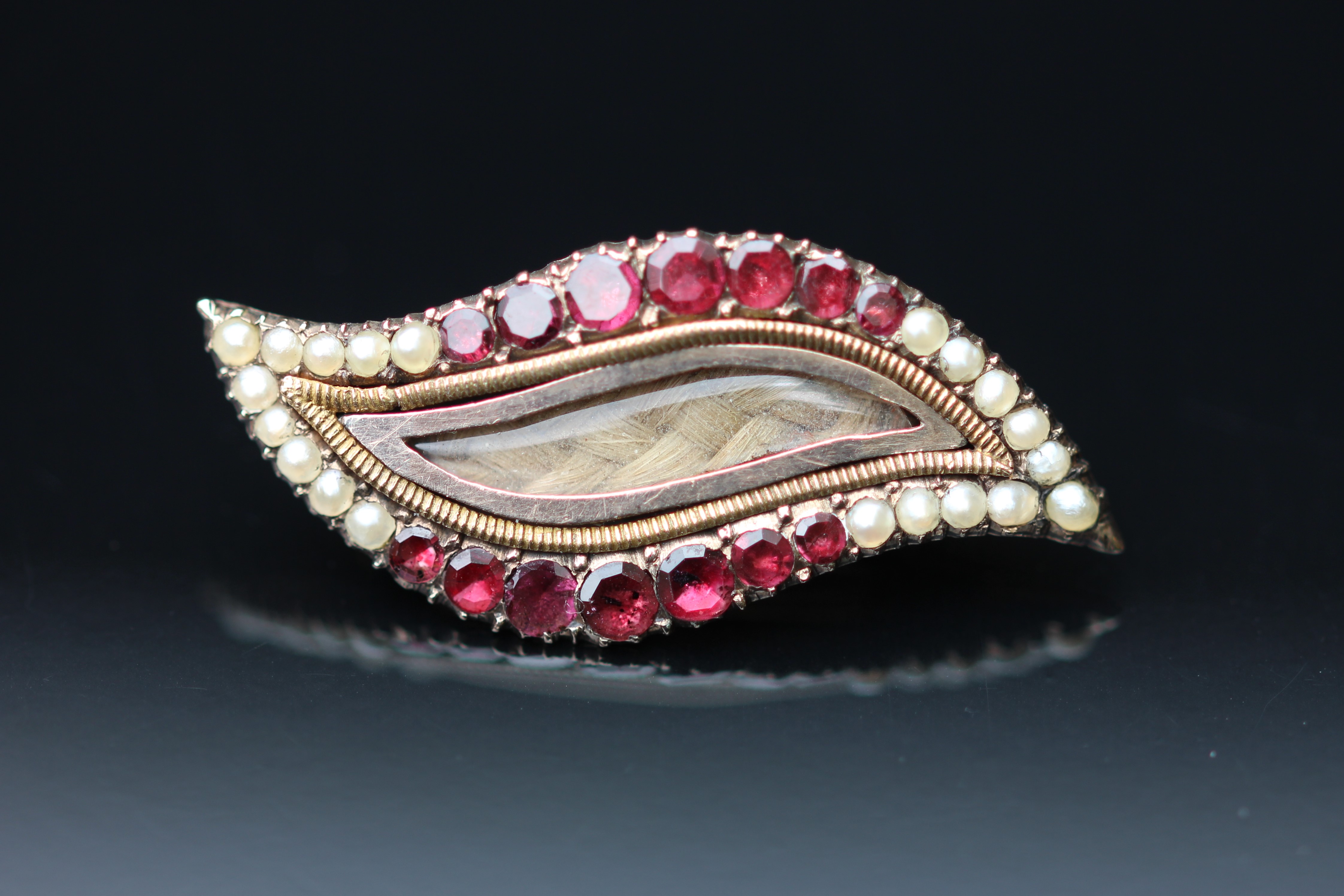
Small pearls were used in sentimental jewellery in the 17th and 18th centuries, used as borders for small lace pins and brooches and gem set rings.
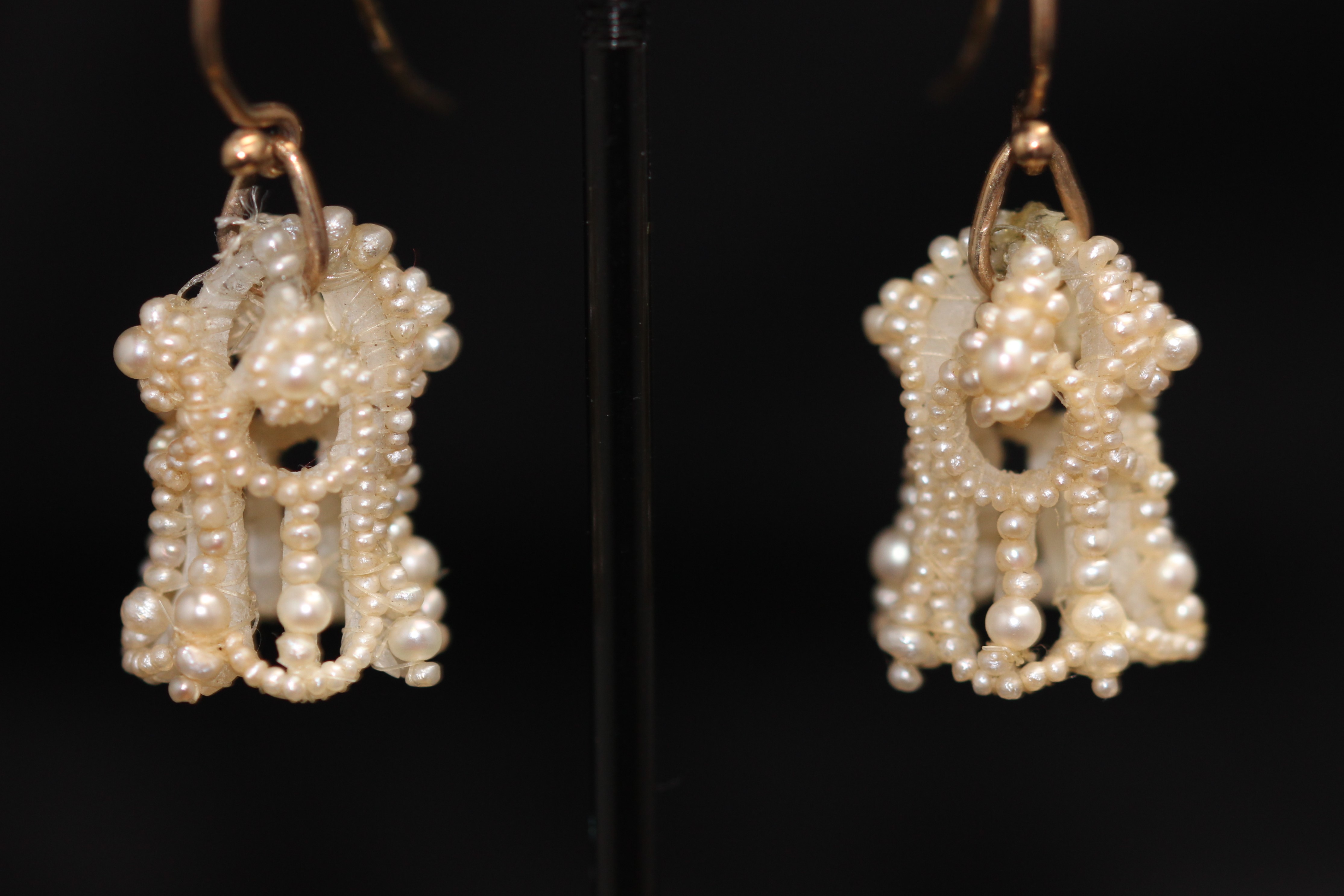
Between 1840 to 1860, parures comprised completely of seed pearls was very popular, with intricately formed pieces being created. The work was extremely time intensive and needed good eyesight and good light. Seed pearls were attached by hand to patterns cut out of thin plates of mother-of-pearl, using white horsehair as the thread. These parures were often given to brides as wedding presents.
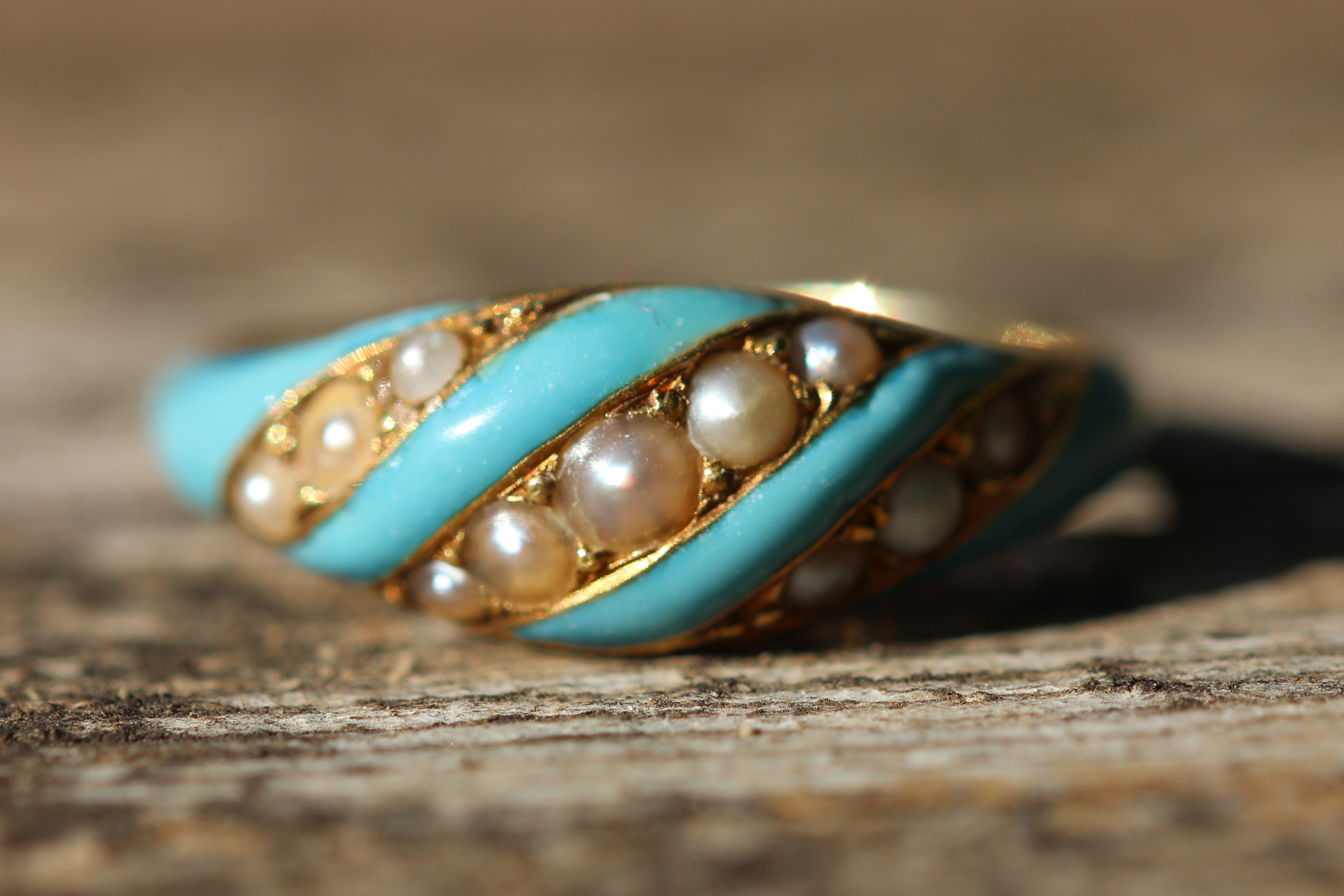
In the second half of the 19th century, which was so dominated by Queen Victoria’s mourning for Prince Albert, small pearls were an important component of mourning jewellery, able to be worn in the third stage of mourning which started 18 months after the death of the mourned person. Pearls represented tears so were to remain associated with mourning jewellery up until the beginning of the 20th century.
 navette jewellery
I love the Georgian sentimental eye-shaped shuttle brooch. So Pretty!
LikeLike
Yes, one of my favourites.
LikeLike