
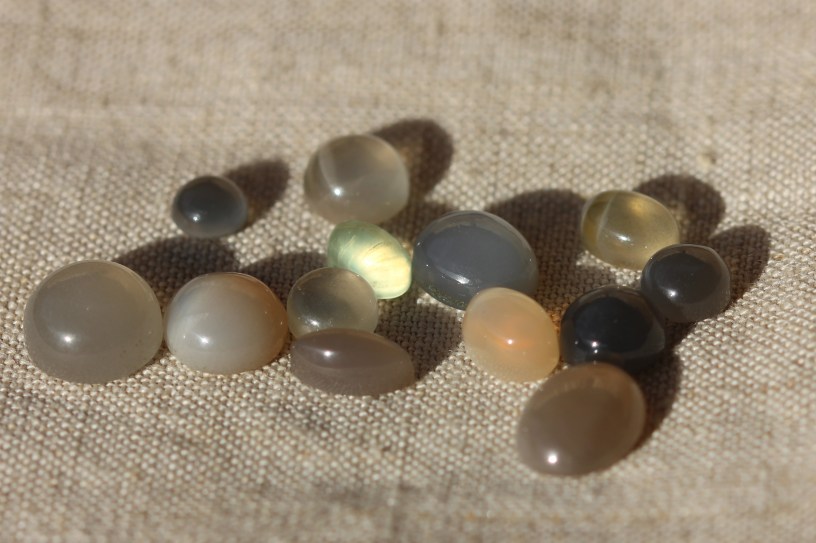
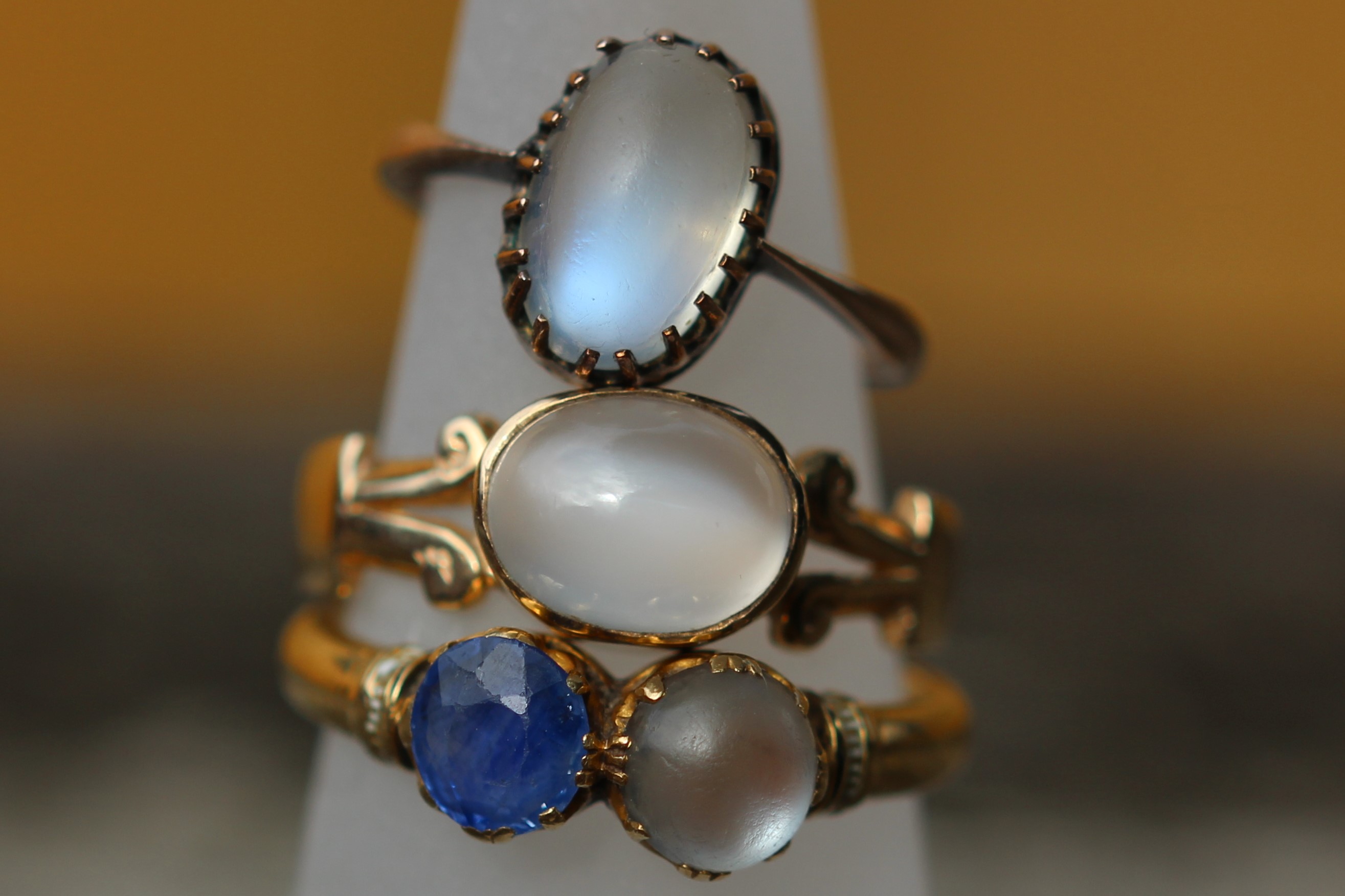
Moonstones are one of the birthstones for June. They get their name from the fact that they look like stones internally reflecting the light of the moon. This internal reflection is called adularescence or schiller. Moonstones belong to the feldspar family of gemstones. Normally, moonstones used in jewellery are a colourless transparent to translucent stone which show a soft adularescence with a milky to blue sheen as seen in the moonstone rings below.
But moonstones come in a range of colours. As you can see from the moonstone cabochons in the photo at the top of the post, they can be a smokey grey, dark grey, brown, pinky orange and even a green. Some are more transparent than others but all of them seem to have an internal milky glow.
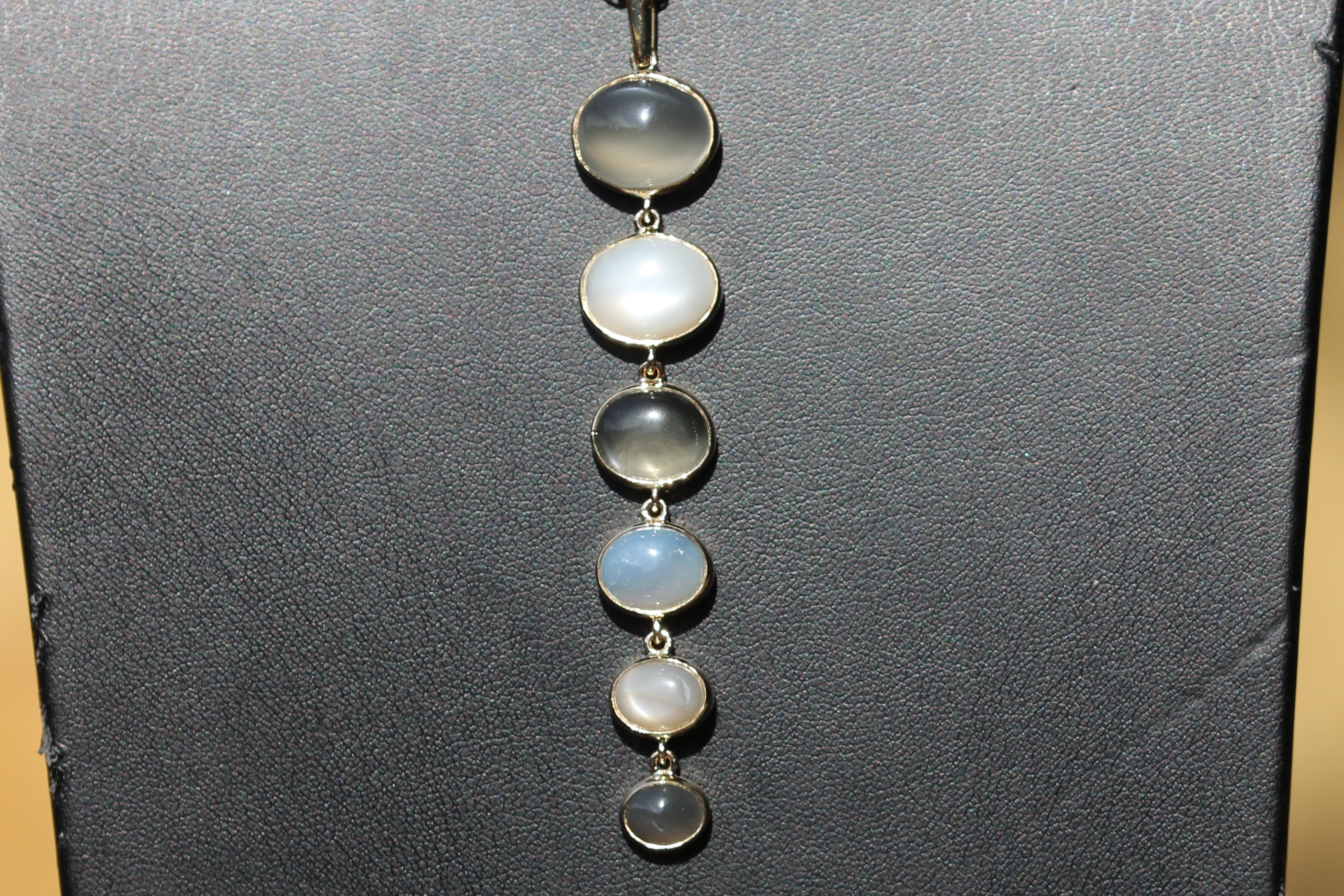
Some moonstones have a cat’s eye effect as well as a sheen and a few display asterisms or stars.
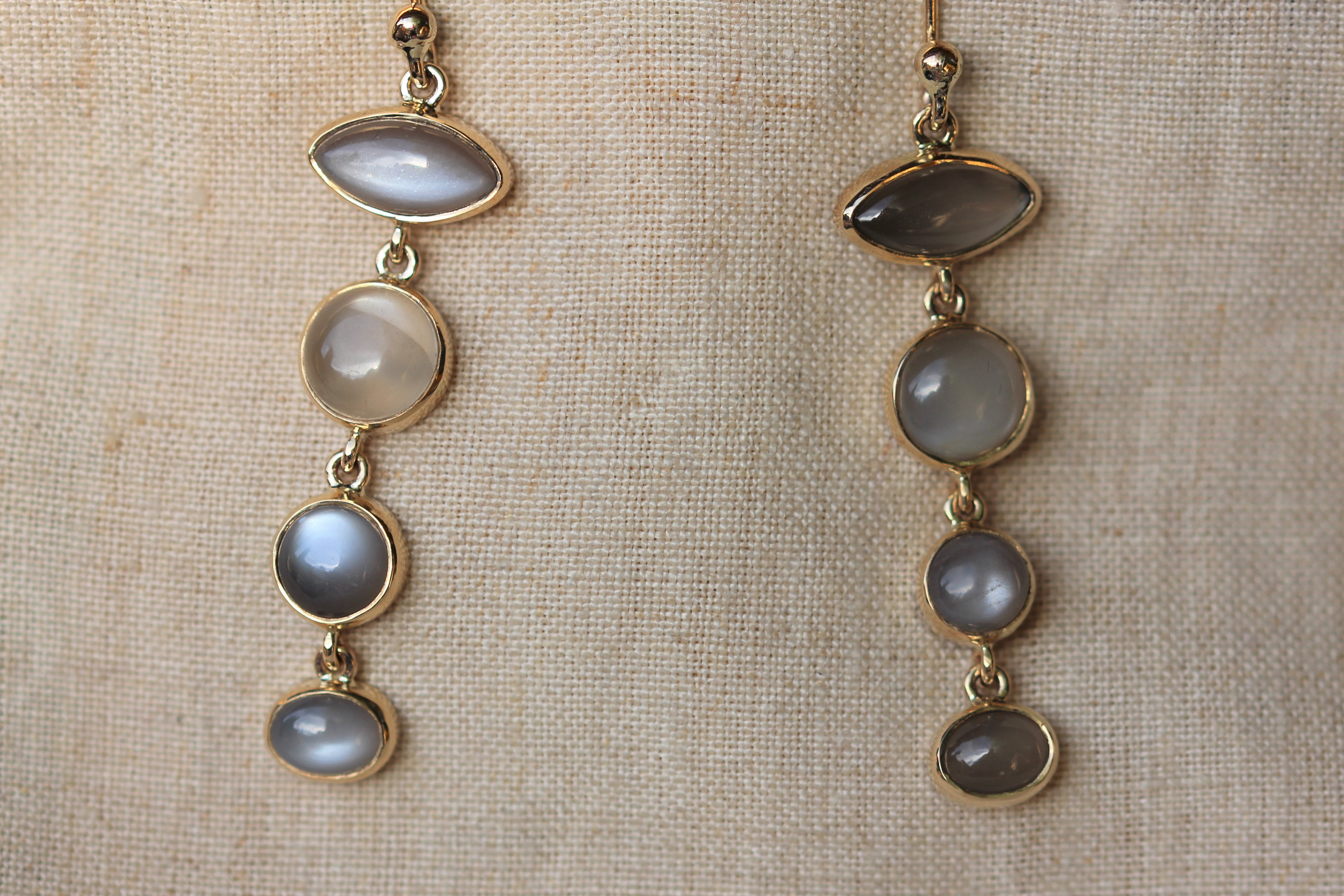
The colour of the gemstone is determined to a large extent by where the stone was mined. Sri Lanka produces moonstones ranging from misty white to pale grey and pale orange. Myanmar produces colourless stones with a blue sheen. India produces reddish brown stones as well as white, grey, bamboo-green and black. Africa produces translucent to transparent stones with a blue sheen as well as a light grey. Moonstones are also mined in the USA, Australia, Kyrgyzstan, Canada, Armenia. Mexico, Brazil and Russia.
Reference:
M O’Donoghue, R Webster, Gems, 6th edition, 2006

