
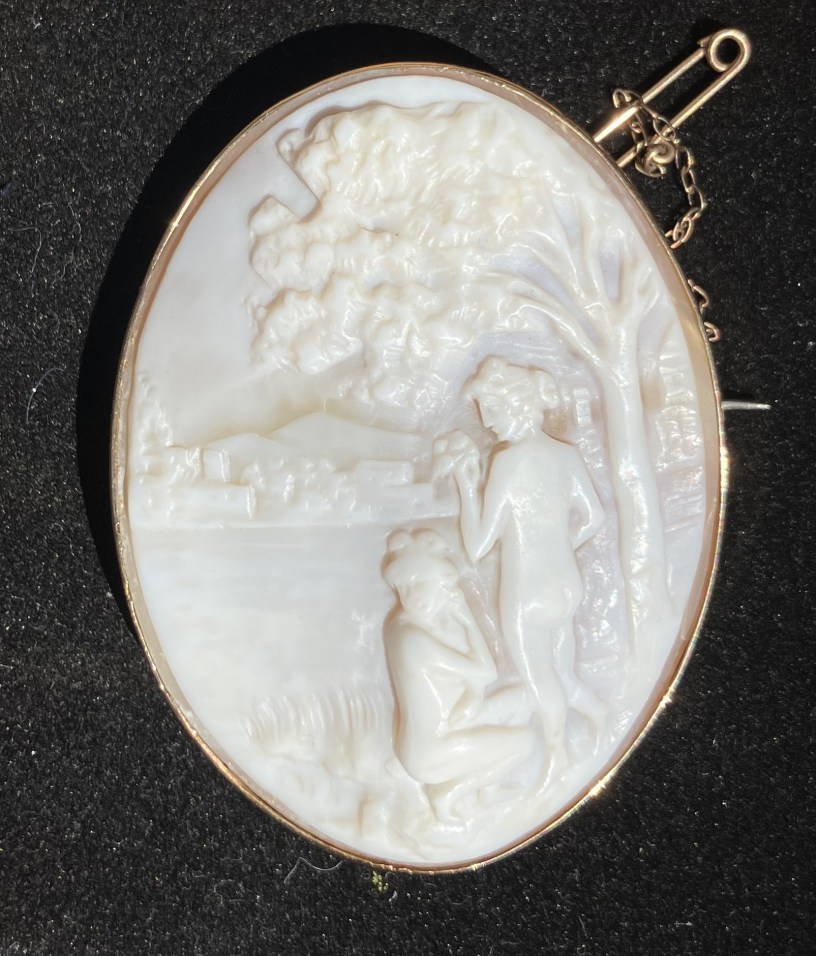
What is a cameo? In antiquity, a cameo was a design carved into a hard stone in positive relief. Commonly, the carving was done using stones which have layers such as banded chalcedony so that the carving exposed the underlying stone of a different colour to the top layer. Shell, which also has layers, began to be used for cameos from the Renaissance. Cameos that do not have layered material can be carved in coral, lava, and various gemstones.
Cameo carving began in the Hellenistic period in Greece, between 323BC to 32BC, and they were regarded as being ornamental – a move away from the functional role of intaglio gems as seals (Mason & Pocker, 55). This resulted in a new development which was the cameo portrait, mainly of gods and goddesses in the Greek period, then featuring leaders, heroes, etc. This art form then spread to Rome.
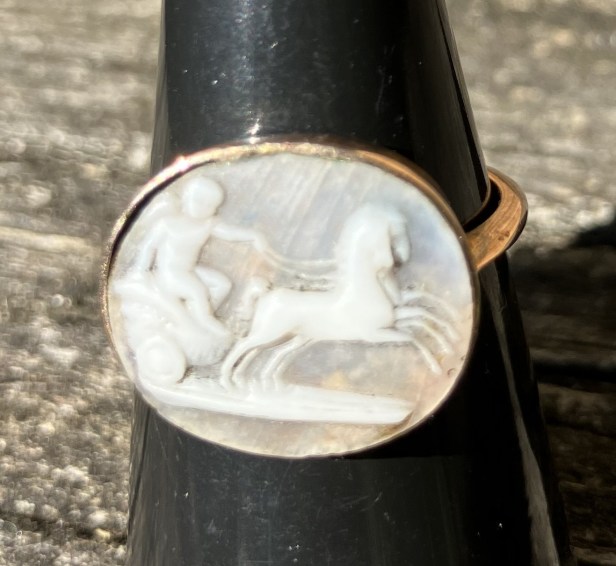
The Dark Ages and the Medieval period produced few cameos and it was not until the Renaissance that there was a re-birth, both in technical skills and an interest in the arts of the Greco-Roman period. Many of the cameos produced during this time were of members of the leading Italian families of the period. The next period of popularity for cameos was during the 18th and 19th centuries, due to a large extent to the Grand Tours undertaken by the wealthy.
Popular subjects for cameos were Greek and Roman mythological scenes, portraits of kings and queens, and artists, as well as biblical scenes, such as ‘Rebecca at the Well’. The large Victorian shell cameo at the top of the post appears to be depicting a naked Adam and Eve under an apple tree.
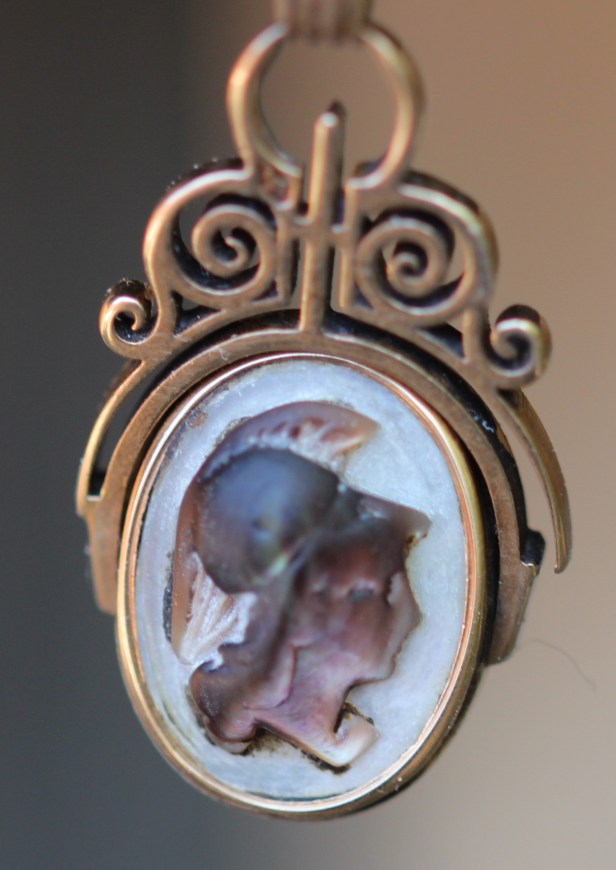
Shell had become the main material used for cameos in the 19th century. The main shells used for carving cameos are the cornelian shell (Cassis Rufa), the male helmet shell (Cassis Tuberosa), the sardonyx shell (Cassis Madagascariensis), and the tiger shell (Cypraes Tigris). Conch shells were also used to carve pale pink cameos, looking similar to angel skin coral. Some cameos are carved out of mother of pearl, resulting in a translucent, opalescent cameo.
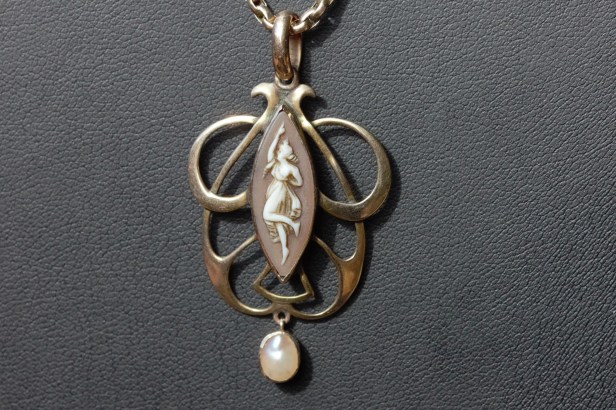
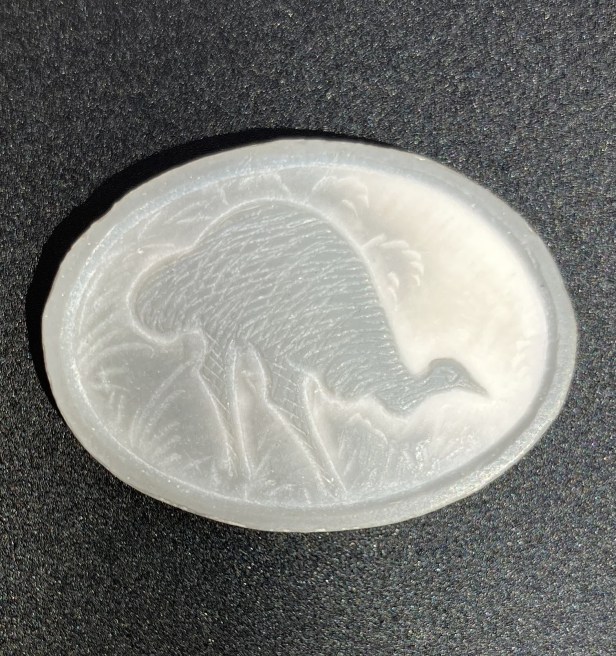
While cameos are normally carved in high relief, standing prominently above the background, they can also be carved in low relief, as is the case with this antique carved emu shell plaque below. Emu eggshells have layers of colour, with the outer layer being a dark green, then a light teal layer and then a white layer.
References:
A Miller, ‘Cameos: Old & New’, 4th Edition, 2009, Gemstone Press
Mason & Pocker, ‘An Illustrated Dictionary of Jewellery’, 1973, Osprey Publishing Limited
L Rafiera, ‘The Art of Cameos ~ From Early Ages to the Nineteenth Century’, https://thejva.org/articles/art-cameos-early-ages-nineteenth-century

