
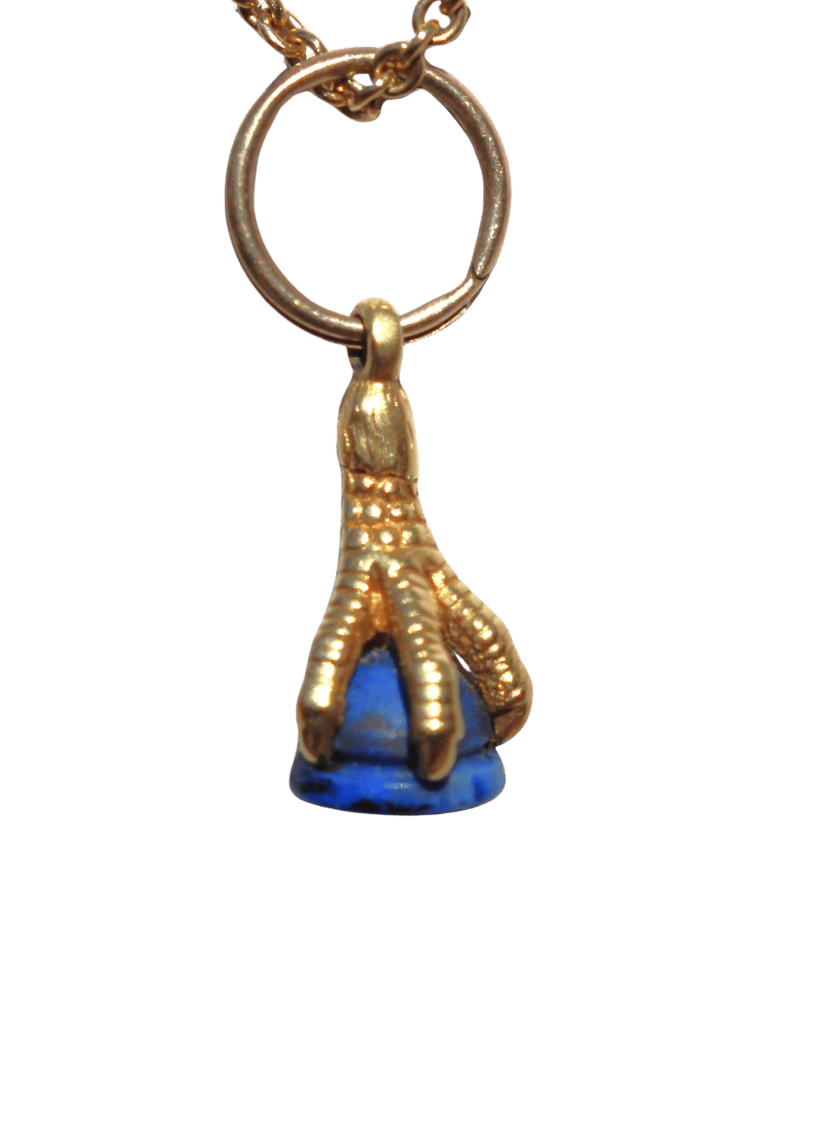
A gemstone is a material that demonstrates rarity, durability and beauty and is used in jewellery. It may comprise a mineral (like a garnet), a rock (like obsidian) or an organic substance (like a pearl). A mineral has a definite chemical composition and crystal structure while a rock is an aggregate or two or more minerals. In today’s post, I want to talk about one particular rock that is used as a gemstone – lapis lazuli, meaning a blue stone. It primarily consists of the mineral lazurite, which gives it is blue colour, but also contains pyrite, which gives it tiny gold flecks, calcite, which gives it white or grey streaks, and a number of others in small amounts.
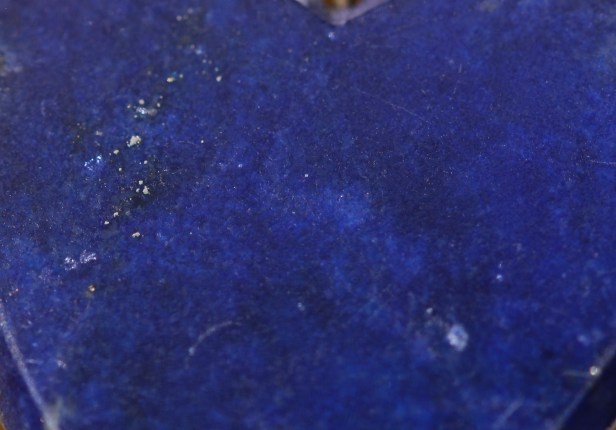
Lapis lazuli has a long history as it has been used for 1000s of years as a gemstone and for other forms of decorative art. It was mined at Badakhshan in Afghanistan and some is still mined there today. For use in jewellery, it is usually fashioned as beads and as cabochons and as inlays. While a stone with a consistent blue colour is desired, fine pyrite sprinkles in particular are seen as evidence of the stone being genuine.
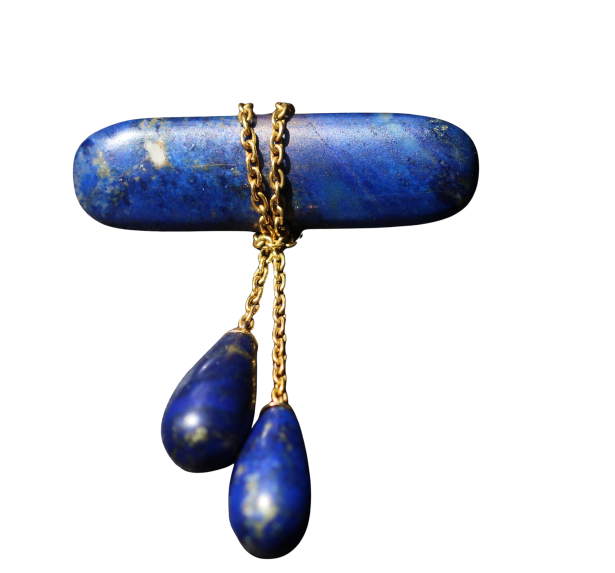
The 19th century brooch above is a lovely deep blue, with white onyx and thin veins of pyrite.
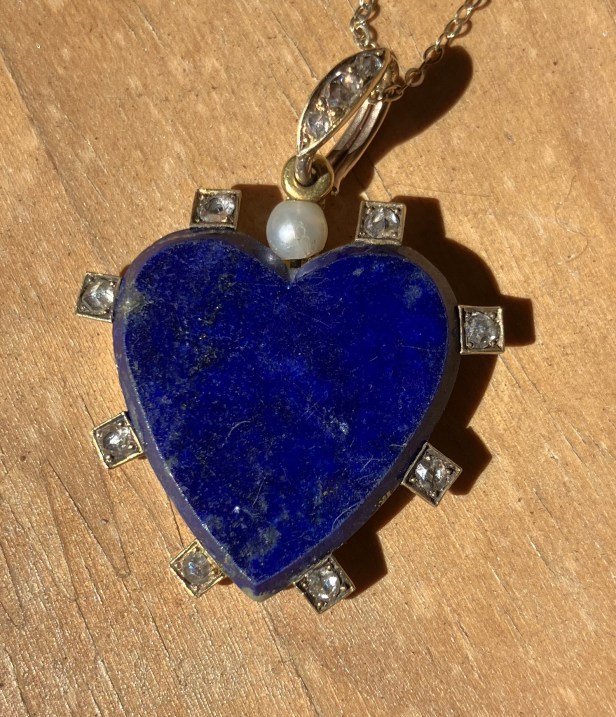
There is a lot of symbolism around lapis lazuli, changing over the centuries. In mourning and sentimental jewellery, it is associated with compassion, love and nobilty. It has been used for the lovely sentimental pendant above, with a diamond fringe and with a hair compartment in the back.


One of my faves
LikeLike
So beautiful. It has always been a favourite of mine.
I remember studying The Bishop Orders His Tomb at Saint Praxed’s Church by Robert Browning. In it the corrupt old Bishop instructs his ‘nephews’ to fetch a lump of lapis lazuli to adorn his tomb.
“…Go dig
The white-grape vineyard where the oil-press stood,
Drop water gently till the surface sink,
And if ye find . . . Ah God, I know not, I! …
Bedded in store of rotten fig-leaves soft,
And corded up in a tight olive-frail,
Some lump, ah God, of lapis lazuli…”
LikeLike