
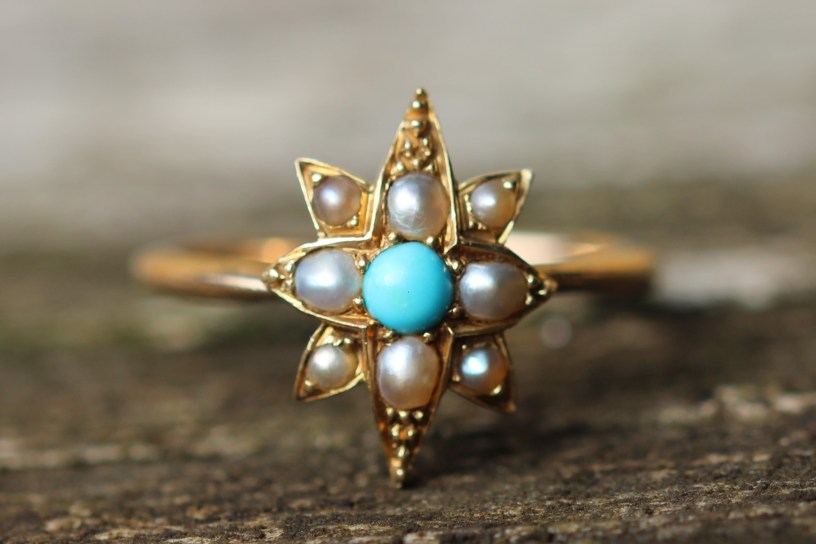
December has three gemstones –turquoise, zircon and tanzanite but I am only going to talk about turquoise in this post. Turquoise is a beautiful ornamental stone, opaque and with a slightly waxy sheen. It is generally used as a cabochon in jewellery. It has been found in a number of locations across the world – Iran, Egypt, China, Mexico, Peru, Chile and southwest states in the USA.
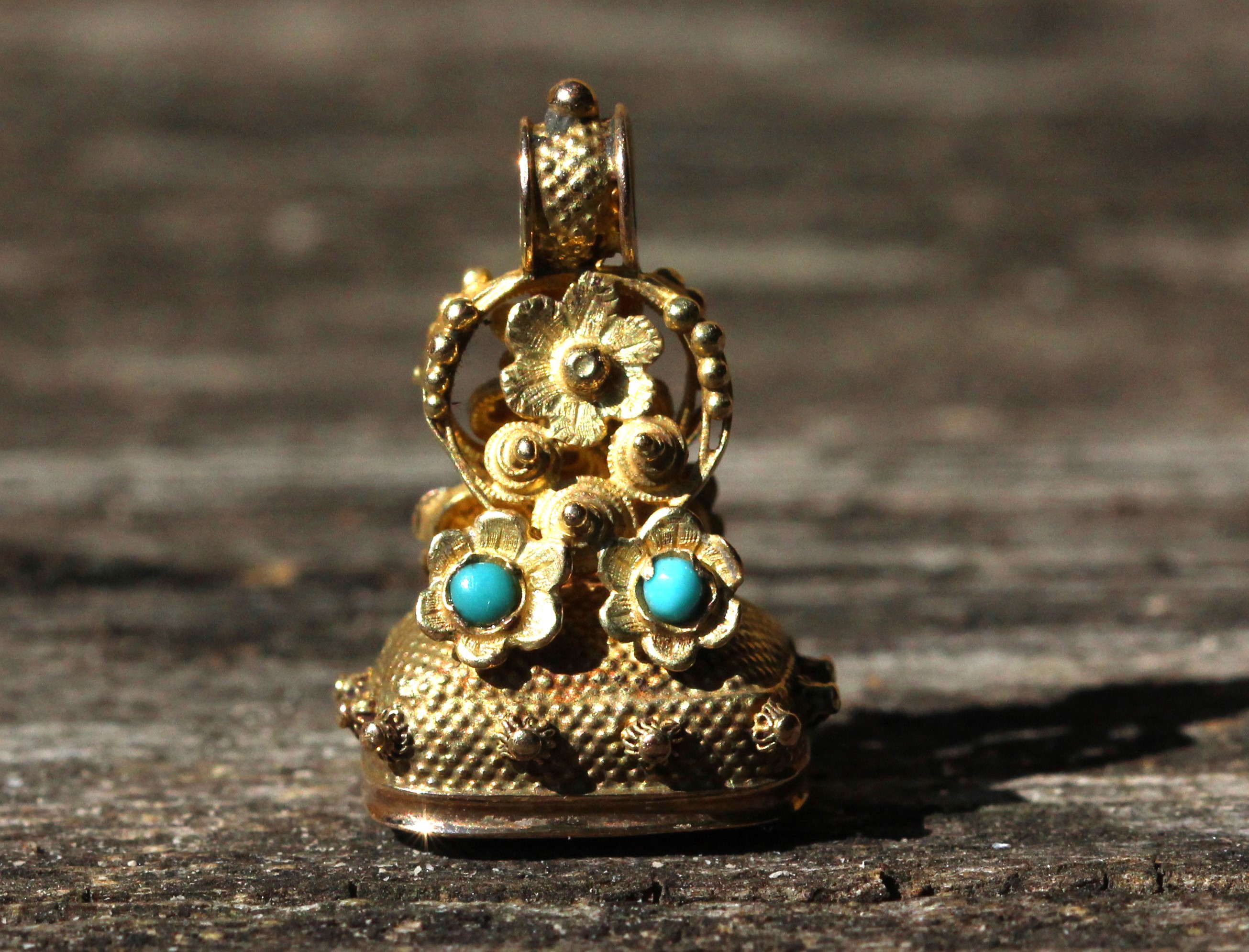
It is a stone that has been used for decorative purposes for centuries. King Tutankhamen’s funeral mask from about 1323 BC was inlaid with turquoise. Jewellery dating from around 300AD has been found in Arizona. In 1576, the conquistador Bernal Diaz del Casillo noted that the Aztecs of Mexico valued a blue stone called chalchihuitl.
The name ‘turquoise’ arose in the 17th century, derived from the French expression ‘pierre tourques’ (‘Turkish stone’) as it arrived in Europe via Turkey, mainly from mines in what was then Persia where it was mined for over 2000 years. Iran and Egypt still operate mines today.
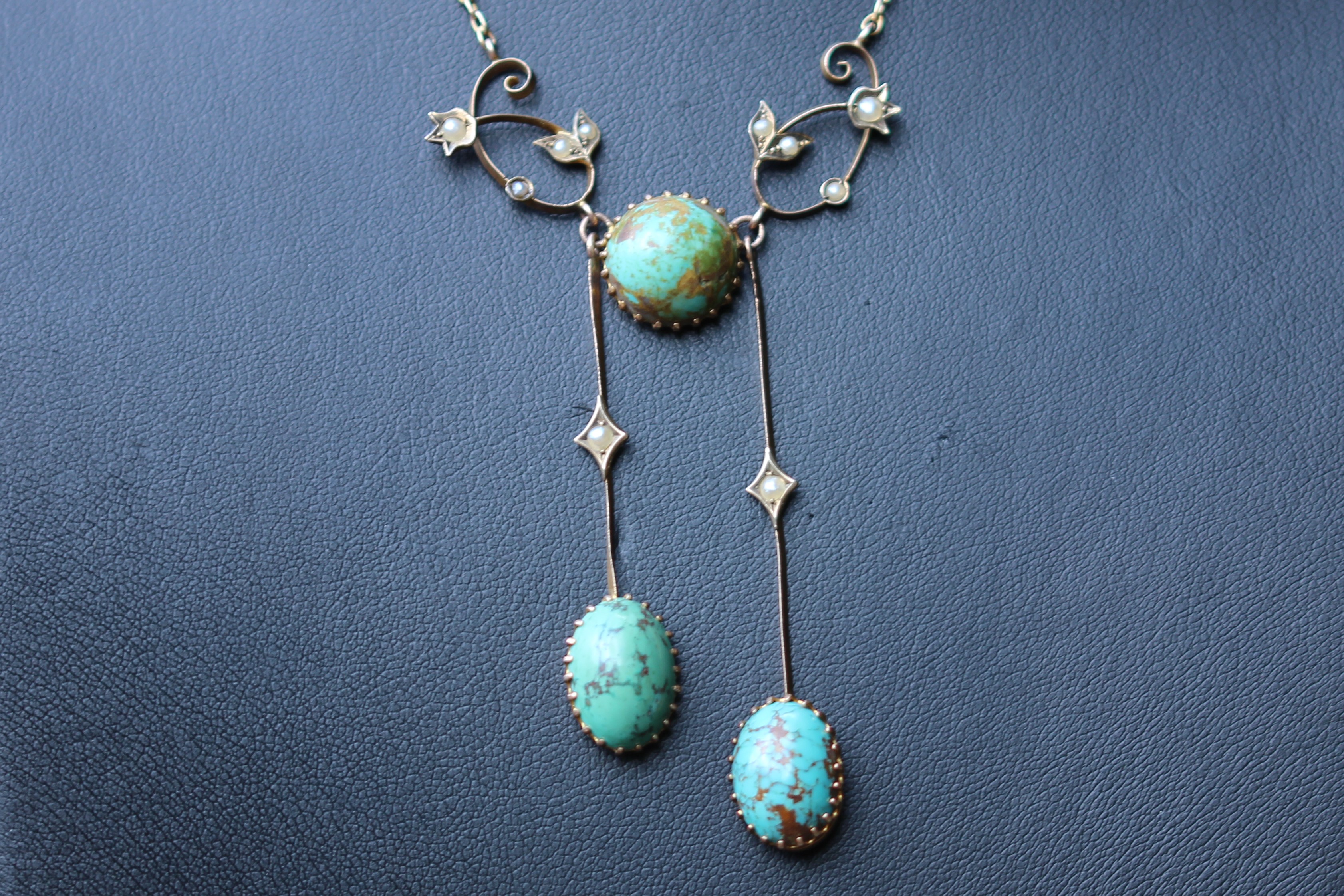
You can see in different pieces of antique jewellery that the colour of turquoise can vary from a sky blue to a greenish blue, depending on two factors. The first factor is where it was mined. Typically found in arid regions, turquoise is formed when acidic watery solutions seep into rocks and fill crevices. It is often interwoven within a matrix of the host rock. This matrix can be hard to spot, like a spider web in some instances or it can be a striking feature of the stone. Persian turquoise is a sky blue, usually a uniform colour, without markings. Some turquoise from the Americas can be a greenish colour as it contains iron. Turquoise from Bisbee, Arizona contains dark veining or spider webbing matrix.
The second factor is how often as well as the manner in which turquoise jewellery has been worn. It is very porous and so can darken and turn greener due to perspiration and access to water. Sometimes, particularly if the jewellery is worn close to the skin, the colour of some pieces can become a dark green.
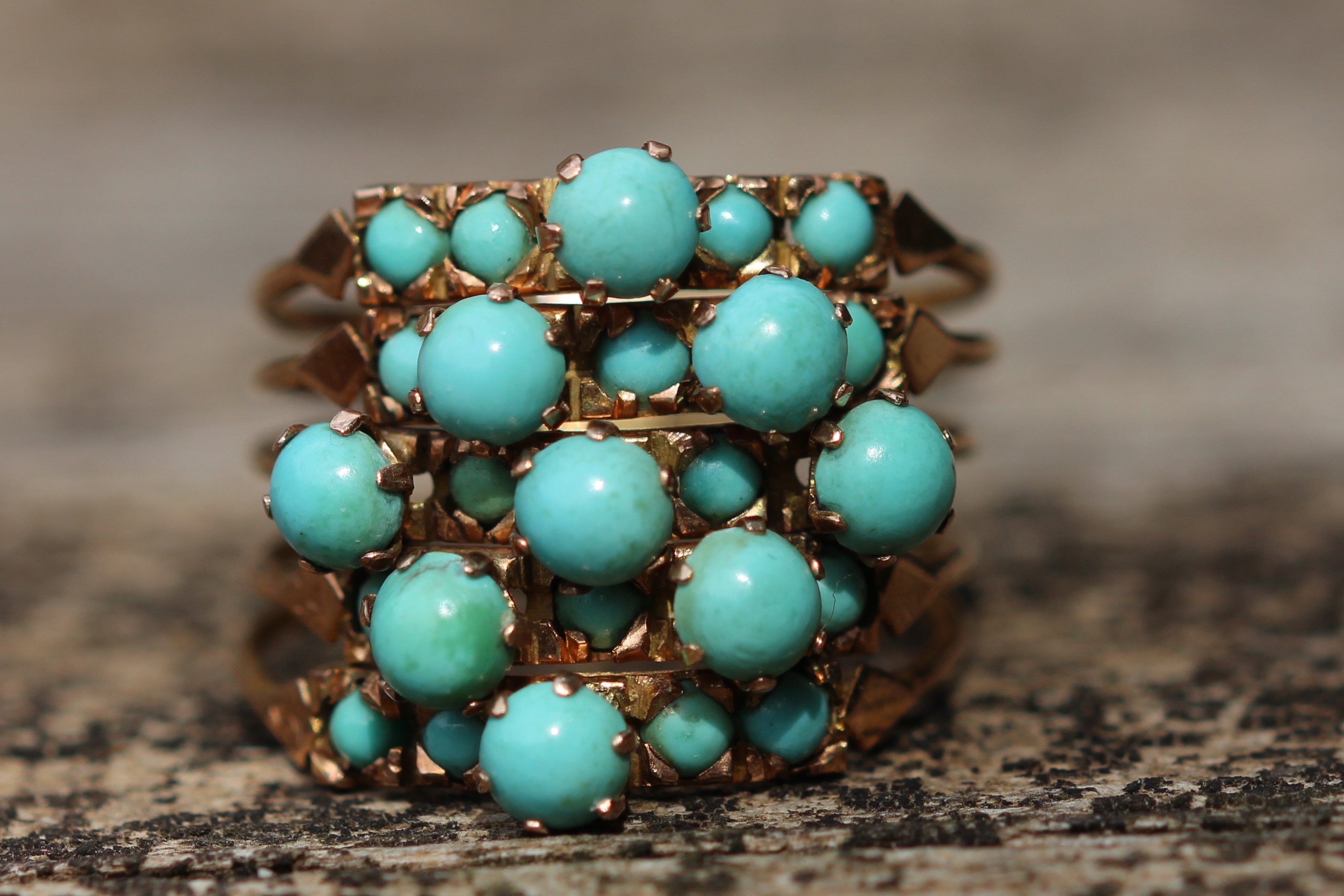
Although popular with the Egyptians and Romans, turquoise was not common in the Europe during the Dark and Middle Ages. It was in the 14th century that it began to be used more frequently, particularly for religious jewellery and ornaments. Turquoise began to be used in non-religious jewellery in the 16th, 17th and 18th centuries. It was used in particular in sentimental flower jewellery as the blue colour was similar to the blue forget-me-not flower. In the 19th century, turquoise was also used a lot in Egyptian revival pieces.

