
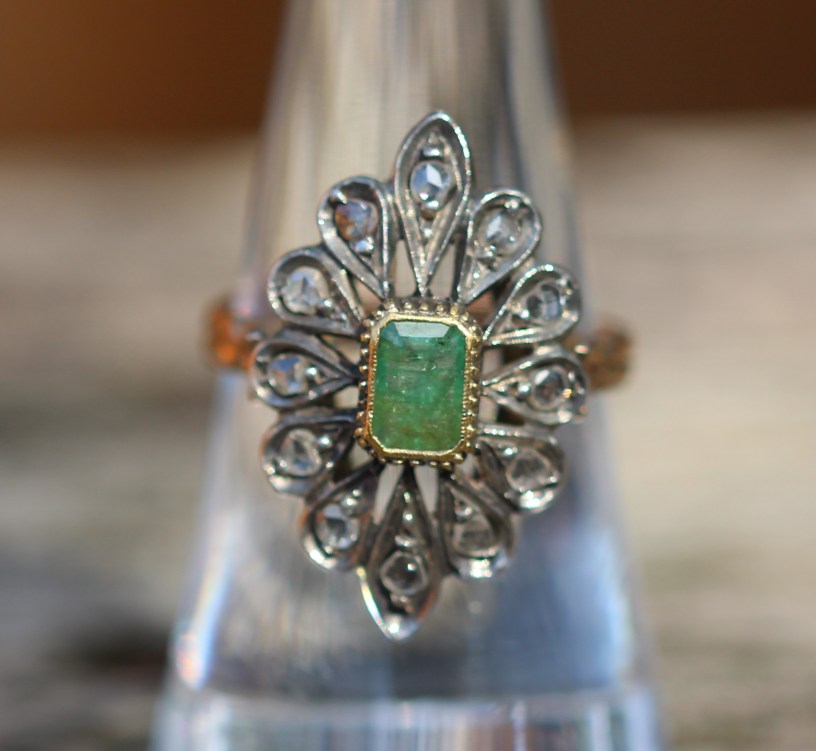
The May birthstone is the emerald. They are renowned for their beautiful colour, ranging from a deep green to a slightly yellow green. However, emeralds can be very included, that is, they contain a lot of internal defects such as tiny fractures and little crystals. Although quite a hard stone, emeralds are also quite brittle and so are usually cut in a simple stepped octagonal shape known as the emerald cut, or smoothed into a bead.
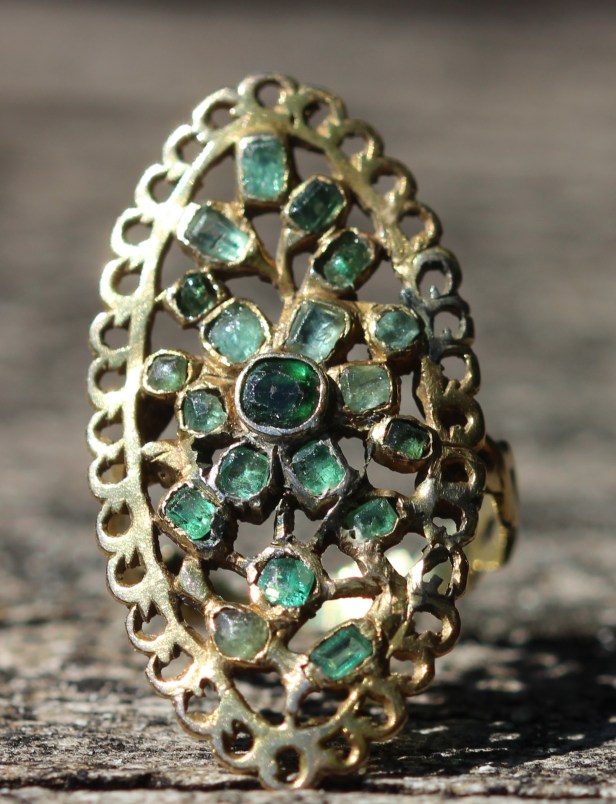
The antique ring below is a good example of the varying shades of emerald gems, from a dark vibrant green, to leaf green, and some yellowy greens.
Pliny the Elder, in his Natural History of Precious Stones, Book XXXVII, ranked emeralds as the third most important gemstone, after diamonds and pearls. He called them ‘smaragdus’, Latin for green gem, and stated in Chapter 17 that there were 12 different kinds. The finest was the Scythian smaragus (probably referring to the Siberian emerald) due to its deeper colour and relative freedom from defects, then ones from Bactria (north Iran), with the third finest from Egypt.
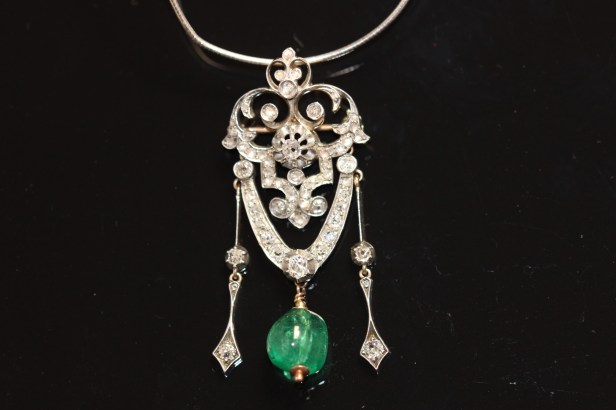
Pliny noted that ‘since high prices ae freely paid for these stones, it is only right we should point out their defects (section 18)’. He mentioned that some stones showed variations in colour, others contained ‘shadows’, and some had ‘clouds’, a whitish hue. Finally, he stated that some had ‘[f}ilaments, specks like salt and inclusions resembling lead…’.
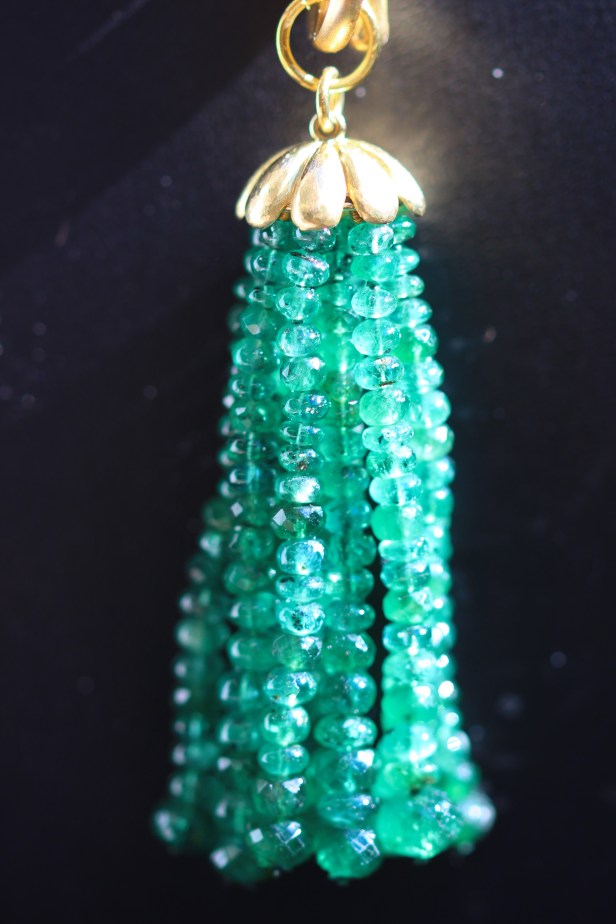
The defects in many ways add to the beauty of the emerald. Such a lovely gemstone!
 navette jewellery
I love an emerald, especially the included ones
LikeLike
I know, the inclusions add so much.
LikeLike