
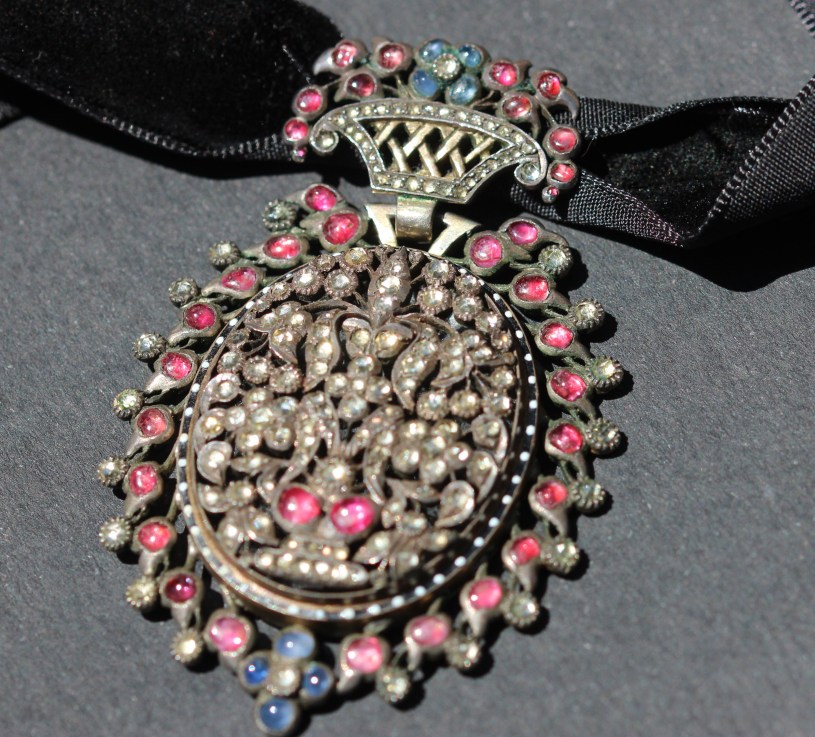
Attaching a cord or thread to a piece of jewellery and either tying or knotting the ends of the cord or thread together to form a necklace or bracelet was an ancient method for closing jewellery. The cord or thread could just be tied into a bow which could be undone easily or it could be knotted to form a permanent necklace that could pass over the head. This method is still used today as a form of clasp. It is now more likely known as a type of choker necklace.
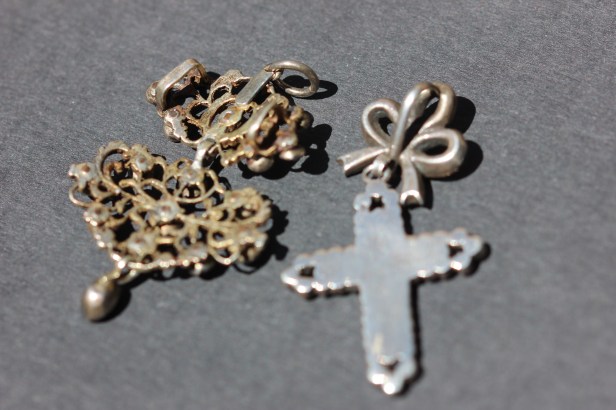
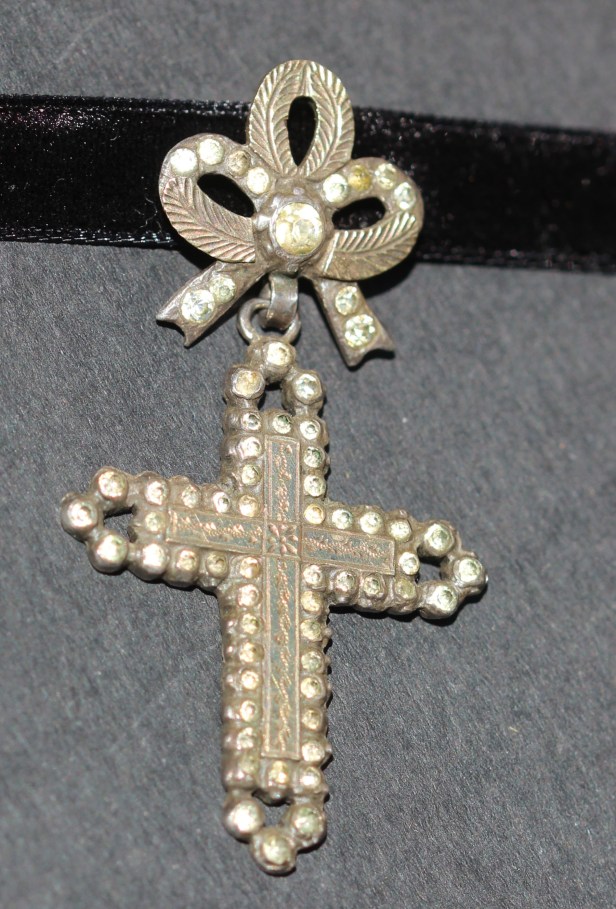
The use of ribbons attached to a central pendant was very popular in the 17th and 18th centuries and into the 19th century. Black velvet ribbon was the normal type used. Pendants were designed to be detachable and were usually set with either two vertical bars on each side of the pendant at the back, allowing a ribbon to be slid through. Another version was for a large fixed oval ring to be attached to the back of the top of the pendant (see the two versions in the photo above). Some of the inspiration for this style of necklace in the 18th century came from French traditional jewellery, particularly with crosses used as the pendants, like the Croix d’Yvetot from Normandy in the photo at the bottom of the post.
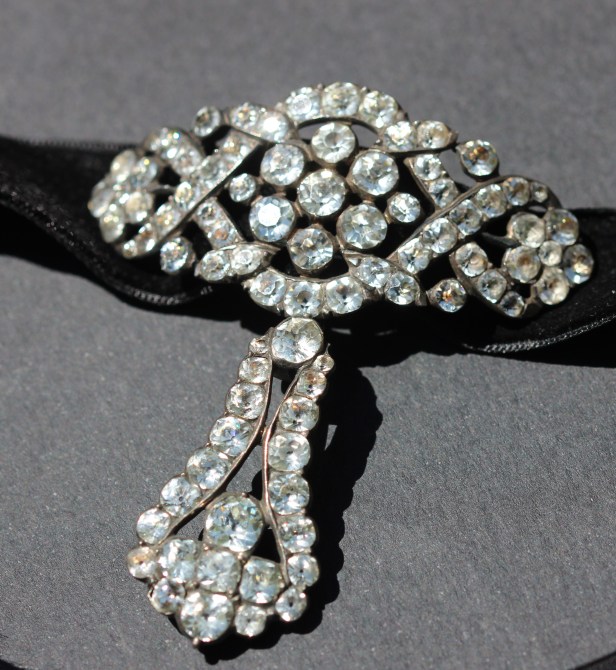
Many of the pendants with the slide fittings have had bales added and often the slide bars have been removed, although some signs of them can still be seen. Those pendants with the fixed oval ring at the back of the pendant top are fine to be used with a chain but some don’t always sit properly as they are meant to be worn hanging from the neck, sitting in the sternum notch just above the collar bone, rather than sitting flat on the chest.


Thank you
You always have interesting articles and great for education
LikeLike