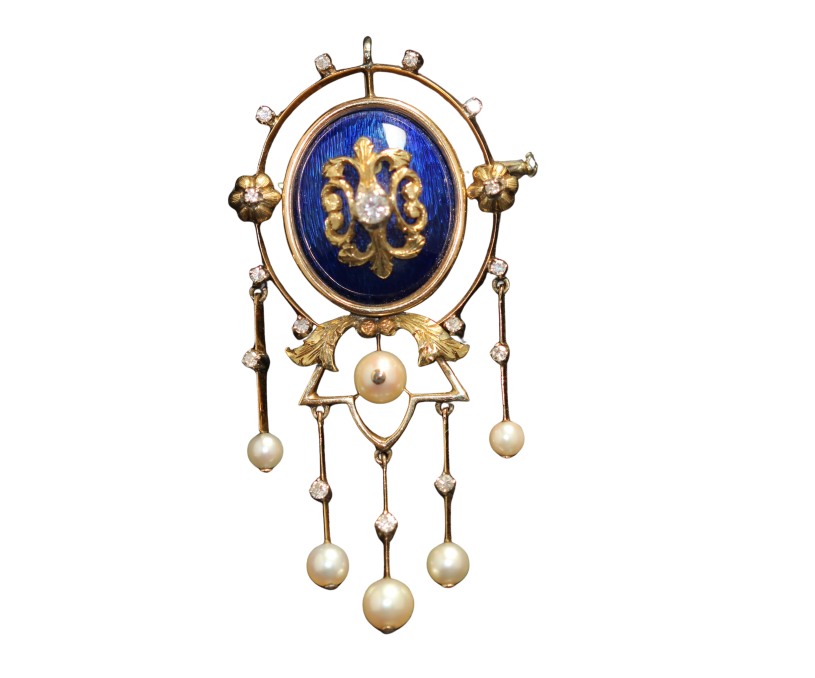
At the end of the Victorian era and into the Edwardian period, jewellery, particularly necklaces and earrings, became more delicate, resulting in lace-like metal creations often set with diamonds. Instead of using thin chains to create decorative drops, jewellers produced necklaces set with knife edge bars which were triangular when looked in cross-section, and which tapered to a razor-thin top edge. When gems were set onto the bars, the wires seemed to disappear and the gems appeared to float.
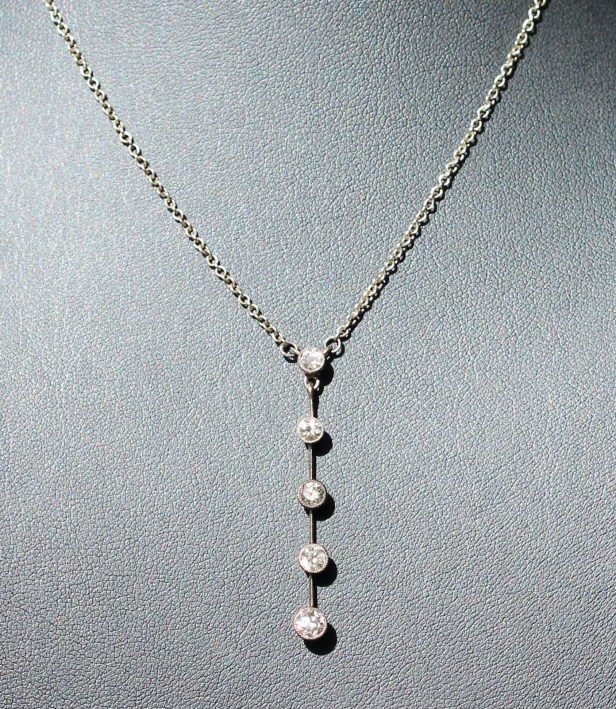
The use of knife edge drops suited the popular necklaces of the time, the lavalier, the negligee and the fringe. The lavalièr, also known as a lavalière or a lavaliere, is a necklace consisting of a ornament, sometimes even just one stone, suspended from a necklace chain. In its original French, a lavallière, which came into fashion in the 17th century, was usually a small, jewelled gold locket, though it could also be an enamelled locket. The style is supposedly named after the Duchesse de la Vallière who was the mistress of King Louis XIV of France from 1661 to 1667.
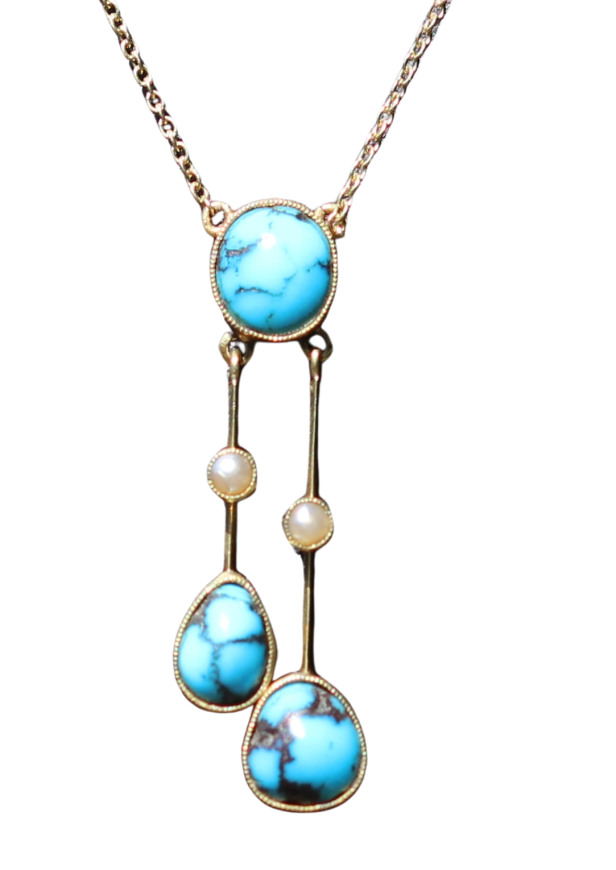
A variation on a lavalièr is a négligée necklace. These are necklaces where two dangling drops suspended from a pendant attached to neck chains are of unequal lengths. Knife edge wires were usually used for the uneven drops.
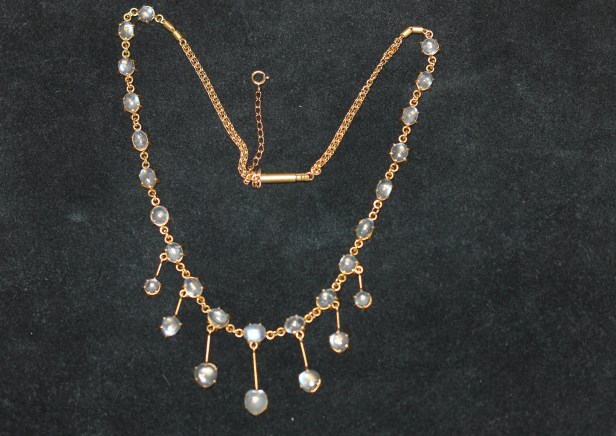
Fringe necklaces, popular from before Roman times, saw a renaissance in the Edwardian period. They comprise pendants or drops suspended from a chain, often graduated from the centre. Knife edge wires were used to great effect with fringe necklaces as seen below.