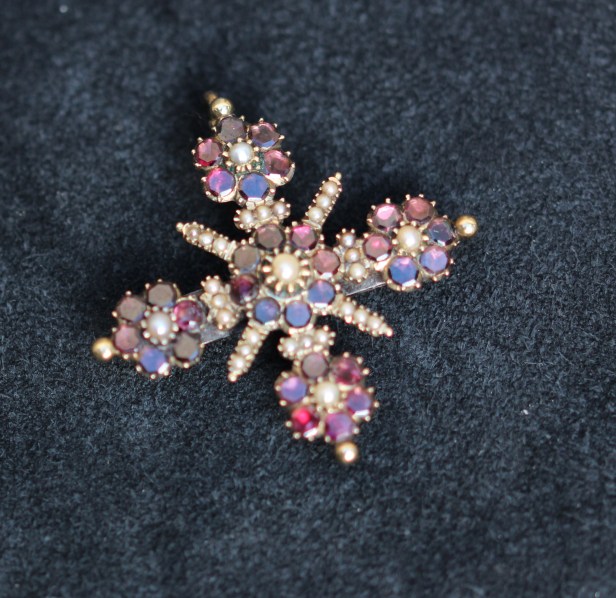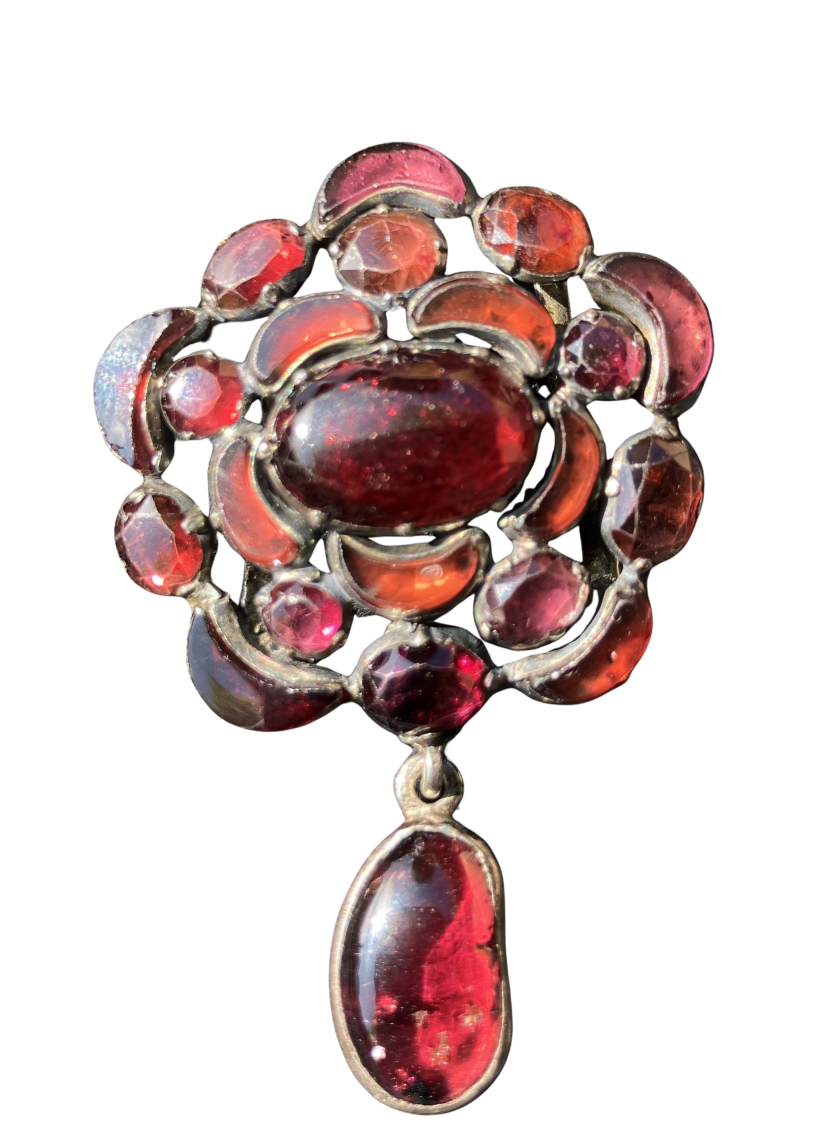
Foiling of gems was a very common practice for centuries, with examples of foiled stones being found in Minoan graves around 2000AD. Its object was to change the colour or the appearance of the gemstone. Foiling could either involve lining the back of the setting or placing the foil on the back of the stone. The settings were closed at the back. The foil might be a silver colour to help reflect light through the stone or a colour the same as the gem to enhance it. Sometimes stones were foiled to imitate a rarer stone.
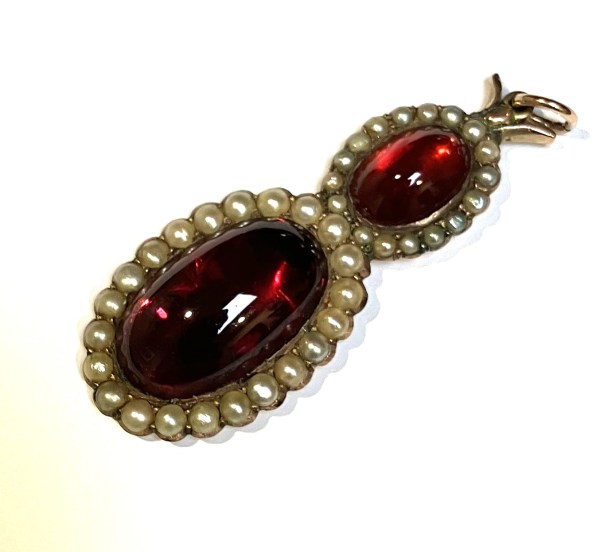
Garnets were commonly foiled, particularly in the 17th and 18th centuries. Open settings became popular during the Victorian period and so foiling became less common but was still used with garnets well towards the end of the 19th century. One reason for this was the fact that garnets like almandine were usually cut as cabochons, unlike other gems which were more and more faceted. The flat bottom of the cabochon allows the foils to remain flat without creases. It also allowed light to reflect straight up back.
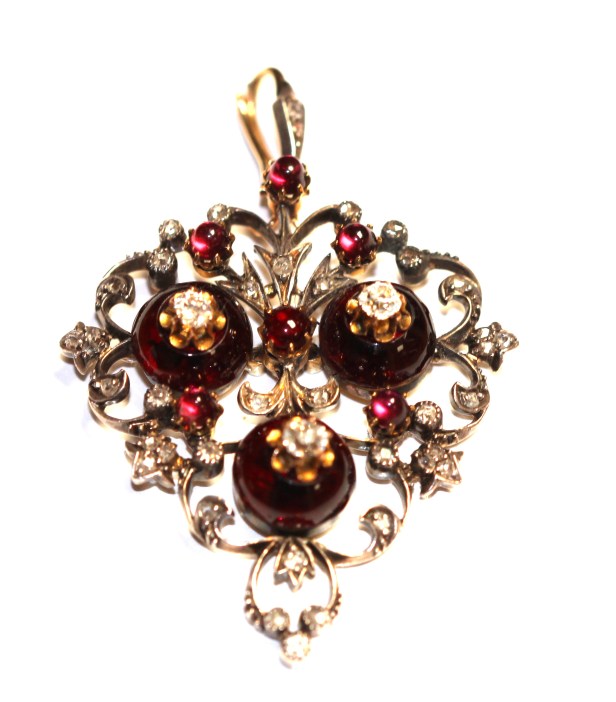
Other gem cuts were also suited to foiling due to their flat bottoms, particularly cuts like the table cut (see the brooch below) and the rose cut.