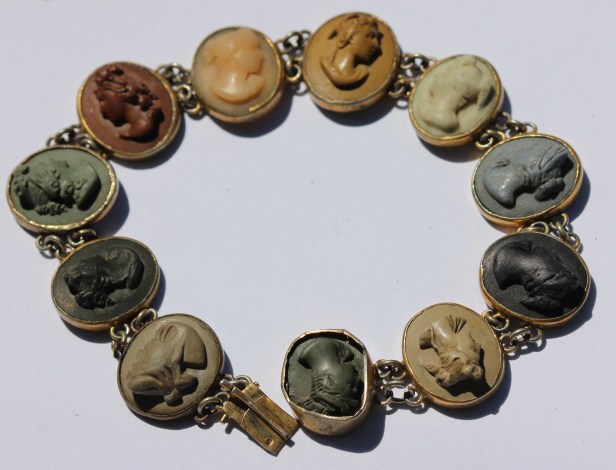
Lava cameo jewellery became popular during the era of the Grand Tour in the 17th, 18th and 19th centuries. In particular, the 19th century led to a move away from wealthy young men collecting sculptures, paintings and furniture as well as small valuable items like intaglios, to more middle class tourists who were interested in small, relatively inexpensive souvenirs to take home.
Two very popular Italian sites for tourists to visit were Herculaneum, excavated in 1738, and Pompeii, excavated in 1748. Both these were Roman cities buried under ash and lava when Mt Vesuvius erupted in 79AD. Tourists visited Naples and were able to take side trips to the evacuation sites. Desirable souvenirs from these sites were jewellery items made of lava jewellery. The stone used in lava jewellery was not in fact lava but was a fine limestone native to Southern Italy which was able to be polished.
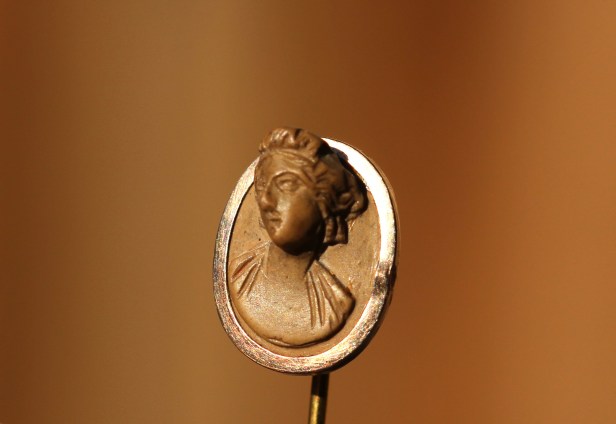
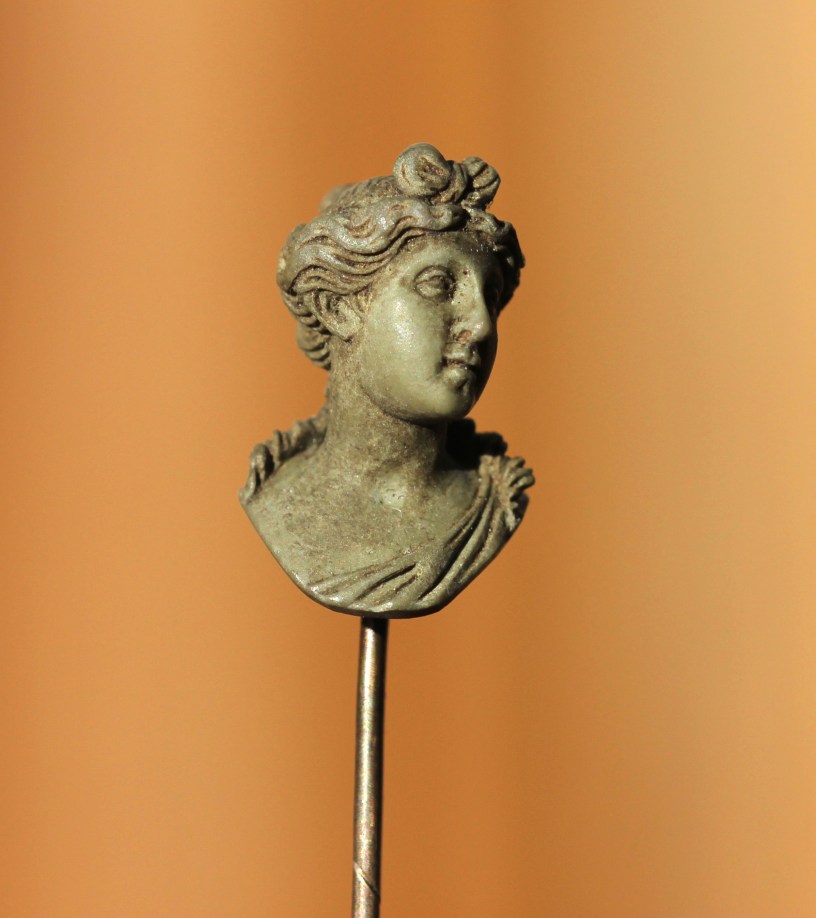
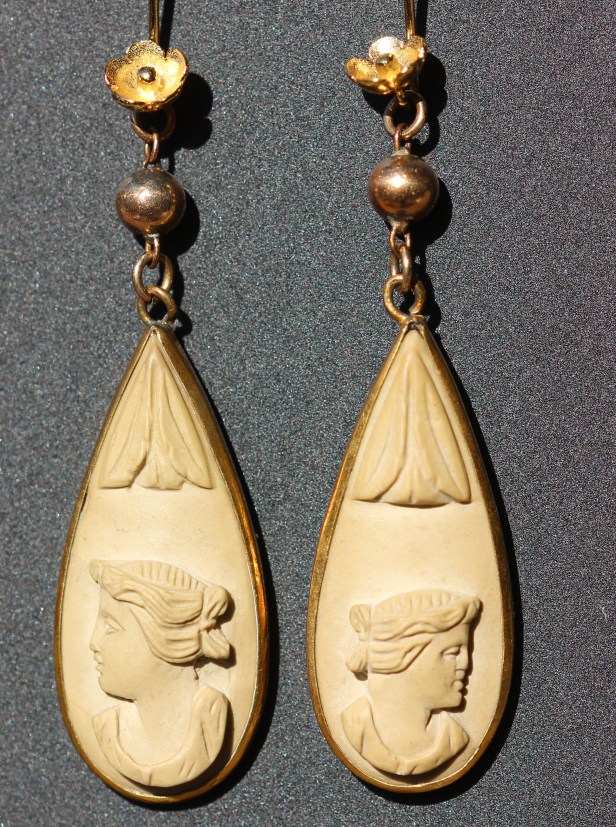
Greek goddesses like Hera, Aphrodite, Demeter, Athena, Artemis, Hestia and Persephone were a common motif for lava jewellery, as were their Roman counterparts. All the lava jewellery in this post depicts a female goddess. You can see that the quality of carving varies a lot, from the exquisitely carved goddess in the stickpin at the top of the post to the blunt depiction of goddesses in the earrings a few photos down.
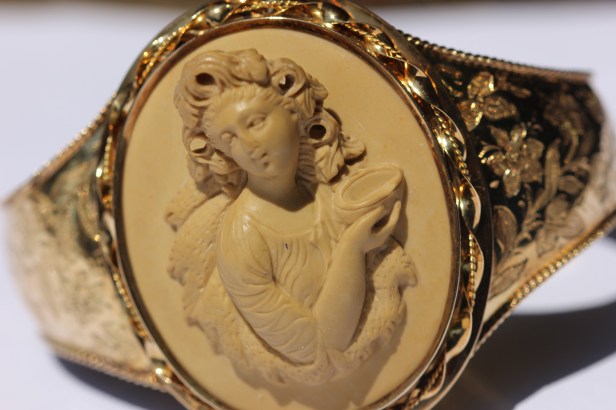
What also varies, too, is the settings of the pieces, from gold for the pins and bangle, to silver gilt surrounds for the earrings, down to metal for the bottom bracelet.
All the pieces are attractive but I have to admit my favourite is the little goddess at the top of the post.